
I bought a house in the Piemonte region of Italy that hadn’t been touched in decades, renovated it from top to bottom, and lived to tell about it. 😉
All this to say that renovating in Italy will be one of the biggest (and hopefully amazing) adventures of your life. It has been and continues to be for me.
I knew the house needed a total renovation going in, but I never imagined just how big of a project it would end up being. Call it the perfect mix of courage and being just naive enough to take the leap. And luckily, I’ve got no regrets!
But even so, there are things I wish I knew or truly understood beforehand. Because if I’ve learned anything from renovating in Italy it’s this.
Yes, it helps to know a few things about working on old houses and the local way of getting it done. But just as important (maybe even more!) is your mindset and how you handle the challenges and decisions that come with every new day.
So in this guide, you’ll find 10 of my biggest takeaways after doing a home renovation in Italy to help you anticipate the incredible twisting road ahead, hopefully quicker than I did. 😉
1. Make peace with being outside of your comfort zone (especially at the beginning).
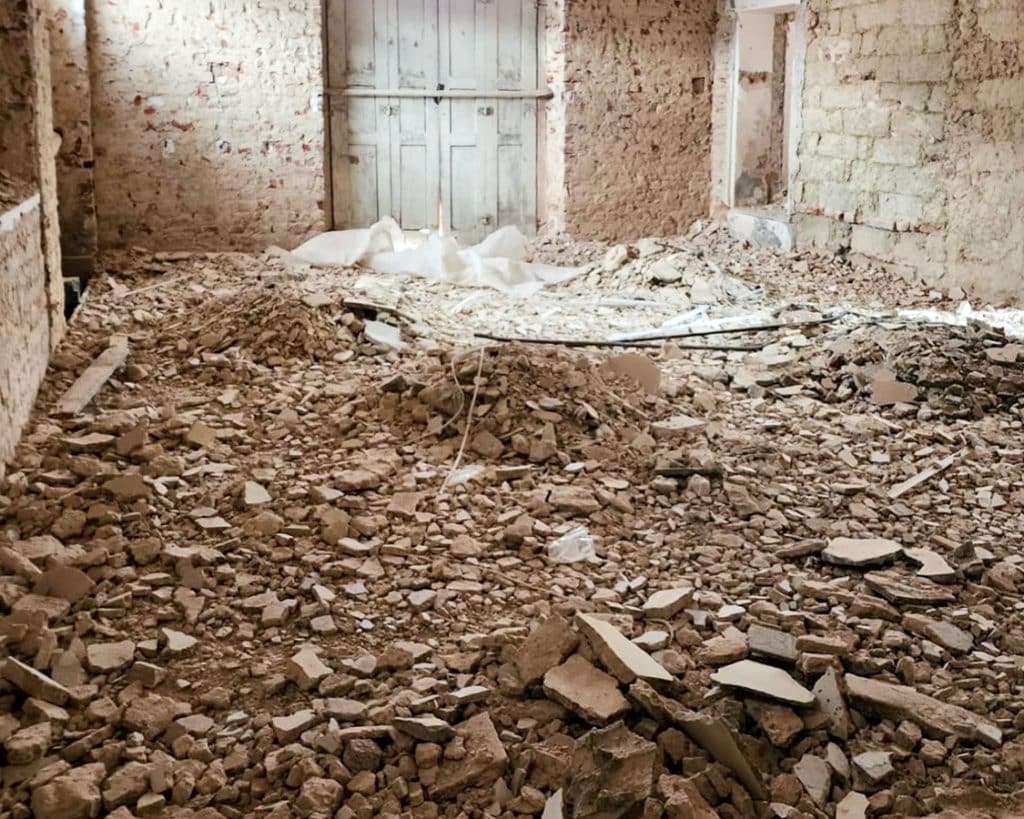
Call it a bit of a catch-22, particularly when you’re just starting your Italian renovation journey. You’ll need the help of the friends, professionals, and neighbors you know up to this point. But I get it because you’ll also want to be the decisionmaker in control of everything. It is YOUR house after all.
Thinking about this as I write, I’d love to go back in time to the start of my own project. I’d tell myself, “stai tranquilla” or stay calm, despite the whirlwind of decisions, new information, and things to figure out that I’d just stepped into.
I’d reassure myself that I’m still the same competent and confident person who just happens to be learning a lot of new things on the fly…in another language. What feels out of my comfort zone now will eventually feel normal later on.
You’ll absolutely make a faster and smoother start if you put some trust in the people around you and recognize that some things will feel out of your ability to control. Even more so, if you don’t understand or speak Italian.
With a gut renovation of an old house in Italy, there’s always a degree of putting faith in the team you’ve put together to help you complete the project.
But over time, you learn more about the work being done which helps your barometer more accurately calibrate the right things to do or say in any given moment. Piano, piano (little by little), you’ll feel more “in control” of what’s happening around you.
2. Hire all or as many of your workers locally (the best ones are usually recommended).
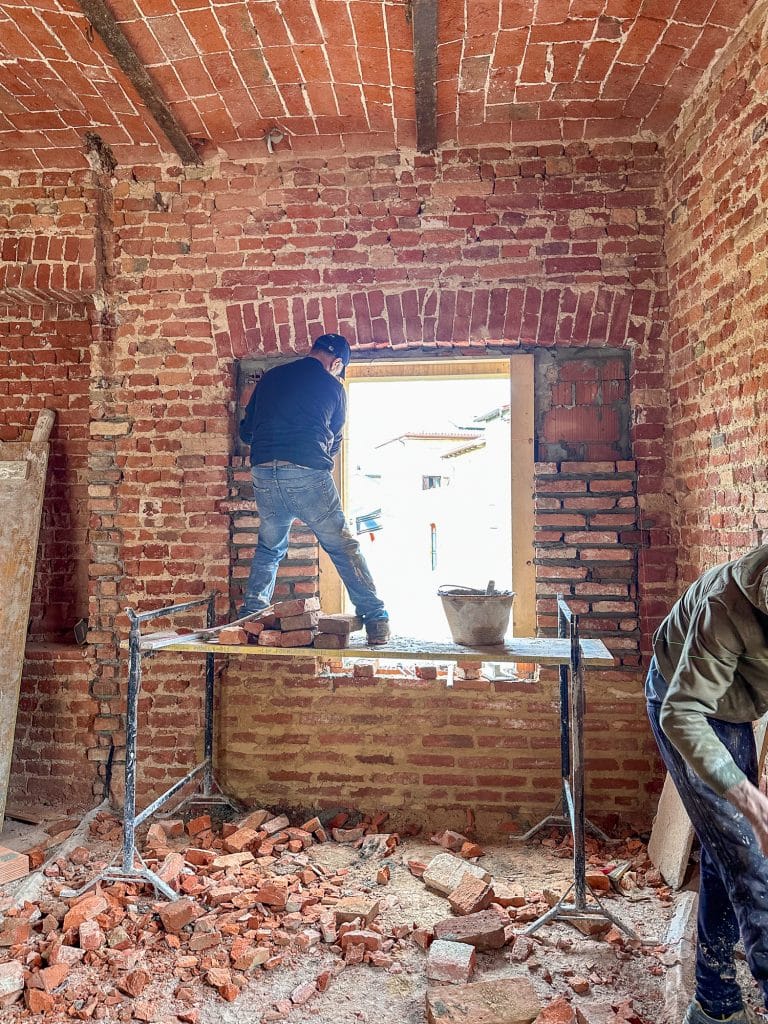
We started off with a builder who wasn’t local and he eventually ghosted us. We learned this lesson the hard way! Fortunately, it cost us mostly time and stress, but it could’ve been a lot worse.
Local builders, plumbers, electricians, and tradespeople need business from their immediate area and have usually done work for someone in your town or village. If they’re good, they don’t need to advertise. Word travels fast and they’re repeatedly referred to new clients. (The news also gets around just as quickly if you should steer clear of a particular tradesperson.)
So, get recommendations from your friends and neighbors first and foremost! Find out who they’re happy with or have heard good things about. For example, our new builder had done work in my village for other houses and the town itself. No way did he want to mess with his entire reputation while working on my house.
Plus, if others you know have used someone, it’s easier to see if the price you’re quoted seems fair or not.
If you don’t know anyone yet, ask at local shops or talk to your geometra or engineer. My geometra recommended my electrician who did great work. A friend of mine asked the guy at his regular paint store if he knew anyone locally who could paint window shutters. Sure enough, they gave him a name of a great guy in the neighboring village.
Of course always do your homework, too. And make sure you’re hiring the right person for your kind of job. (My total renovation needed a builder who had more than 1 or 2 guys working with him.) But, locally recommended tradespeople are usually worth their weight in gold.
3. Renovating in Italy = construction surprises (especially in old or abandoned houses).
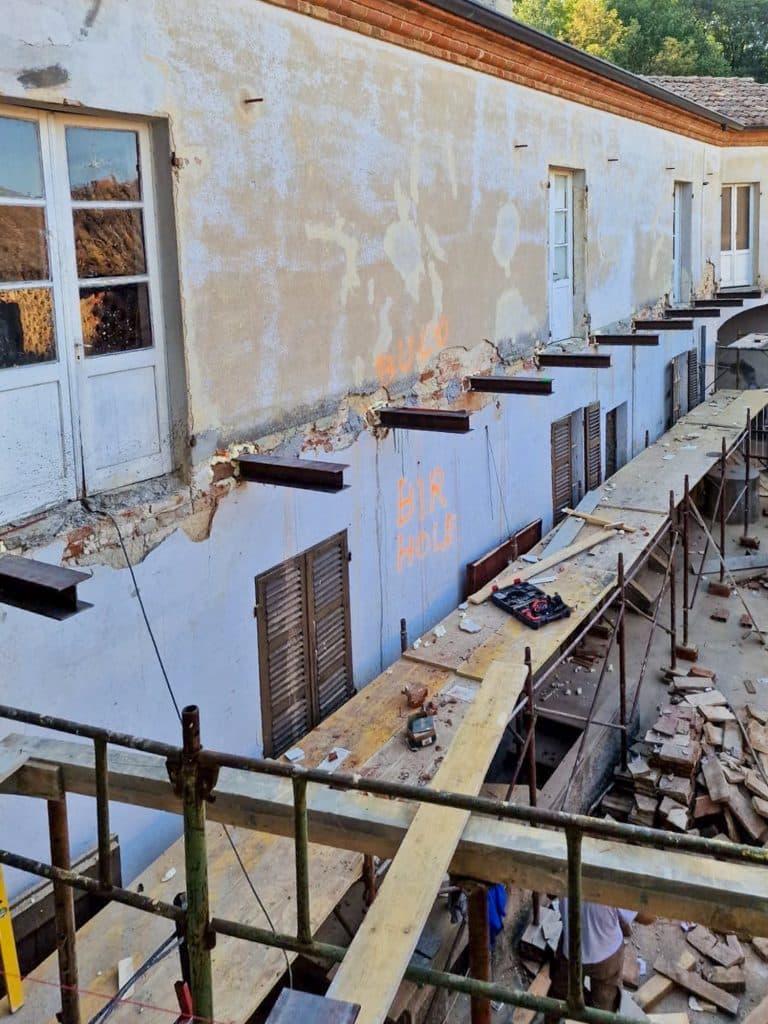
Maybe this one seems obvious because renovating a house anywhere rarely follows a straight line where everything goes according to plan.
But houses in Italy can be old…really old. There will be the problems you can clearly see and budget for.
But old walls, beams, and foundations can hide structural problems. And once you demo and remove plaster, problems come to light which weren’t in your original renovation plan.
We knew we’d need to add/fix some “keys” to hold the walls on the top floor in place. But it wasn’t until plaster was removed did we realize we had to demolish and rebuild a large existing balcony in the courtyard. We also needed to add some beams, do some unexpected roof work, and a hundred other little things that popped up that were minor, but nevertheless, add up.
So, always have a house you’re interested in looked at by a structural engineer. The findings will either help you plan your renovation project or understand when renovation work will be too costly and it’s better to move on.
You won’t know what surprises await, but you should absolutely budget for them.
Whatever your renovation budget is, make sure you can comfortably increase it by 20% to cover anything that comes up unexpectedly.
4. Expect delays.
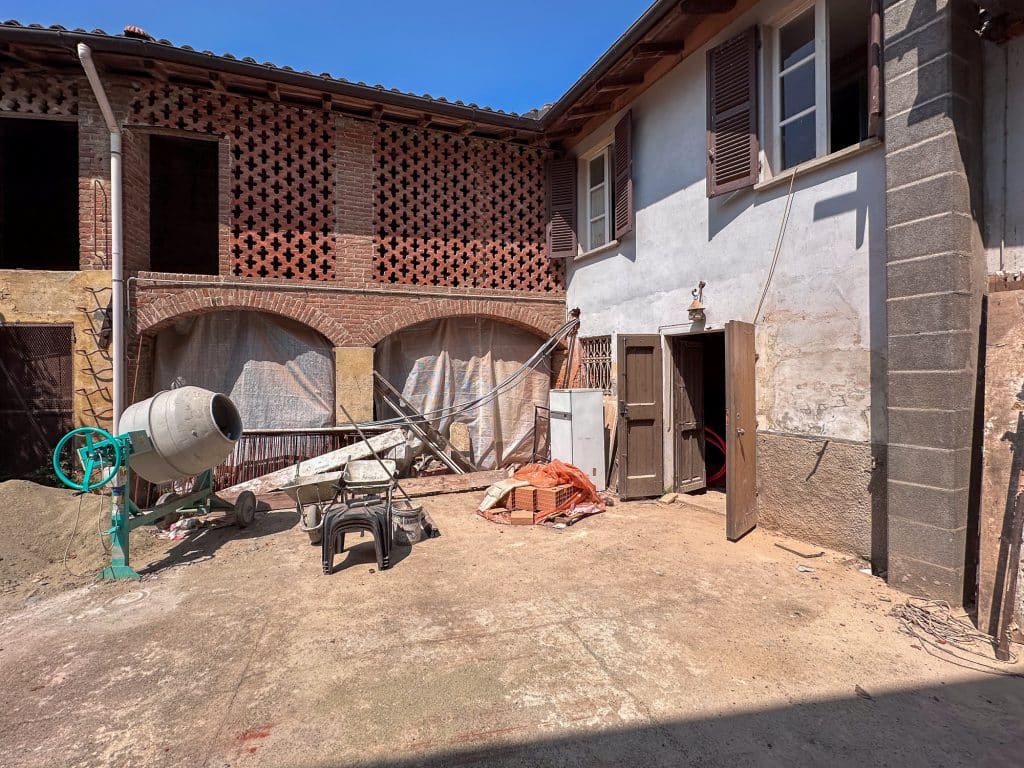
Italian construction moves slowly. Sometimes it’s because you’re working with someone who takes other jobs so they’re at your house for a week and then disappear for a week, which is beyond frustrating.
Even if this isn’t the case, though, houses in Italy are made of stone and bricks and so they’re renovated in a totally different way than you might be used to. The work is labor-intensive and time consuming.
There’s also an enormous amount of coordination necessary. There are no handymen in Italy. Everyone specializes in a specific trade.
So the plumber has to be ready to work once the builder has done his part. And once the electricity and plumbing are roughed in, the builder has to be ready to pour the subfloor so the tile guys can put down the flooring…who also need to be available. Oh, and is the flooring itself ready or are you waiting for the local store to get everything in stock and delivered?
Whatever you’re thinking for how long it will take to renovate a house in Italy, double, triple…or maybe even quadruple it.
And understand that “domani” doesn’t always mean tomorrow…it means not today.
5. Learn as much Italian as you can.
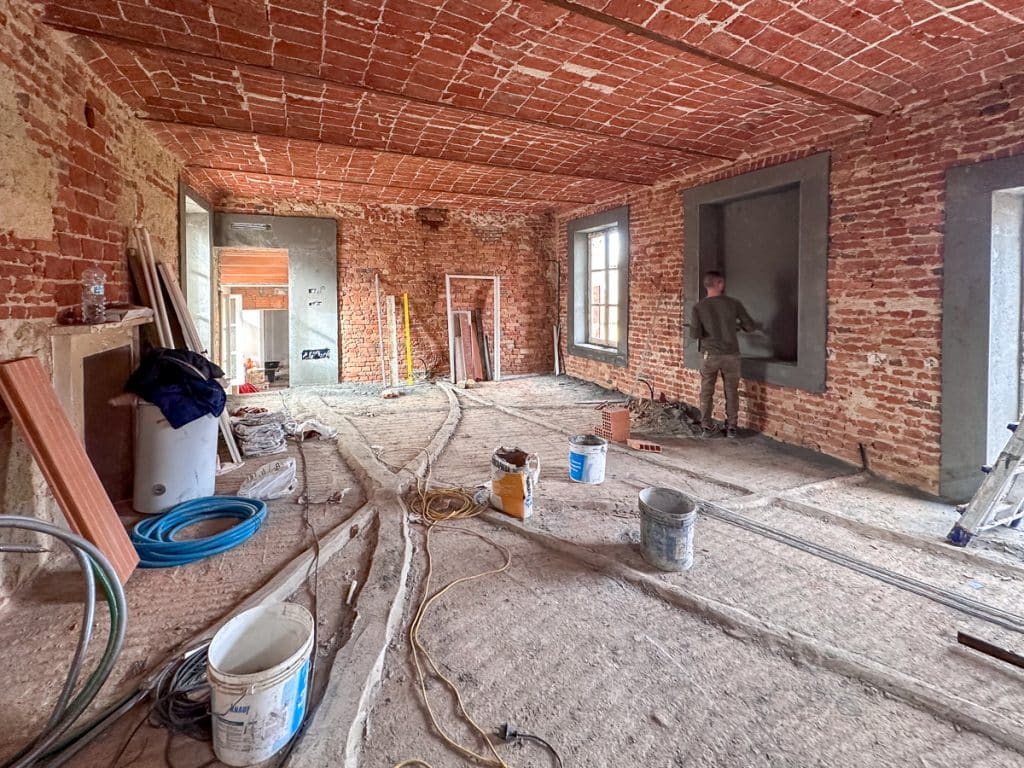
When I started, I knew the same few words in Italian every tourist knows. And it wasn’t easy because the majority of the workers at the house spoke no English.
Initially, I had to put trust in the people around me, like a friend or the geometra when he was on site, to translate for me. But, I was the one there on a daily basis and the workers talked directly to me when there was a question about something or they needed to explain about something that came up.
My advice is to learn as much Italian as you can as quickly as possible…with a strong focus on what’s most important for houses and renovating. I developed a bank of construction vocabulary in Italian that I relied on over and over. At that point in the project, I couldn’t make small talk with my Italian friends, but I could say where I wanted plaster and where I wanted exposed brick. I knew the words for tiles, subfloor, pipes, boiler, shower, drain, etc., but still needed to translate some words on an Italian menu.
Gradually, though, I understood more of what I heard around me. (Context is everything!) Then one day, my plumber actually complimented me on how good my Italian was getting. (Take these small victories and celebrate!)
Yes, everything worked out in the end (although you’ll find a few bad drawings on some now covered walls as evidence of early “conversations” between the plumber and me. But there’s no denying, everything would’ve felt much better had I had a better grasp on the language to start.
6. Get an itemized price quotation for the work.
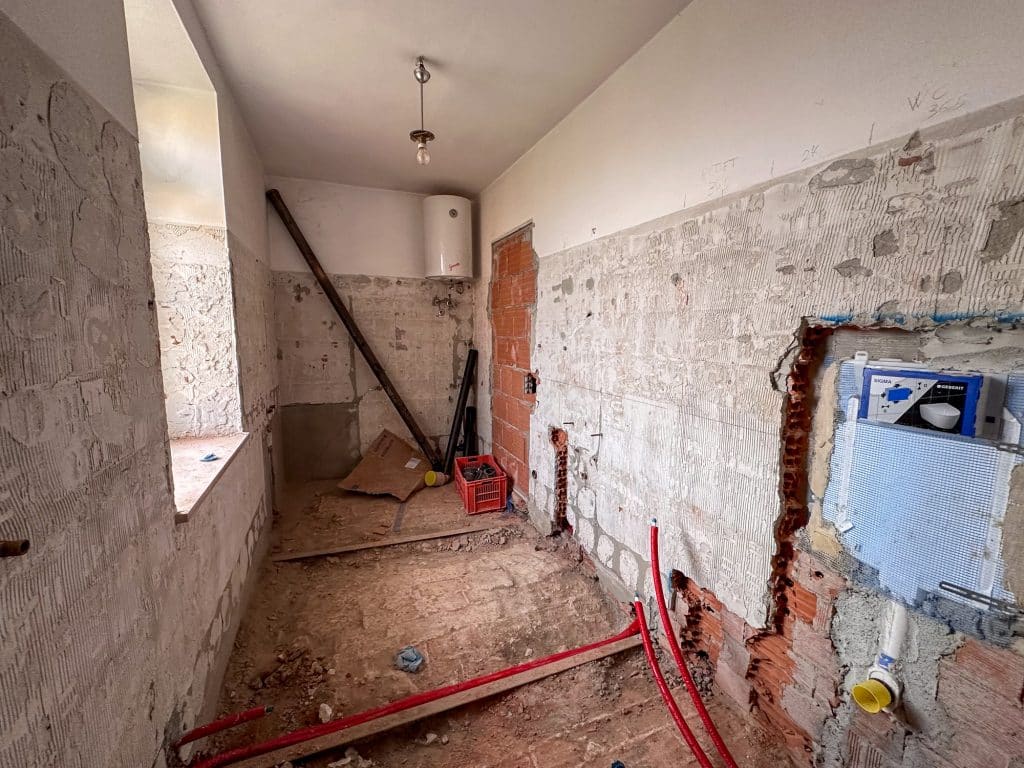
When you ask a builder, plumber, or tradesperson for a price quotation, known as a “preventivo” in Italian, it should individually list each bit of work that you’re planning and any materials these workers will supply for you.
This might seem daunting, especially if you’re doing a complete house renovation. But here’s what to know.
First, honest tradespeople should do this automatically. Their preventivo should outline the per item cost, or for certain things like repairing exposed brick walls, a per square meter cost. In some cases, there could also be a per hour cost if a particular job is best listed like this. For example, the guy who restored and rehung our windows had a per hour cost for re-installation of the windows.
The point is everything should be transparent.
Because the reality, especially with a gut renovation of a large house, is that things will change. Work you originally planned will get adjusted or scrapped altogether. Other things you didn’t imagine or changed your mind about will inevitably get added to the work being done.
With an itemized price quotation, these adjustments are easily calculated. You thought you needed 50 square meters of floor installed, but it ended up being only 45 square meters? Simply subtract the cost of the additional 5 square meters using the per square meter cost.
Otherwise these changes, and the difference in price, become something that is calculated on a whim. And you’ll have no idea if the cost was fairly and correctly adjusted up or down.
7. Understand what you can and cannot do.
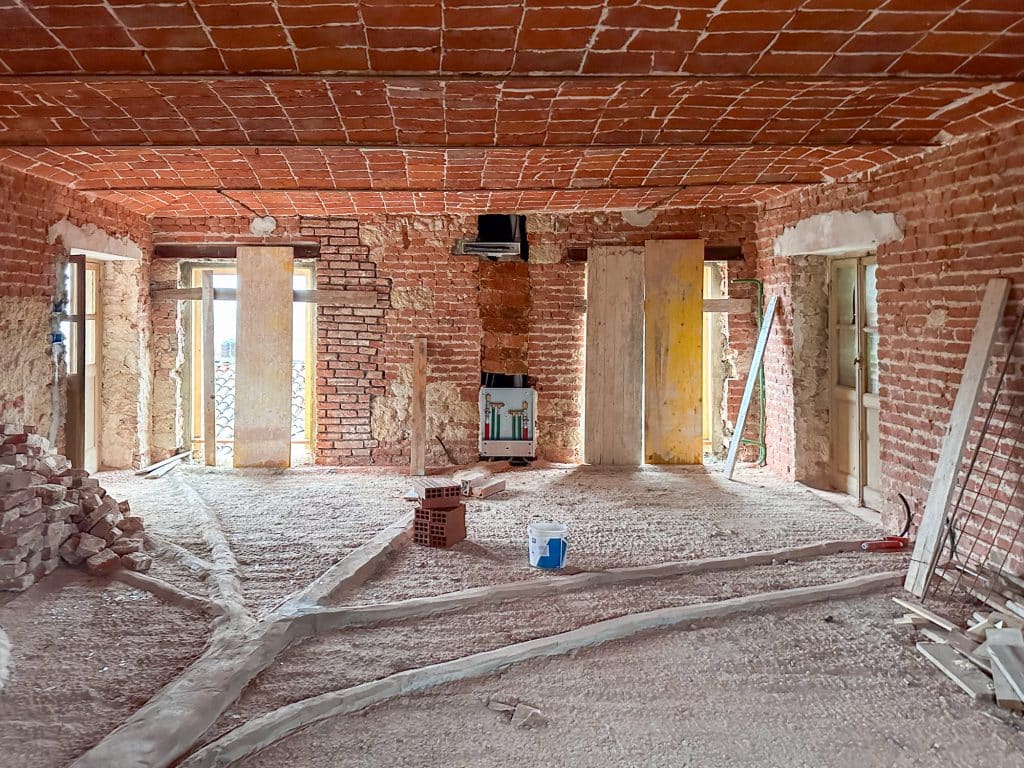
Every village or town has its rules about renovation changes. Some regions are very strict about this (i.e. Tuscany), and others not as much. But, in most places, there’s an established baseline to keep an Italian aesthetic, particularly on the outside of a house.
It can also depend on where your house is located within a town and/or whether it has any historic status. My house is in the center of the village. We couldn’t do certain things that another house in the back of the village could do. For example, we wanted to open a spot for a panoramic window on the top floor to take advantage of the view. But it wasn’t allowed.
In the end, we compromised on opening two French-door style windows to match the others in the room. This kept the aesthetic of the house in the center of the village, but gave us the view we wanted.
A friend nearby has frescoes on some of her ceilings that are considered historic. There are rules about how she needs to maintain them during and after her renovation.
So before you buy a house in Italy, check with a geometra or at the town hall (not the real estate agent) to know if you can make the changes you’re envisioning or not.
8. Renovating a house in Italy will take over your life.
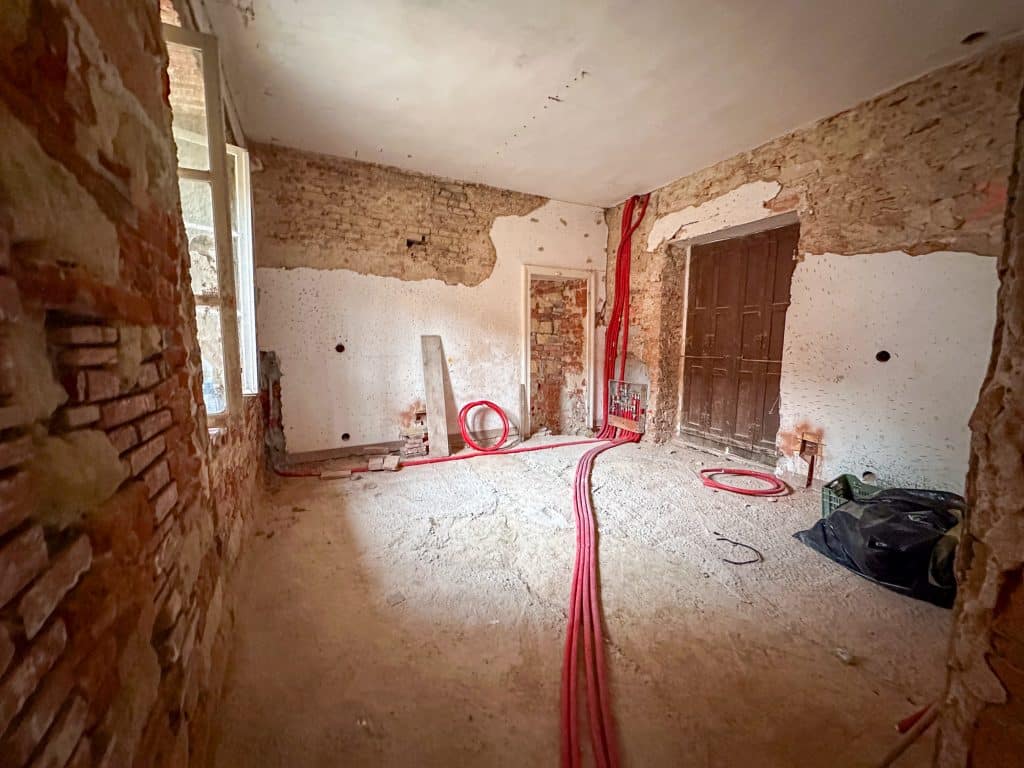
It’s all-consuming, in a good way, even when you hire others to do the renovation work.
My advice is to designate someone to be the project manager. In my case, my husband and I bought the house with my sister and her husband. I had the most flexibility so I was the one who coordinated everything that needed to be done and talked to the workers on the job site.
And don’t assume your geometra will manage the day-to-day work. They’ll handle permits, plans, and check-ins, but they won’t be there every day. Someone needs to be.
We couldn’t live in our house during the renovations. So, I flew back and forth repeatedly, and stayed for weeks and months at a time when necessary. Yes, more work happens when you’re physically there.
It’s also easier when just one person or one couple is talking with the workers and professionals. Things naturally get a bit lost in translation. Add to that multiple people telling the builder different things and it’s a recipe for a lot of frustration.
If you’re the one managing the project, triple your patience, be open-minded, and ready to act and respond to solve problems as they come up. This means making decisions on the spot when you’re in Italy and waking up at 6 a.m. (when you’re not on Italy time) to a barrage of messages with questions and things needing your approval.
In all honesty, I made personal sacrifices (like time with my husband and shifting some focus away from my career) to see the renovation to a successful finish. But, it was all worth it because now we have a beautiful house and life in the Italian countryside.
9. Local tradespeople know what works here.
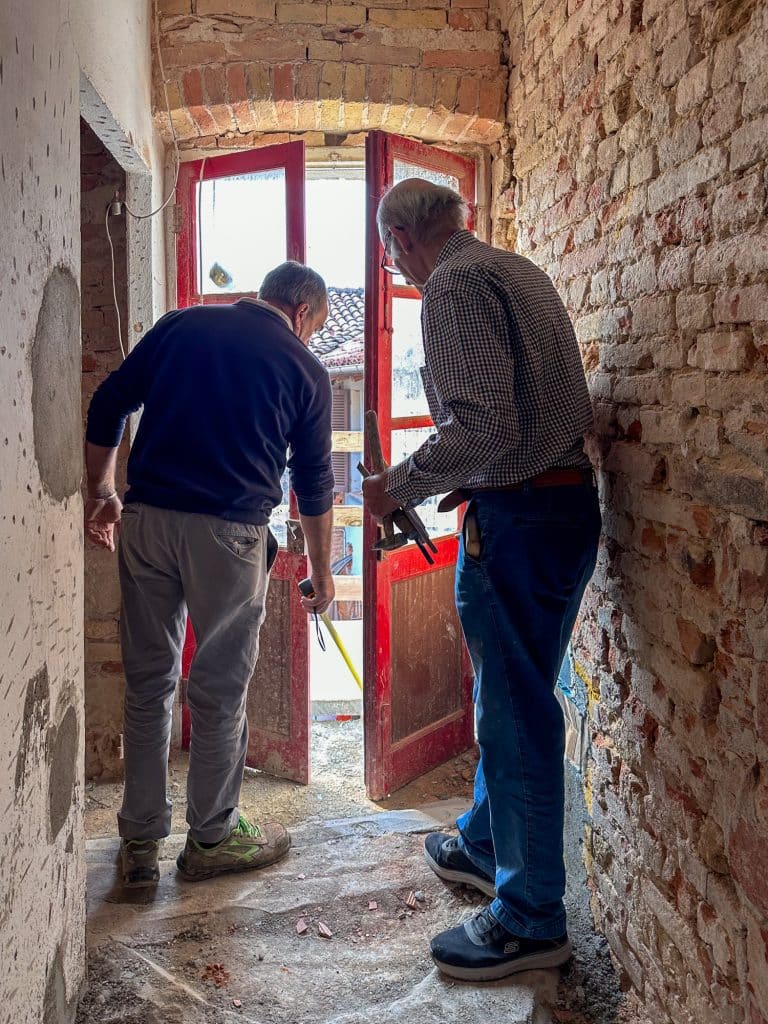
Hiring local isn’t just about finding honest and fair people. It’s about what happens after.
Listen to what they tell you even if it contradicts some of the ideas you’ve gathered from Pinterest or your favorite home renovation TV show.
They know what’s best for the brick houses in your area. They understand local weather conditions and humidity.
Their experience has taught them how to efficiently manage heating. (Yes, if it was my house I would put another radiator in the kitchen.)
They’ll come up with ideas that you never imagined. (It’s better to lose one of the four fireplaces in the house and use the space to run new heating tubes instead of channeling through the brick wall.)
They’ve worked on houses like yours over and over, and probably live or have lived in one, too. Their advice can be absolutely invaluable.
10. Old houses demand respect.
Listen to what they have to say, especially if you don’t have an infinite amount of money to spend on renovations.
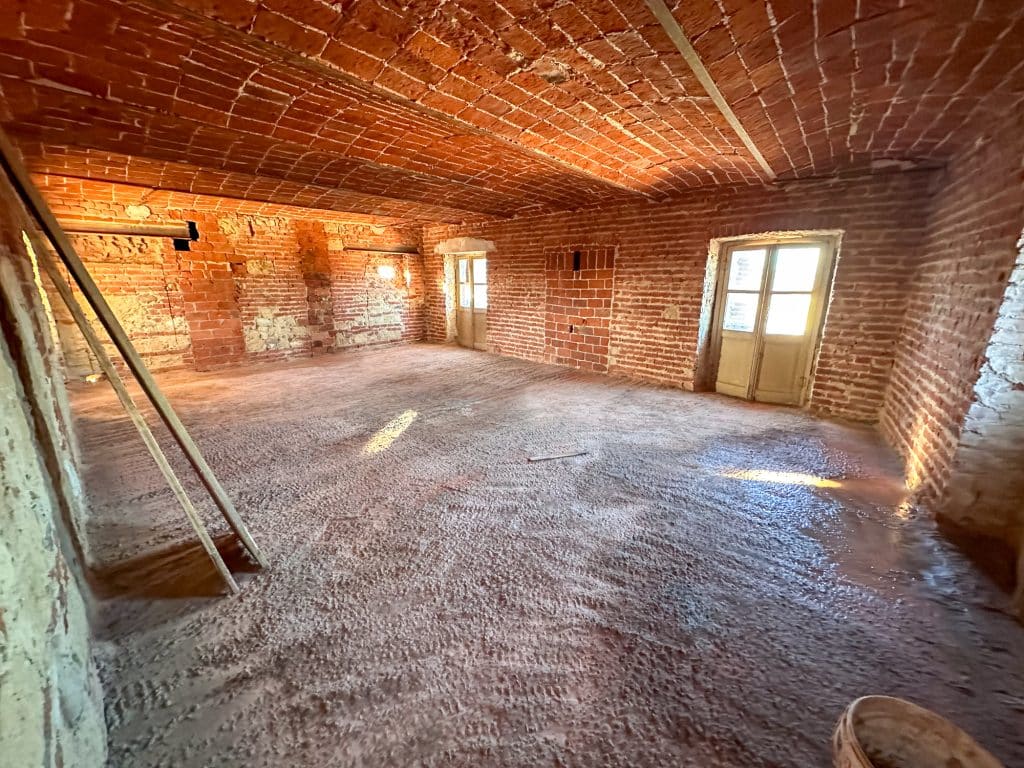
Old brick houses are quirky. They’ve got doorways at different heights, walls that’ve been added over time, extra arches and chimneys, and rooms with no heating.
You’ll probably see that it’ll make sense to run wires or pipes in certain places. And that may not be where you originally wanted a sink or a radiator. Sure, it’s possible to stick with your plan, but forcing modern solutions everywhere will cost you.
It might also erase pieces of the house’s character or history. So decide what’s important, what makes sense for your budget and liking, but remember the old house you’re investing in has probably been around since your great-grandparents walked the Earth. It knows a lot already about how to keep the people living inside comfortable. If you take the time to learn from it, you might see ideas and possibilities that you hadn’t even considered.
Bottom Line
Renovating in Italy is not a straight line. It’s a series of surprises, decisions, delays, discoveries, and moments where you’ll wonder if you’ve made a mistake. But then you’ll look up one day and see your beautiful vision coming to life from what used to be a crumbling old wall.
The practical stuff matters: get itemized quotes, hire locally, budget for surprises, learn the language. But what will carry you through when things get hard (and they will) is your mindset. Patience, flexibility, and a willingness to trust the process (and the people) around you will get you further than any spreadsheet or renovation plan.
Respect the house, respect the process, and always…stai tranquillo/a.
