
I recently did a wine tasting in Grana Monferrato with some of my family that was visiting where the owner led us through a wine tasting and her son took us to see their infernot carved below the ground of the winery’s entrance room. We were hugged, talked to like family, and on a first name basis by the time we left. There were no lines or tour groups. Just a friendly wine-making family who never stopped smiling, so honored to share their passion for the area’s grapes and winemaking with us.
That’s Monferrato in one afternoon. And it’s exactly why it’s worth visiting if you’re searching for the Italy you pictured before the tour buses found it.
Where is Monferrato? (And How it’s Different from the Neighboring Langhe)
Monferrato is in the region of Piemonte in northern Italy, east of Torino. It includes places like Casale Monferrato in the north, Asti, Alessandria, and Acqui Terme and Ovada towards the southern part of the area where Piemonte meets the Apennine Mountains on the border with Liguria.
Monferrato, along with the Langhe and Roero, is part of a group of three UNESCO wine-growing and slow food areas of Piemonte.
The Langhe is the most well-known because it’s where wines like Barolo and Barbaresco are produced. The International White Truffle Fair is held in Alba every fall and visitors come from all over the world to taste and buy some. This fame comes with a bit more tourism infrastructure, but also more crowds in peak months and higher prices.
Monferrato is the bigger and less expensive Langhe neighbor, whether you’re searching for award-winning wine, traditional food, or your dream Italian house like I found.
The even better news is Monferrato is still a place where you might need to knock on the door of a restaurant or winery because the family still lives there. Its villages and wineries are not touristy or crowded even though the area has the same vineyard and hazelnut covered hills, historic villages, and spectacular views with the Alps on the horizon.
What Monferrato Has That Tuscany Doesn’t
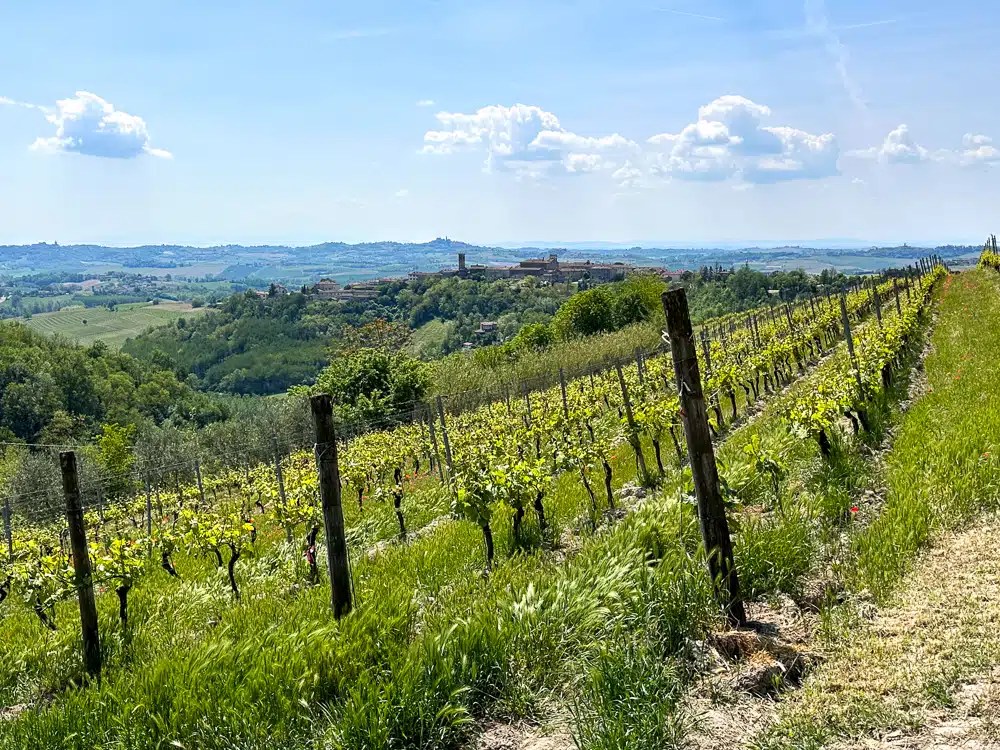
I’m guessing that you knew of Tuscany long before you ever heard the words Monferrato or Langhe. It’s no secret that Tuscany is what nearly every person on the planet imagines when they think about the perfect Italian countryside landscape. Rightfully so. Tuscany is beautiful.
But it’s also packed with visitors and very expensive compared to other countryside areas in Italy. (You see where I’m headed with this, right?)
Monferrato (and the Langhe) has the same rolling hills covered in grape vines, ancient hilltop villages that overlook the stunning landscape, and excellent wineries and restaurants. All of it is at a fraction of the cost and without the menus translated into English.
In Monferrato, you get a much better value for your money on everything from food and wine to lodging when you compare it to the most touristy parts of Tuscany. But the value layers on from there in ways that aren’t concrete numbers.
You don’t have to fight your way through crowds of people or look for parking between tour buses. When you visit a winery, you’re not in a busy tasting room. The family of winemakers are the ones welcoming you and explaining their process as you taste. You’ll find restaurants in tiny villages serving home-cooked recipes where you just might be the only English-speaking table…which already makes it an unforgettable experience.
Let’s focus on the food and wine for a moment. Piemonte is the region where Italy’s slow food movement began. There’s a commitment in the cooking to fresh ingredients and recipes that have been handed down for generations. And it’s not lost on Italians, foodies, and visitors who pass through. Piemonte is consistently thought to be one of the best Italian regions for food.
My house is near the main restaurant in my village so inevitably the smell of cooking makes its way inside as soon as food prep begins. It’s like smelling Nonna’s best cooking every day!
And the wine from the region, specifically some of the DOCG wines from Monferrato, are among the best in Italy. There are actually more DOCG wines produced in Piemonte than Tuscany.
Combine all of this with uncrowded, unrushed authentic experiences like hiking, biking, renting a Vespa to explore, wandering through a stone village, taking a cooking class, or just sitting for aperitivo overlooking a view with the Alps on the horizon. Without even trying, you’ll have found a piece of the “real” Italy.
The Towns and Things To Do That Make Monferrato Worth It
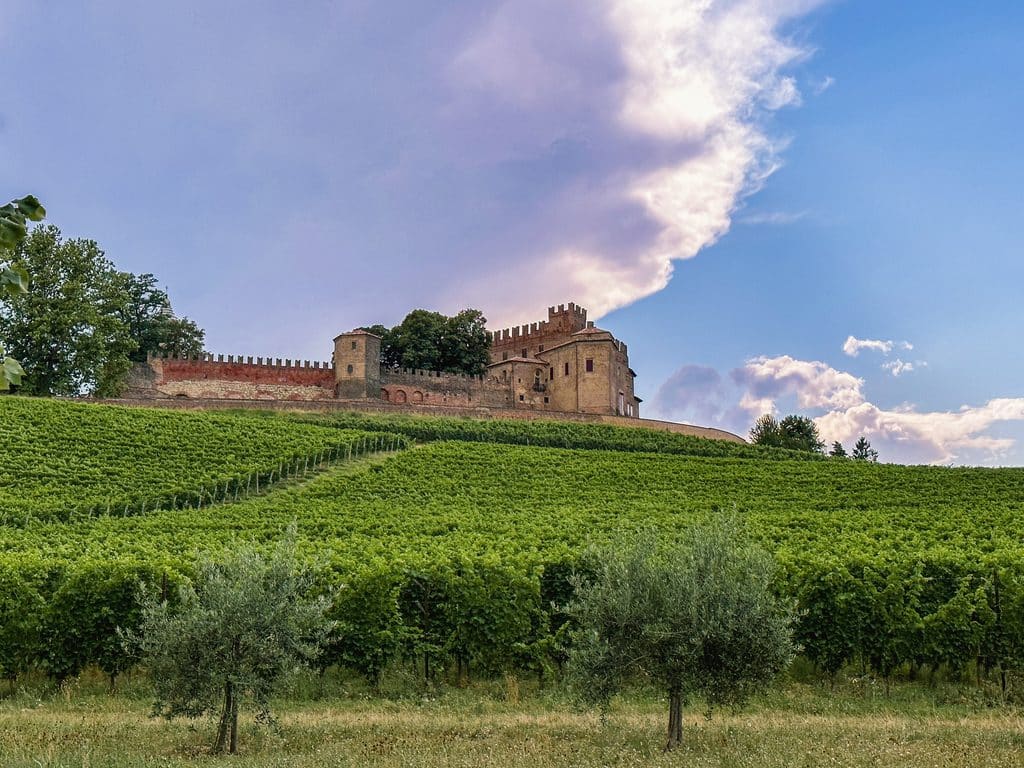
Casale Monferrato and Asti are both part of Monferrato and have lovely walkable historic centers with ancient churches, museums, and medieval architecture. Both cities have plenty of places to eat, sit for an aperitivo, taste local wines and food, and be part of a true local scene.
Casale has a great antique market every 2nd Sunday of the month and regular market days every Tuesday and Friday. Asti’s weekly market days are Wednesday and Saturday. Plus, the city has seasonal tours arranged through the tourism office in town, historic towers, and a Cathedral with pretty painted columns and frescoes inside.
Aside from these cities, Monferrato has no shortage of pretty hilltop villages. Some of my favorites include Cella Monte, Moleto, Olivola, Rosignano Monferrato, Nizza, Montemagno, Grazzano Badoglio, Vignale Monferrato, Ovada, and Castagnole delle Lanze. Cocconato, Cereseto, Mombello Monferrato, and Garbagna are also beautifully characteristic of the area and (along with Cella Monte) designated as some of the prettiest in Piemonte.
From all of these villages, you’ll find trails that lead into the hills for a walk or hike. Signs point cyclists toward scenic routes that pass through a series of villages or along wine roads. I love Nizza’s antique market on the 3rd Sunday of every month. Montemagno has a walkable historic path up to the castle (It’s not open to visitors but still impressive to see.) and a small hilltop bar specializing in vermouth, village ambiance, and beautiful views over the vineyard-covered hills.
And the tiny stone streets and scenic overlooks in Moleto, Olivola, and Vignale are some of the prettiest spots in Monferrato.
Monferrato is also home to the Sacro Monte di Crea, one of the UNESCO pilgrimage chapel sites spread across (mostly) Piemonte and Lombardy. The series of chapels date back to the 1500s and contain beautiful frescoes and statues. The chapels are in a wooded area so you can walk the loop path and peek inside each one as you go. These chapel sites are becoming a bit more known to visitors like the one at Lake Orta. But when you visit the Sacro Monte di Crea, you’re likely to have the path to yourself.
You can tour some of Monferrato’s UNESCO-recognized infernot. These hand-carved underground chambers are both historically significant to daily life here and true works of art. The Ecomuseo della Pietra da Cantoni in Cella Monte has information about them and a good one to see, as do many wineries, restaurants, and even historic houses. An airbnb I stayed at in Camagna Monferrato even had one!
And of course, you can’t leave Monferrato without doing some wine tastings, eating at a village restaurant or at an agriturismo in the hills, and going in search of a few big benches.
How to Get to and Around Monferrato
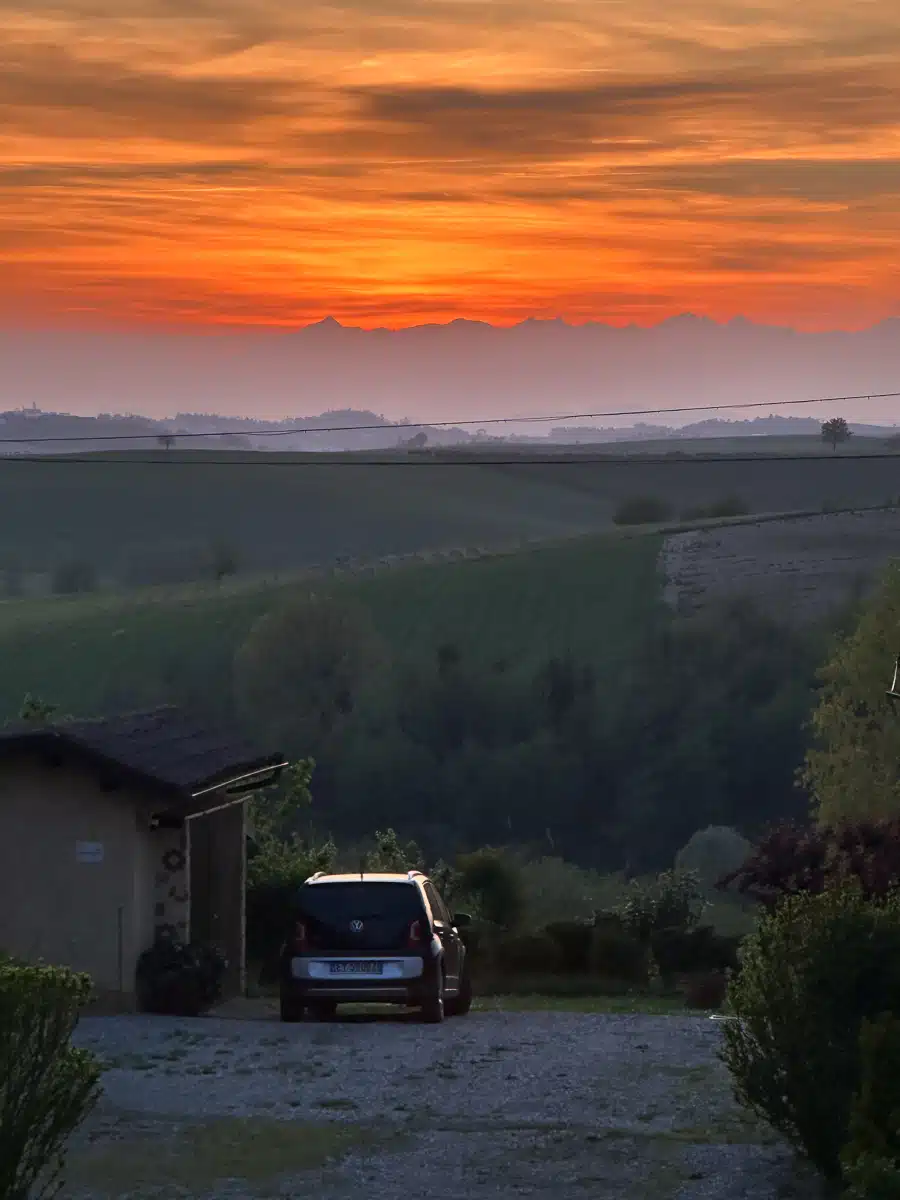
Monferrato is between Milan and Torino, making Milan’s Malpensa Airport and Torino’s Airport easy starting points to reach the area. The drive to Monferrato from either airport takes about 60-90 minutes using a combination of the Autostrada and local roads.
If you’re already traveling in northern Italy, Monferrato is easy to reach by car from places like Lake Orta, Lake Maggiore, Genoa, the Italian Riviera, Aosta, and Parma.
You need to rent a car to travel around Monferrato and most of Piemonte (unless you’re just basing yourself in Torino).
Regional trains can get you to cities like Asti and Casale Monferrato. But the essence of Monferrato is found in the beauty of its rolling hills.
With a car, you can visit hilltop villages, do wine tastings at local wineries, and get to restaurants, hiking & biking trailheads, the famous big benches, and cultural sights easily and at your own pace.
Monferrato FAQs
I’ve answered a few more commonly asked questions about Monferrato below to help you learn more about the area and plan you visit.
1. What are the UNESCO Infernot of Monferrato?
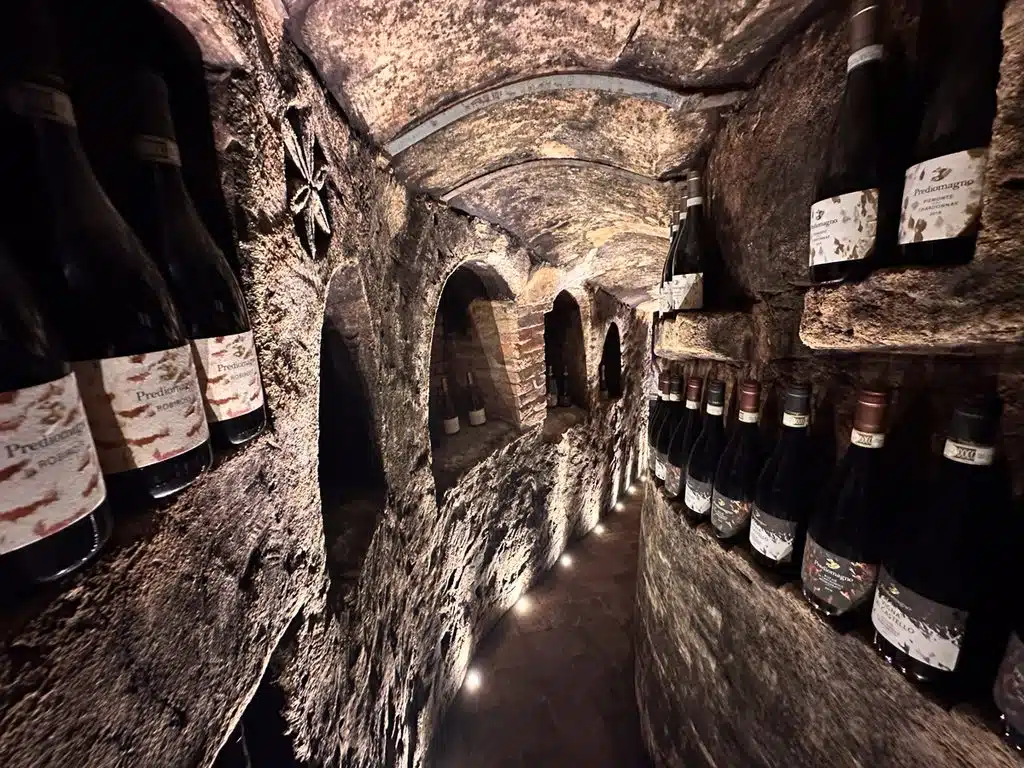
Monferrato’s famous infernot are hand-carved rooms and caverns under many houses to keep wine stored at the perfect temperature. They can be one small room or an elaborate series of tunnels that lead to different rooms.
What I love seeing is how the shelves for the bottles have been also been carved from the stone! All at once these spaces are practical for what’s grown and produced locally and incredible places to show off Italian artistry.
You can see them if you do wine tours and tastings at many wineries. One of my favorites is at Prediomagno Winery in Grana.
Cinque Quinti, another winery located in Cella Monte, also has one that you can see on one of their tours. (The village also has a museum called the Ecomuseo della Pietra da Cantoni where you can see another infernot.)
Hint: Both wineries are great spots for tastings!
2. What wines are produced in Monferrato?
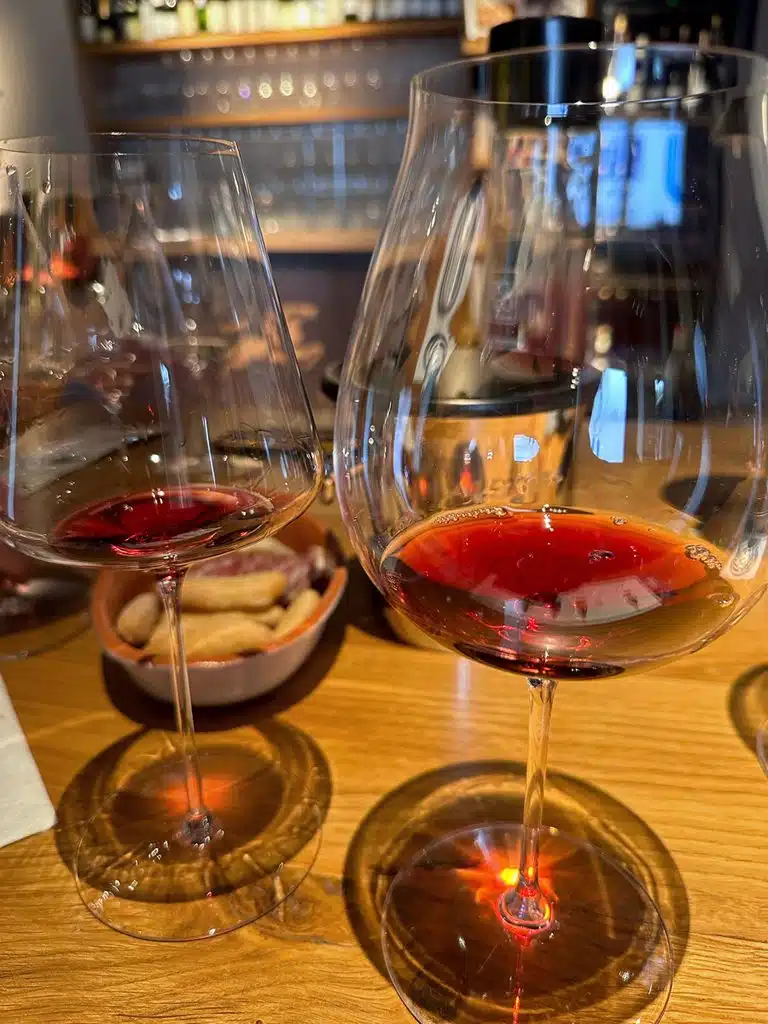
Barbera is the most famous wine produced in Monferrato. Do a few tastings to understand the differences between the varieties produced depending where you are in the area.
Along the way, you’re bound to discover favorites like Ruche and Grignolino wines made from grapes only grown here. Look for local cantinas like the one in Casorzo to taste and buy wines you can only buy from these community spots.
Overall, Piemonte has the most DOC and DOCG wines out of any region in Italy. Of the combined 42 that make the list, 13 of them are from wines produced in Monferrato. These include Barbera d’Asti DOCG, Nizza DOCG, and Ruche di Castagnole Monferrato DOCG.
3. What regional dishes should you try in Monferrato?
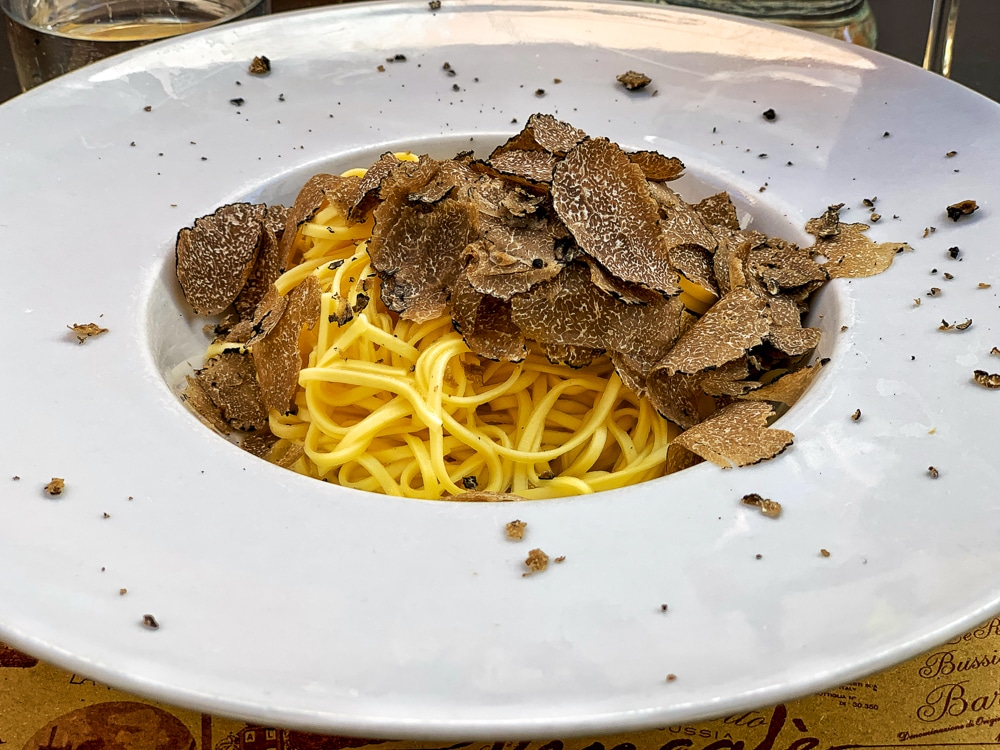
Agnolotti is the region’s most classic pasta dish. It’s a small pouch usually stuffed with meat (although it’s possible to find vegetarian varieties) and served with a roasted meat gravy-like sauce.
Vitello tonnato is a thinly sliced veal with dollops of tuna sauce on top found on menus throughout Monferrato. Monferrato is also known for its beef. You’ll often see it offered “crudo” (raw) on a menu or maybe braised in a Barbera wine sauce.
My favorite time of year is fall. People (myself included!) come specifically during this time to have dishes with truffles and porcini.
4. When is the best time of year to visit Monferrato?
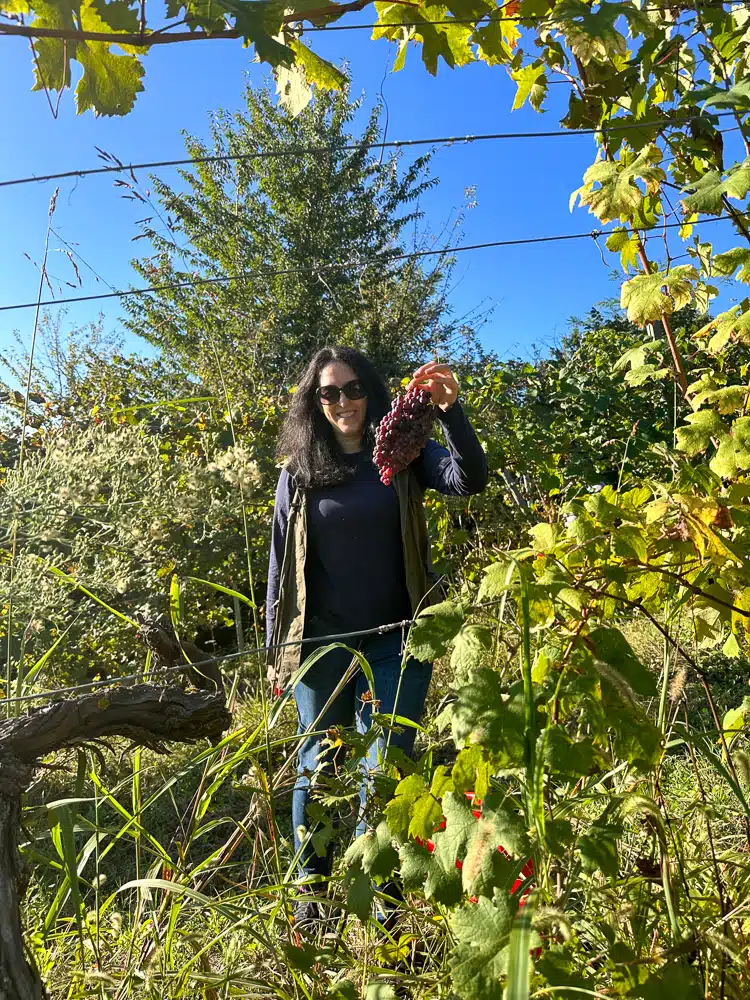
Spring and fall are the best times of the year to visit Monferrato.
In spring, the hills are a brilliant green. Days tend to be the perfect mix of crisp sunny mornings that turn to pleasantly warm throughout the day. It’s the perfect time to be outdoors (before the mosquitoes of summer arrive).
Plus, if you’re there for a few days at just the right moment, you get to see the vines wake from the winter and leaves appear seemingly overnight.
Fall is equally as beautiful. The hills are full of activity as the vendemmia (grape harvest) is underway. The leaves on the grape vines turn every hue of golden yellow and orange under bright blue skies. Fall is also when the region has a lot of harvest events and special truffle tastings.
I also think it’s the time of year when the views of the Alps on the horizon are the most incredible.
5. What are the Big Benches in Monferrato?
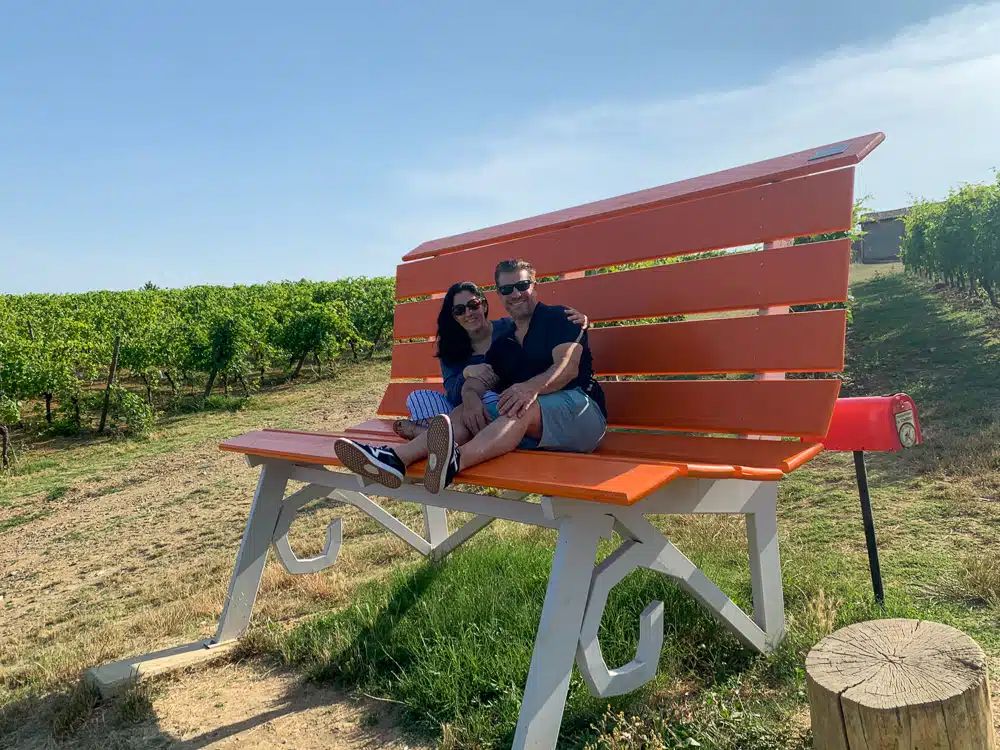
Throughout Piemonte, but also regions like Lombardy and Emilia-Romagna, you’re bound to come across huge, brightly colored benches that have been positioned in lesser-known spots so that people can sit, slow down, and swoon over the spectacular landscape.
Search for them on Google Maps. Look for “Panchine Giganti” road signs and head in that direction. You never know what you’ll also find along the way!
So, Is Monferrato Worth Visiting?
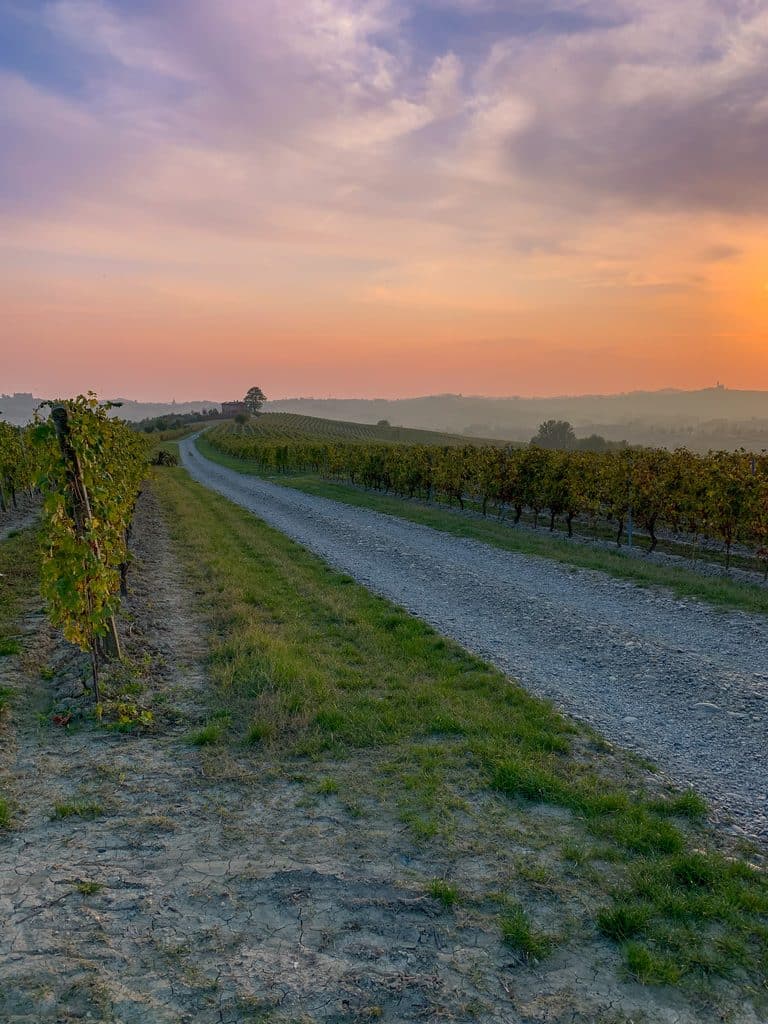
Monferrato isn’t going to show up on someone’s must-see list before Tuscany or even the Langhe. But that’s exactly why now is the time to visit. It’s also exactly why I bought a house here. Wineries, hilltop villages, hiking trails, and cultural events are all yours (and mine) to enjoy.
Save this guide for when you’re ready to plan your visit to Monferrato. Plus, I’ve got more guides coming in this series to help you plan where to stay, build a Monferrato itinerary, and the restaurants, wineries, activities, and villages to prioritize.
Have questions about visiting Monferrato? Let me know in the comments below.
Like this guide? Please share it on social media using the share buttons.
