
If you’re visiting Italy from a country where breakfast is considered the most important meal of the day, you might be surprised to find out that the traditional Italian breakfast is nothing more than a quick and simple start.
Forget towering stacks of pancakes, egg sandwiches, or savory breakfast sausages! A typical Italian breakfast is all about starting the day with a touch of sweetness and coffee. It’s completely contrary to what visitors to Italy imagine thinking of big Italian meals.
But once you experience an authentic Italian breakfast, you realize it’s quintessentially Italian- elegantly simple and perfectly indulgent at the same time.
Most Traditional Italian Breakfast Foods
The overwhelming majority of Italians prefer sweet breakfast foods over savory ones. Whether you’re in northern Italy or further south, this theme holds true.
But what you see for breakfast does depend on your plans in Italy. As you might expect, hotels typically offer a continental-style breakfast (possibly with some meats and cheeses) but might also offer eggs cooked in different ways to cater to visitors.
But if you’re having your breakfast in a classic Italian “bar” or staying with friends or family, don’t look for eggs or waffles. Instead, here’s what you can expect to find on a typical Italian breakfast table:
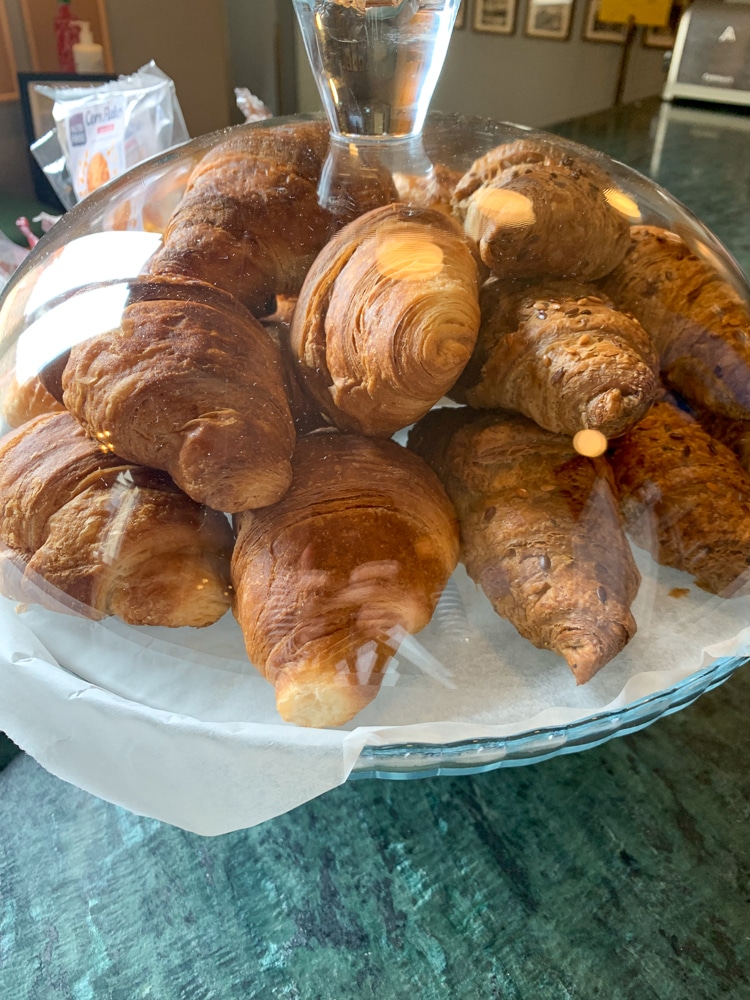
1. Cornetto
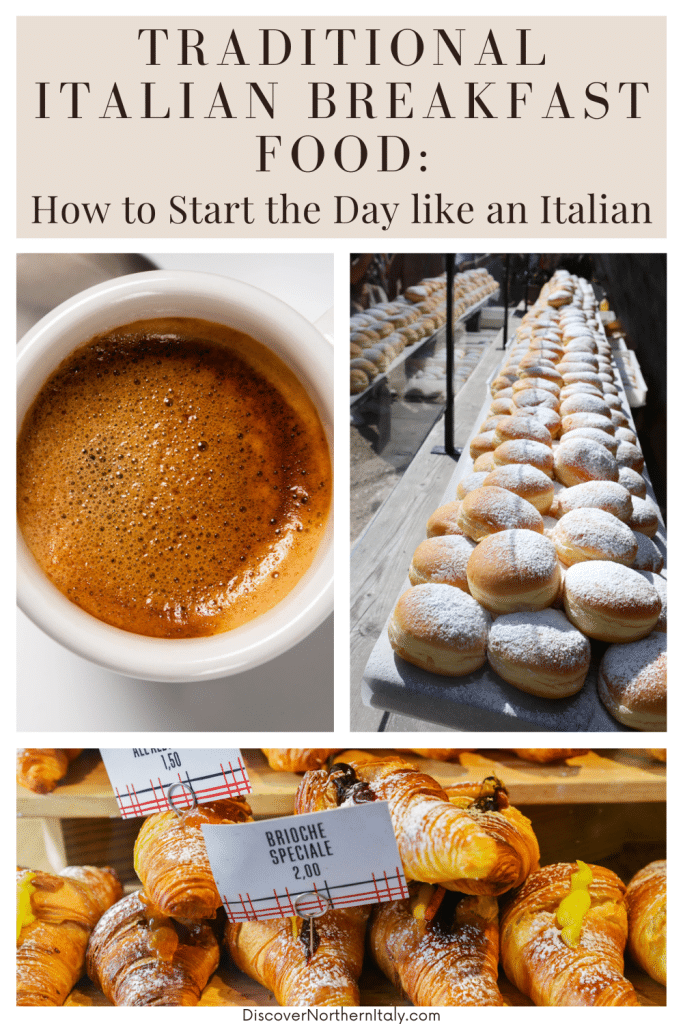
The cornetto is a delicious Italian breakfast staple. This iconic crescent-shaped pastry may look like a croissant, but unlike its French cousin, a cornetto has a softer, less flaky, texture. You can eat them plain or filled with different flavored creams (like pistachio), jams, or Nutella. Paired with a caffè (espresso/coffee), there isn’t a more classic Italian breakfast.
2. Biscotti
As an American, when you hear the word Biscotti, you probably think of those twice-baked, long, crunchy cookies. But the word “biscotti” in Italian means “cookie” and includes cookies of all types, shapes, and sizes. Commonly, you’ll see something similar to a classic butter cookie, of course, served with espresso or cappuccino, on an Italian’s breakfast table. If you’re shopping at an Italian supermarket, look for Mulino Bianco (any variety). They’re my absolute favorite biscotti with my morning coffee or tea.
ProTip: Cantucci are long cookies that look similar to the American version of biscotti. They usually have almonds in them and go with a dessert wine like Vin Santo. You’ll see Cantucci and Vin Santo on the menu typically after dinner. They’re not Italian breakfast foods.
3. Fette Biscottate
Think of these as Italy’s version of toast – thin, crunchy, miniature slices of twice-baked bread. You typically eat them with a spread of jam, Nutella, or honey. These light toasts are also a great option if you want to manage the sweetness level of your Italian breakfast. On their own, they’re plain except for the grain they were made with. The spread you put on them determines how sweet the combination will be.
4. Yogurt and Cereali or Fruit
If you want a lighter, healthier option, yogurt with fresh fruit or a drizzle of honey is another Italian breakfast food choice. You can even add a dash of granola or cereal for a bit of a crunch. Cereal with milk has become more popular but mostly for kids. Adults will usually combine cereal and yogurt.
ProTip: You can usually find whole milk and low-fat milk in most places in Italy. If you’re staying in a house or apartment, a local grocery store may have other milk varieties like lactose-free, soy, rice, almond, or oat milk. I’ve been able to find all of these varieties even at my local supermarket in the countryside. However, these milks will likely be harder to find at bars or cafes.
5. Pane, Burro e Marmellata
This simple, yet satisfying classic Italian breakfast, is any type of fresh, local Italian bread spread with creamy butter and jam. Along with fette biscottate and biscotti, these are the most likely everyday breakfast foods you’ll find if you’re staying with Italian friends or family.
6. Crostata e Torta
While not as common for everyday breakfast, slices of crostata (tart) or torta (cake) might be enjoyed on special occasions or weekends. Crostata is typically filled with fruit preserves or almond paste. A torta can range from a simple cake made from regional products like hazelnut cake in the region of Piemonte to more elaborate layered creations.
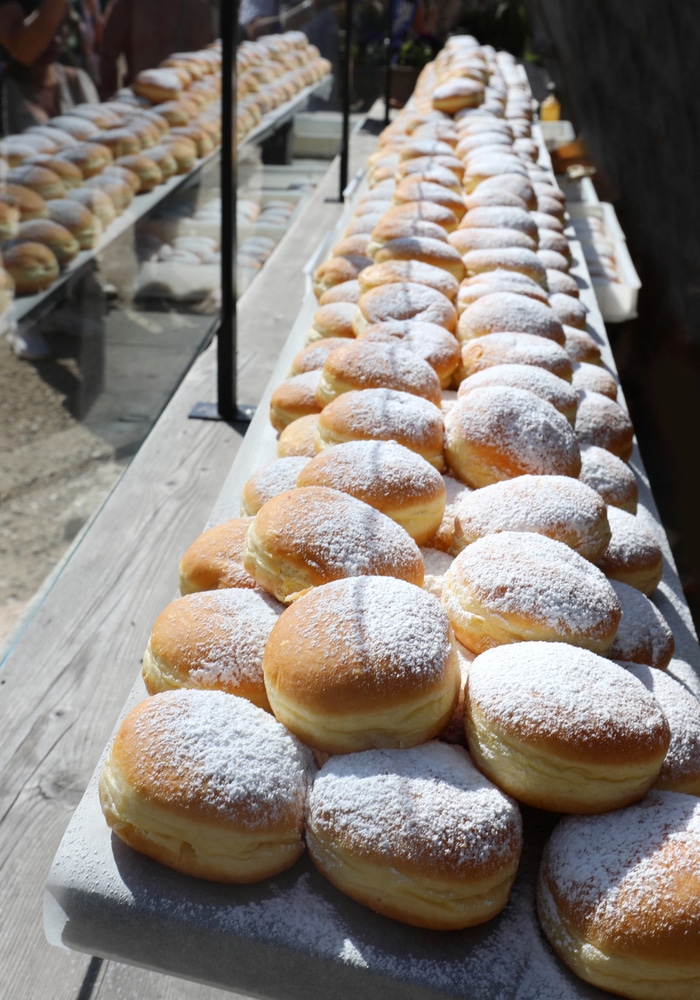
7. Pastries
If you’re having breakfast in a cafe or at your hotel in Italy, you’ll also likely see an assortment of baked goods. These will mostly be things like a croissant-like pastry filled with rich chocolate, strudel, or Italian donuts like bomboloni (filled with flavored cream) or ciambelle (ring-shaped like a donut). These may also be eaten at home but it would likely be for a special breakfast.
8. Regional Italian Breakfast Foods
Just like Italy’s diverse regions have lunch and dinner specialties, you’ll find some special regional breakfast foods, too. For example, in Liguria, you eat a piece of focaccia for breakfast and even dip it in your cappuccino!
Down in Naples, start your day with a sfogliatella, a pastry filled with sweet ricotta and citrus zest, and in Rome, treat yourself to maritozzi, sweet buns filled with whipped cream.
In northern Italy’s Veneto and Lombardy regions, you might see polenta and milk for breakfast but likely only in someone’s house because it’s not a usual Italian breakfast food of today.
ProTip: Depending on when you’re in Italy and where, you might find some seasonal Italian breakfast foods, too. For example, Frittelle can be found around Venice only during Carnival.
Typical Italian Breakfast Drinks
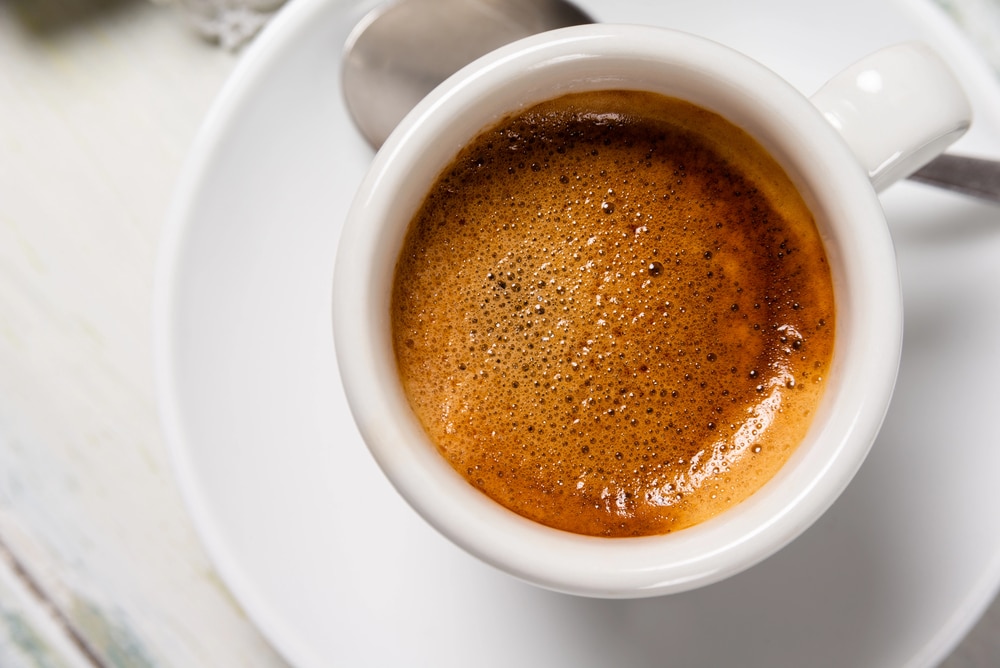
But no matter where you are in Italy, these sweet, traditional breakfast foods always come hand in hand with an Italian caffè.
1. Caffè
The undisputed king of Italian breakfasts! This word is used to refer to a shot of espresso and, more generally, coffee. But when you order ” un caffè” in Italy, you’ll be given an espresso served in a small, demi-tasse cup.
This concentrated dose of caffeine is the start of all Italian breakfasts. It’s meant to be enjoyed quickly at the bar and give you the jolt you need to start your day. It pairs perfectly with a cornetto, biscotti, fresh bread, fette biscottate, or any typical baked good for a quick, tasty breakfast.
2. Cappuccino/Macchiato
If the classic espresso is too strong for you, try a cappuccino or macchiato instead. A macchiato is simply espresso with a “stain” of steamed milk, while the cappuccino adds a layer of frothed milk on top. While you can typically have a macchiato throughout the day, Italians don’t drink cappuccinos after breakfast.
ProTip: If you ask for a latte in Italy, you’ll be served a glass of milk and likely some odd looks. Latte is the Italian word for milk and, on its own, has no connection to coffee. Instead, ask for a caffè latte.
3. Cioccolata Calda
On chilly mornings, warm up with a cup of thick Italian hot chocolate or warm milk with cocoa. Unlike the more watery versions found elsewhere, Italian hot chocolate is richer. And it’s more common for kids to drink hot chocolate with breakfast than for adults.
4. Tè
While coffee reigns supreme, some Italians enjoy a cup of black tea in the morning, often served with milk or lemon. Morning tea varieties typically have caffeine while tea later in the day is more likely to be an herbal flavor with no caffeine. Generally speaking, Italians tend to think of tea as an afternoon drink more so than a breakfast drink but it’s perfectly acceptable to drink tea with breakfast.
5. Caffè d’Orzo
This caffeine-free option, made from roasted barley, is a good option if you want a coffee-like flavor without the jitters. It has a slightly nutty, roasted taste that’s both comforting and unique.
6. Succo di Frutta/Fruit Juice
Freshly squeezed orange juice or other store-bought fruit juices are also suitable to drink at breakfast, although they tend to be more popular with kids.
The Italian Breakfast Culture

I admit that when I first began spending longer amounts of time in Italy, I felt a bit guilty because I was used to a morning routine with a heartier meal. I even tended to put together a healthier breakfast with yogurt and fruit as opposed to biscotti or cornetti. But I’m over that now! Seriously, who doesn’t love to start the day with pastry or bread and jam?!?
Just keep in mind that Italians are excellent at portion control. It’s ok to start your day with a cornetto or a few biscotti when you keep everything in moderation.
In addition to a sweet, quick breakfast, many Italians have breakfast at home, enjoying a quick coffee and pastry, toast, or biscotti before heading out the door.
However, it’s also incredibly common to have breakfast at the “bar” as it’s called in Italy. The bar in Italy isn’t only a place for alcoholic drinks. It opens in the morning for coffee and stays open throughout the day serving drinks of all kinds and small bites.
Stepping into an Italian bar in a big, busy city for breakfast is an experience in itself! Locals gather at the bar, drink their espressos, and catch up on the latest news. The interactions are quick, friendly, and sometimes, animated. If you’re visiting Italy and you walk into a super local bar in the morning, you may need to jockey for position to get a spot and place your order! But the air is welcoming and it’s all part of Italian culture.
How to Eat Italian Breakfast Like an Italian
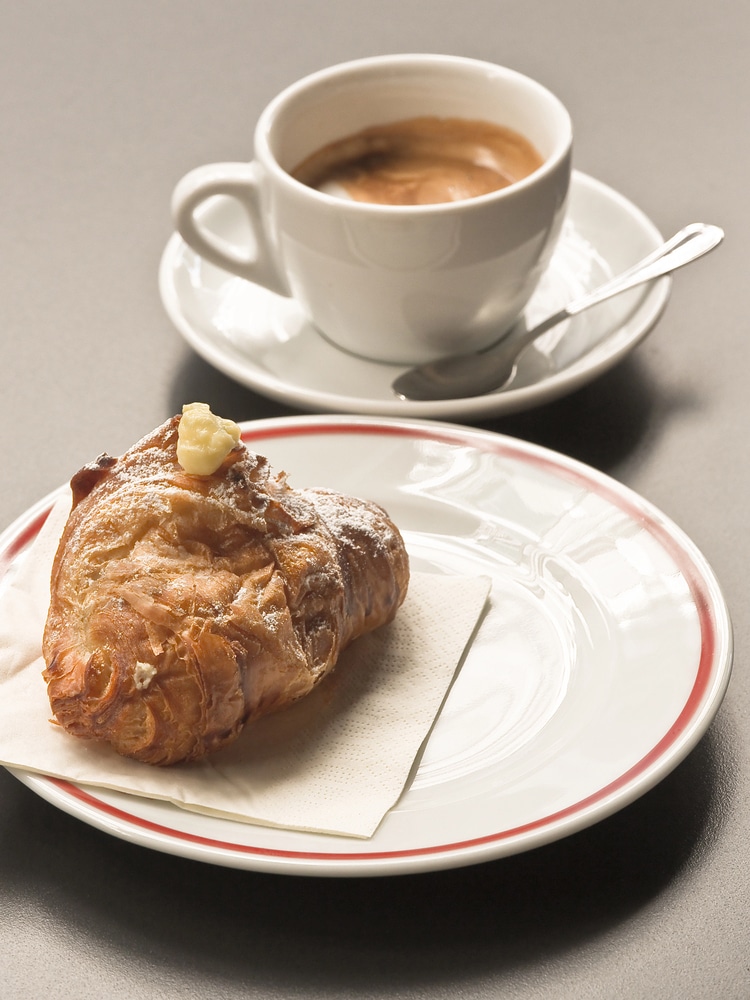
Let’s put all of this together and eat breakfast like a true Italian! Here are a few tips:
1. Coffee is a ritual.
An essential part of the breakfast experience, coffee in Italy is more than just a drink; it’s a ritual. As a visitor, it’ll help to know a bit about Italian coffee culture.
In Italian homes, a moka pot, or caffettiera as it’s commonly called, is a necessity to brew that first cup of the day. If you’ve rented an apartment or vacation rental, you’re sure to find one of these in the kitchen.
If you’re getting your coffee fix at an Italian bar, order a caffè like a local and savor the intense flavor, aroma, and overall atmosphere. But take note, you can’t order a large cup of coffee like what big coffee chains offer—there’s only one size caffè in Italy, and it’s meant to be enjoyed right at the bar.
You can also sit at a table but just know that it might cost a bit more than standing at the bar. And whatever you do, don’t ask for a coffee to go. It’s simply not done in Italy.
2. No lingering at the bar.
Italians believe you should have your morning caffè while it’s hot. Stand at the bar to drink, not sip, your coffee and eat your pastry. Then, move on. The quick, efficient nature of the Italian breakfast routine is part of the local charm.
ProTip: It’s ok to dip your cornetto or biscotti in your morning coffee at home. At the bar, though, I’d skip it if you want to look polite.
3. Cappuccino is for breakfast only.
Just as you’ll discover the rules for eating in Italy, this “unwritten” rule is worth talking about again. Of course, you can technically order a cappuccino any time of day, But, Italians traditionally only drink it in the morning because it has more milk. The heaviness of the milk is thought to be not great for digestion later in the day.
So generally speaking, after the morning, it’s best to switch to an espresso or other coffee options. Otherwise, you’ll likely get a few oddball looks, especially if you’re in smaller towns and villages that are away from more touristy locations. This also goes for ordering a cappuccino after lunch or dinner. Italians simply don’t do this. Instead, have an espresso after a meal to blend in with the locals.
4. Experience the regional nuances of the Italian breakfast.
Tradition Italian breakfast items are largely the same throughout Italy. So when you’re in a region with a breakfast specialty, give it a try! In Genoa, for example, I highly recommend dipping a piece of focaccia in your morning cappuccino. Somehow, they work perfectly together!
5. Embrace the simplicity.
Italian breakfasts are beautifully simple and full of pleasure. Go with it!
Besides, by starting the day with a quick bite, you’re sure to be hungry for your favorite Italian dishes at lunch and dinner. And after you’ve been in Italy for a few days, you start to see how the customs of each meal all work together so that your food and drink intake is all in balance.
Start Your Day with an Italian Breakfast
Next time you find yourself in Italy, embrace Italian breakfast traditions. It’s a fun and delicious way to start your day and experience a small slice of life like an Italian!
What are your questions about traditional Italian breakfast food items and customs?
Like this post? Please share it on social media using the share buttons.

Dellegrazie, what a beautiful religious name. I loved reading this post. However, it made me miss Italy terribly. I miss my people. But thank you.
Thanks so much for reading, Luke