If you’re like most of us, eating in Italy is a big part of your Italy trip planning process. Seriously, what’s an Italian vacation without the food in Italy?!
In Italy, food is a huge part of the cultural experience which is what makes traveling in Italy so memorable and fun! So while, these “rules” at first might seem like amusing, throw-away tips, they’re exactly what’ll save you from embarrassing yourself and overpaying. And in the process, I’m positive it’ll lead to better interactions with the locals you meet and long-lasting memories for you and your tastebuds! Trust me, I’ve done the legwork!
After buying a house in Italy and living in a small village in northern Italy for part of the year, I’ve learned how to eat and enjoy food as the locals do…sometimes the hard way. So, I’ve written these Italy food tips so you don’t have to make the same mistakes.
Shall we mangiamo as the locals do? Andiamo!
Rule #1: Breakfast is Small, Short, and Sweet.
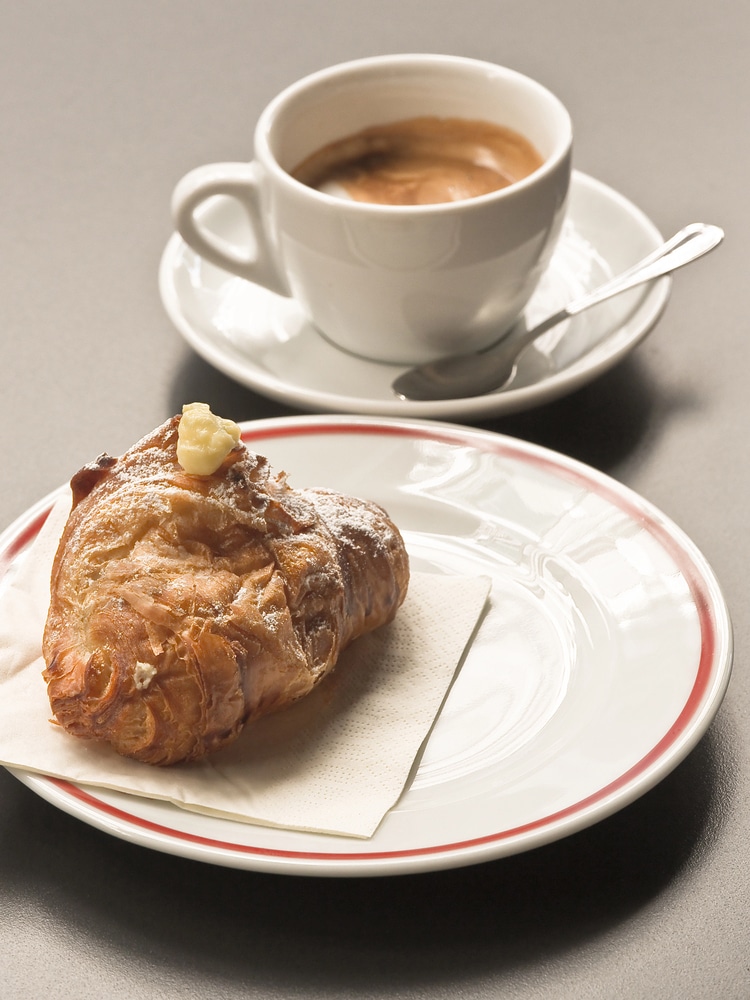
What to Expect: A traditional Italian breakfast is a caffè (espresso) and a cornetto, which looks like a croissant but is essentially a sweeter, more bread-like Italian pastry. They usually have some flavored cream inside like pistachio or hazelnut, but you can also order a cornetto vuoto which has no cream. Outside of a cafe or restaurant catering to tourists, you won’t find eggs, bacon, or pancakes on the menu.
ProTip: If your hotel “includes breakfast,” double check what they offer. If it’s just caffè and Italian pastries, it’ll be cheaper to go to a local bar than pay the extra cost per night at your hotel.
What to Expect: The bar in Italy is a place to get coffee, small bites like a breakfast cornetto, and other drinks like soft drinks or alcoholic drinks. They open in the morning for locals and visitors who want a quick caffeine jolt to start their day.
ProTip: It’s almost always cheaper to stand at the bar to drink your caffè and eat your cornetto. Table seating can be more than double, especially in major touristy areas.
Rule #3: Know How to Order Coffee.
What to Expect: The typical coffee in Italy is a caffè, which is an espresso served in a small demi-tasse cup. This is served throughout the day. In the morning, you can also order things like a caffè Americano (more milk to lower the intensity) or a cappuccino.
ProTip: If you order a latte, don’t be surprised when you’re served a tall glass of milk. Latte is the word for milk in Italian. Instead, ask for a caffè latte so you get coffee with milk.
Rule #4: Understand the Unwritten Coffee-Drinking Norms.
What to Expect: Drink your caffè at the bar within a few minutes. It’s something to drink rather than sip. No matter what type of coffee drink you like, don’t drink it while eating lunch or dinner. And it’s true, you’ll get some oddball looks and even a few grumbles if you order a cappuccino after 11 am.
ProTip: If you’re at a restaurant for lunch or dinner, you will be asked if you want a caffè after you’ve completely finished eating. This includes dessert. Caffè is served after dessert, not with it.
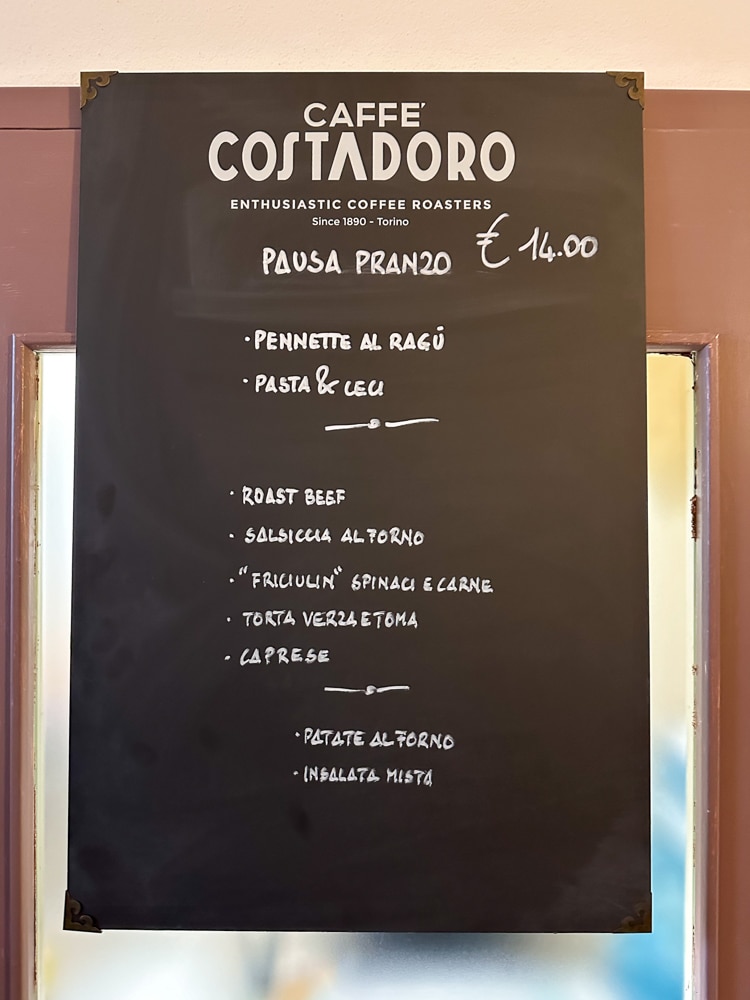
What to Expect: Typically, you’ll see a list of antipasti (starter), primi (pasta), secondi (meat), contorni (side dishes), and dolci (desserts). You don’t need to have each course. Some restaurants, particularly in smaller towns and villages, also offer a fixed price to choose one antipasti, primi, and secondi. This is especially true at lunch or for the Sunday afternoon meal.
ProTip: Salads in Italy are served at the end of the meal, not as a starter or side dish. You should expect a basic salad when you see just “insalata” on the menu and don’t expect a variety of salad dressings. You’ll either be given oil and vinegar to add as you like or it will come already seasoned with olive oil and salt.
Rule #6: Don’t Expect All-Day Service.
What to Expect: Restaurants are typically open from 12:00 – 2:30 for lunch and 7:30 – 10:30 for dinner. Italians eat at set times of the day so restaurants close between meals. Especially in small towns and villages, you must plan your day accordingly or else it may be nearly impossible to find something to eat at other times.
ProTip: If you see an open restaurant outside of these hours, they may only be serving drinks because the kitchen is closed. Places that serve food all day are most definitely for tourists.
Rule #7: Reserve a Table if You Can.
What to Expect: Restaurants book up quickly no matter where you are in Italy. Call, email, or ask your hotel for help to make a “prenotazione.” This is also true in the countryside where there are fewer restaurants and demand from both locals and visitors.
ProTip: Many restaurants have websites with information about how to make a reservation. If there’s no information or the only option is to call, check a website like TheFork.it. You can search for restaurants in your area and book online or through their app.
Rule #8: Water Isn’t Free in Restaurants.
What to Expect: The tap water isn’t served in restaurants. You’ll be asked to choose from still (naturale) or sparkling (frizzante) bottled water. Either way, it’ll come in a small or large bottle and isn’t generally expensive although this will vary from big cities to smaller towns and villages.
ProTip: If you’re given a plastic bottle of water, don’t try to completely remove the cap. It locks into a position so you can pour the water but doesn’t get taken off the bottle.
Rule #9: Tipping Isn’t Expected or Mandatory.
What to Expect: Italy isn’t a tipping culture. It’s not expected. If you do feel compelled to leave something for service that went above and beyond, you can leave a couple of Euros to show your appreciation.
ProTip: If you’re thinking about leaving a small tip, check for “servizio incluso” to see if anything extra was already added for your server. This is generally not the case, but in some very touristy locations, it may be added.
Rule #10: Bills Include a Coperta.
What to Expect: Don’t be surprised to see that restaurants charge a “coperta,” a small fee (1-3 Euros per person) for table items like bread, olive oil, vinegar, salt, and pepper.
ProTip: Don’t confuse this with a tip. This cover charge does not go to your server.
Rule #11: Expect Slower Service than What You’re Used to (in the U.S.).
What to Expect: Waiters in Italy aren’t incentivized by tips. They don’t need tables to turnover quickly to earn more. As a result, they won’t rush you. But, they also won’t check in on you repeatedly to ask about your meal or refill your water. When you’re ready to leave, you’ll need to ask for the bill (il conto, per favore) or simply walk to the payment desk at the front of the restaurant.
ProTip: Italians are passionate about meals. It’s a time to relax, socialize with family and friends, and enjoy good food. You should do the same. And even if you’re hoping to have a simple panini for lunch, take a cue from the Italians. Sit down and take a few minutes to eat. Taking food to go or eating while you’re walking (except for gelato) is just not done.
Rule #12: Know an Americanized Menu When You See One.
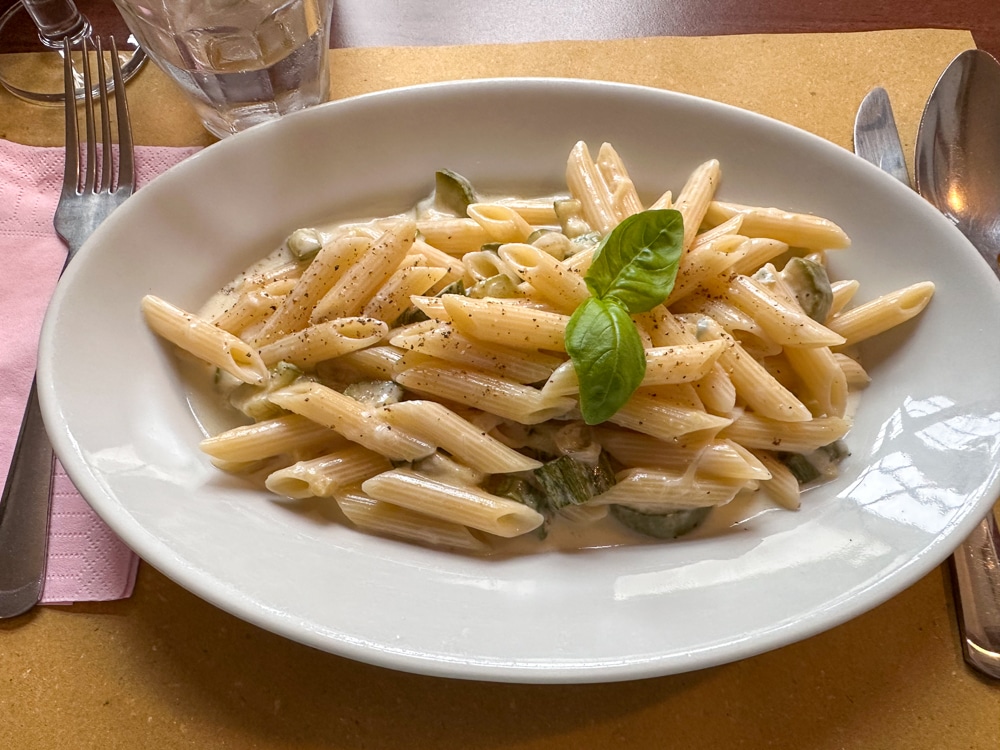
What to Expect: Dishes like spaghetti and meatballs, spaghetti bolognese, garlic bread, fettuccine alfredo, and any pasta with chicken or chunks of meat aren’t Italian. They’re Americanized adaptations. If one of these dishes is on the menu and you want authentic Italian food, look for someplace else that is less touristy.
ProTip: Only eat spaghetti or other long pasta with a fork. Twirling it on a spoon or cutting it with a knife are total no-nos.
The lunch menu in Italian at the restaurant in my village
Rule #13: Italian Menus are a Must.
What to Expect: In popular cities and areas, it’s not uncommon for a restaurant to have a menu in Italian with some English translations. But if a restaurant only has menus in English, it’s a tourist trap. Avoid sub-par food and higher prices by giving it a pass. The same goes for restaurants with photos or numerous languages on the menu. This screams tourist trap.
ProTip: If you need to translate the menu, use Google Translate. From the Google Translate app, you can even take a photo of the menu and the app will translate from the photo.
Rule #14: Bread Is Served on Its Own.
What to Expect: In many restaurants, bread is part of the table service but don’t ask for oil and vinegar to dip the bread or butter to put on it. This is an American adaptation to Italian restaurants. It’s not done in Italy.
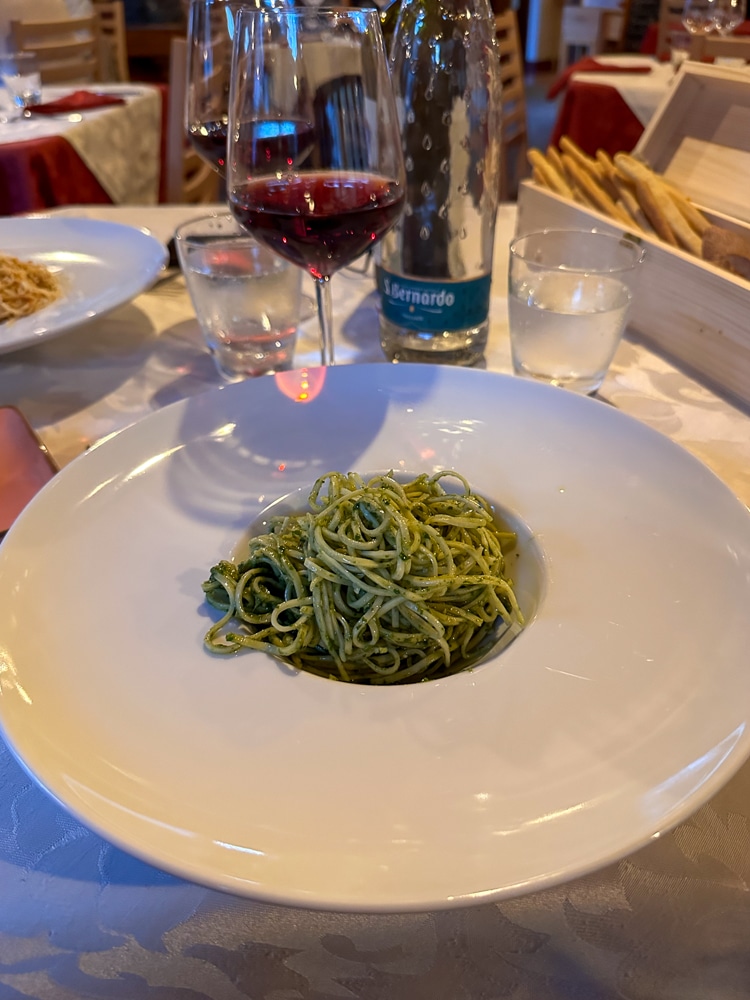
ProTip: Italians don’t eat bread while eating their pasta. But, you should absolutely use some bread to soak up every last drop of the sauce in your dish. In Italian, this is called la scarpetta. When the plate arrives back in the kitchen wiped clean, it’s the ultimate compliment to the chef!
Rule #15: Dine Away from Tourist Attractions.
What to Expect: When possible, don’t eat across the street from the Duomo in Milan or the Colosseum in Rome. Even just a short walk away from the immediate area where the attraction is can pay dividends when it comes to food quality, prices, and overall experience.
ProTip: Avoid restaurants where someone is trying to lure you in. Good quality restaurants don’t need to convince people to come in.
Bagna Cauda in Piemonte
Rule #16: Order Regional Dishes When You’re in that Region.
What to Expect: Each region of Italy is known for certain dishes. Research what they are and try them when you’re there! For example, Puglia is known for seafood. Piemonte isn’t. But Piemonte is known for agnolotti and Puglia isn’t. If you don’t know what dishes are the local specialty, do some quick research to learn more.
ProTip: Look for handwritten menus! It’s likely the dishes change depending on what fresh, local ingredients are available. Even better, if the restaurant says cucina casalinga (home cooking) or the pasta is fatto in casa (made in-house). There’s nothing better than a home-cooked regional dish in Italy cooked by a local chef in that region! And remember, things like grated parmigiano cheese and ground pepper are only offered if the go with the dish you ordered.
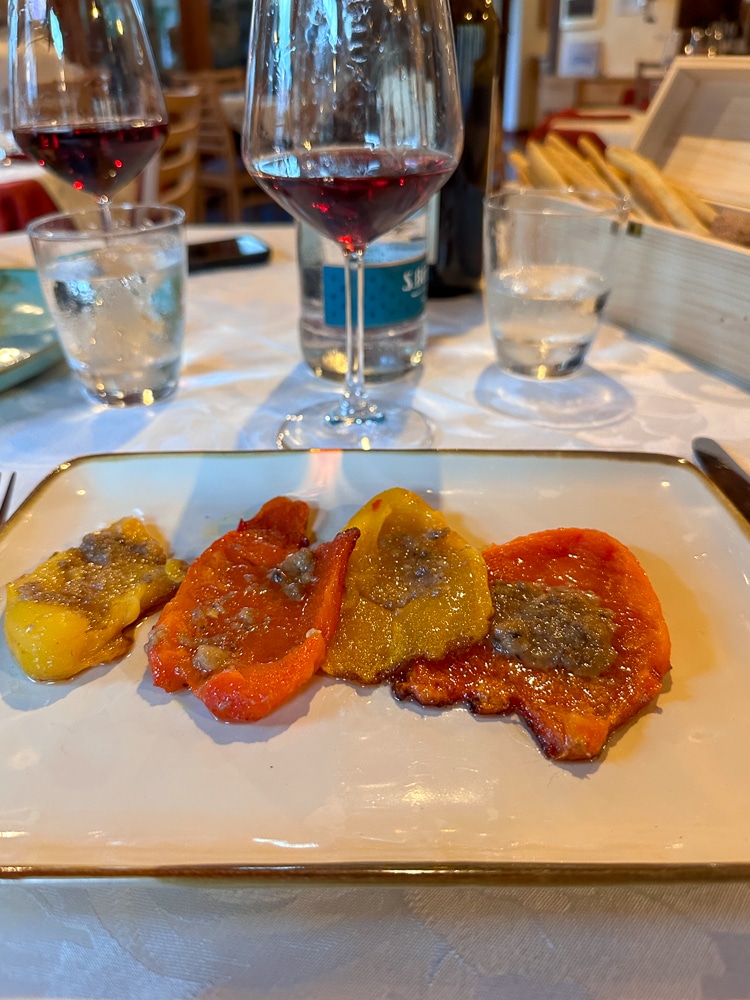
What to Expect: Wine and water are typically the drinks for lunch and dinner. Italians typically drink beer and soft drinks with pizza, although wine is also ok. No need to order an entire bottle of wine if you don’t want one. You can always ask for a glass of wine or order a quarter or half a liter of wine. And even if it’s not listed, you can always ask for the vino della casa (house wine) which is always delicious and usually quite affordable.
ProTip: Digestifs like Limoncello or Grappa are meant to be sipped after a meal. If you order one at the beginning of a meal (like an aunt of mine did once while visiting me in Turin) or knock it back like a shot, you’ll definitely get some shocked, wide-eyed stares!
Rule #18: Know What to Expect When Ordering and Eating Pizza.
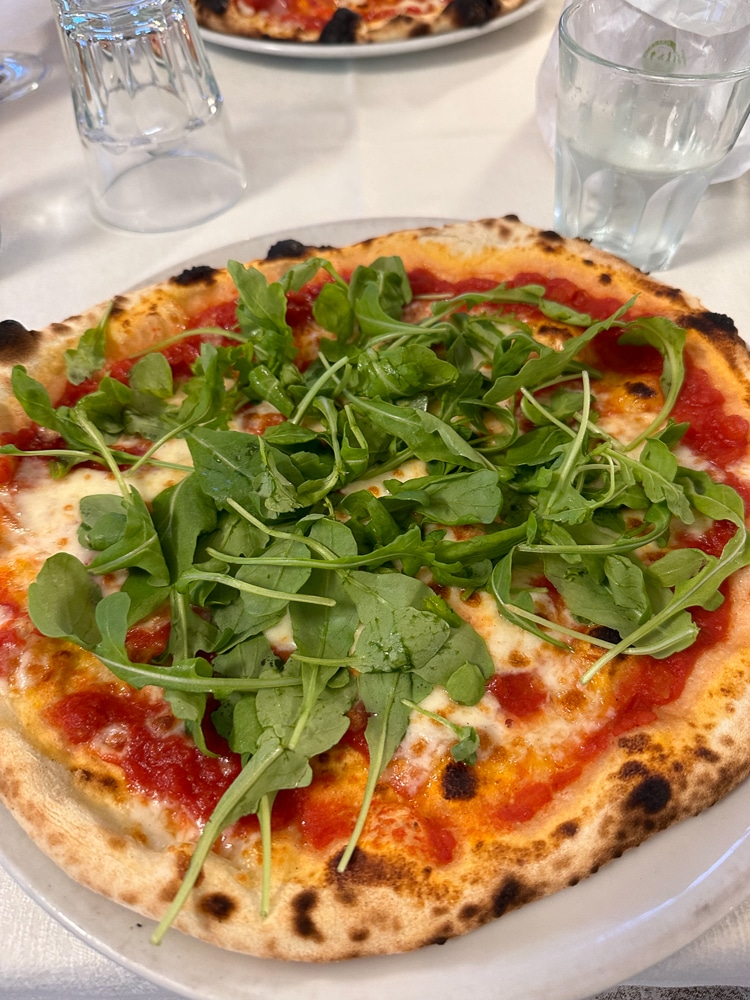
What to Expect: No matter where you are in Italy, pizza only comes in a personal size. Pizzas with specific toppings are listed individually on the menu. You choose from this list of pizzas instead of customizing your toppings. Pizza in Italy doesn’t come pre-cut so you’ll need to cut it with a fork and knife but feel free to eat each slice by hand. Everyone gets their own pizza (no sharing allowed…) and it’s expected that you eat it all which is an excellent rule if you ask me! And whatever you do, don’t ask for pineapple on your pizza (unless you’re actually trying to embarrass yourself and horrify the waitstaff).
ProTip: Not all restaurants serve pizza. (I’ve even seen places in the Cinque Terre that post “No Pizza” signs!) If they do, don’t be surprised if they don’t have it for lunch. Pizza ovens cost a lot to run and a lot of places won’t turn it on except for dinner or only on weekends.
Rule #19: Gelato Is Sacred.
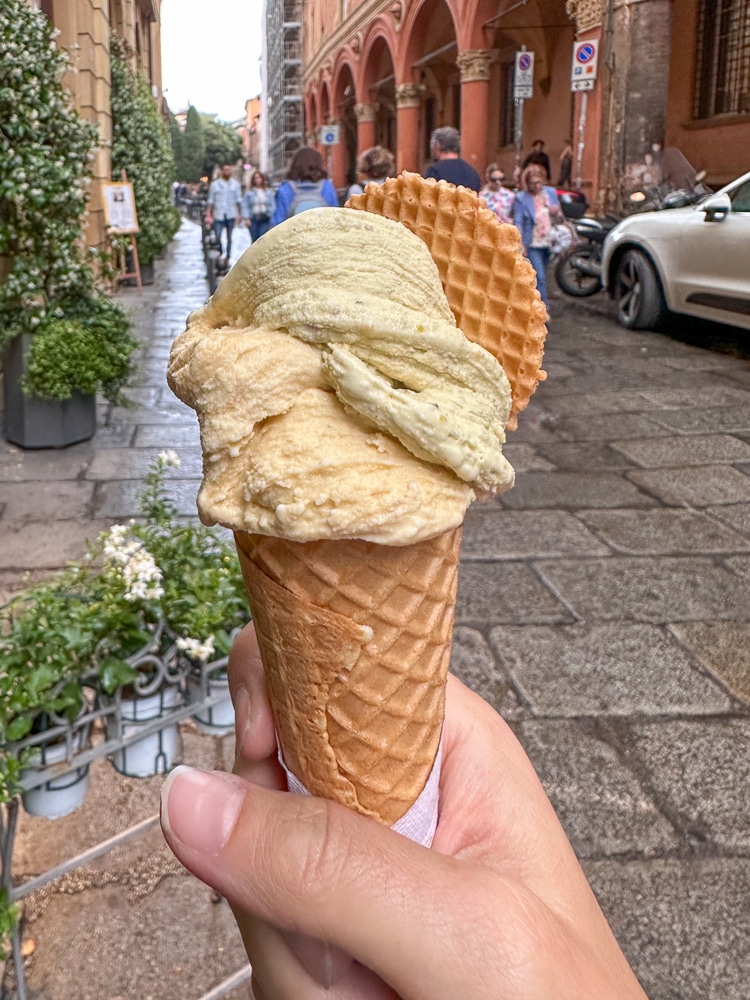
What to Expect: Italians L-O-V-E their gelato. Feel free to have gelato in any season, especially while out for a stroll. Just choose gelaterias where it’s made on-site. The gelato should be in a covered metal tub to keep it cold and fresh, not piled high for all to see. The colors should not look florescent or unnatural (i.e.bright pink or green).
ProTip: No matter which size cup or cone you order, it’s ok to get more than 1 flavor. I always start off with pistachio or dark chocolate and experiment with flavors from there.
Rule #20: Go for an Aperitivo.
What to Expect: This is a pre-dinner drink (usually around 5 or 6 pm) that sometimes includes free snacks. It’s popular throughout Italy, but the concept of aperitivo got its start in the cities of northern Italy. Either way, it’s perfect when you need to rest and refresh from a day of sightseeing.
ProTip:Cena is the word for dinner in Italian. Apericena is a blend of aperitivo and cena and usually includes some small bites with drinks for an early, lighter dinner. It’s also an option if you’d like to skip a bigger meal.
Eating in Italy Is a Bucket List Experience…
And with these Italy travel tips, you’ll enjoy food in Italy just like a local! The only thing left is to head to that ristorante on your itinerary and feast on your favorite dishes. Buon appetito!
Like this post? Please share on social media using the share buttons!
Jackie is a self-professed Italophile. She travels between the U.S. and her house in northern Italy's Piemonte region multiple times a year. She's traveled extensively, both as a solo traveler and with family and friends, throughout northern and southern Italy.