
Visit Piemonte, also known as the Piedmont region of Italy, and you will discover one of Italy’s biggest secrets!
Piedmont is the land of world-famous wine and food and the heart of Italy’s royal past. Set among the region’s bountiful slopes, you’ll find centuries-old hilltop villages, cultural & historic sites, and an endless panorama of stunning natural beauty. Not to mention, the hidden gem regional capital of Turin is easy to reach no matter where your Piedmont itinerary takes you.
Full disclosure, I fell in love with Piemonte and made it my second home. It’s truly one of the most beautiful places in the world with its rolling, green hills and spectacular mountain peaks towering in the background.
In this guide, be inspired by northern Italy’s Piedmont region. Then, use it to plan the Italy trip you’ve been dreaming of!
Where is Piedmont in Italy?
Piemonte (as it’s called in Italian) translates to the “foot of the mountains.” This northern Italian region is positioned perfectly at the base of the Alps in northwestern Italy along the French border. Northern Piedmont touches Italy’s Valle d’Aosta region and Switzerland. To the south, Piedmont is next to Liguria and Italy’s sparkling Mediterranean coast. Lombardy and northern Italy’s capital city of Milan are along Piemonte’s eastern side.
The image below shows a birds-eye view of where Piedmont is in relation to other regions throughout Italy. Its position in between the Alps to the north and the Mediterranean Sea to the south creates long, pleasant spring and fall seasons, warm summers, and shorter, if any, periods of excessive cold in the winter, except for higher mountain elevations. As you’d imagine, the mountains also receive the bulk of the winter snow while the majority of the region at lower elevations sees little to no snowfall.
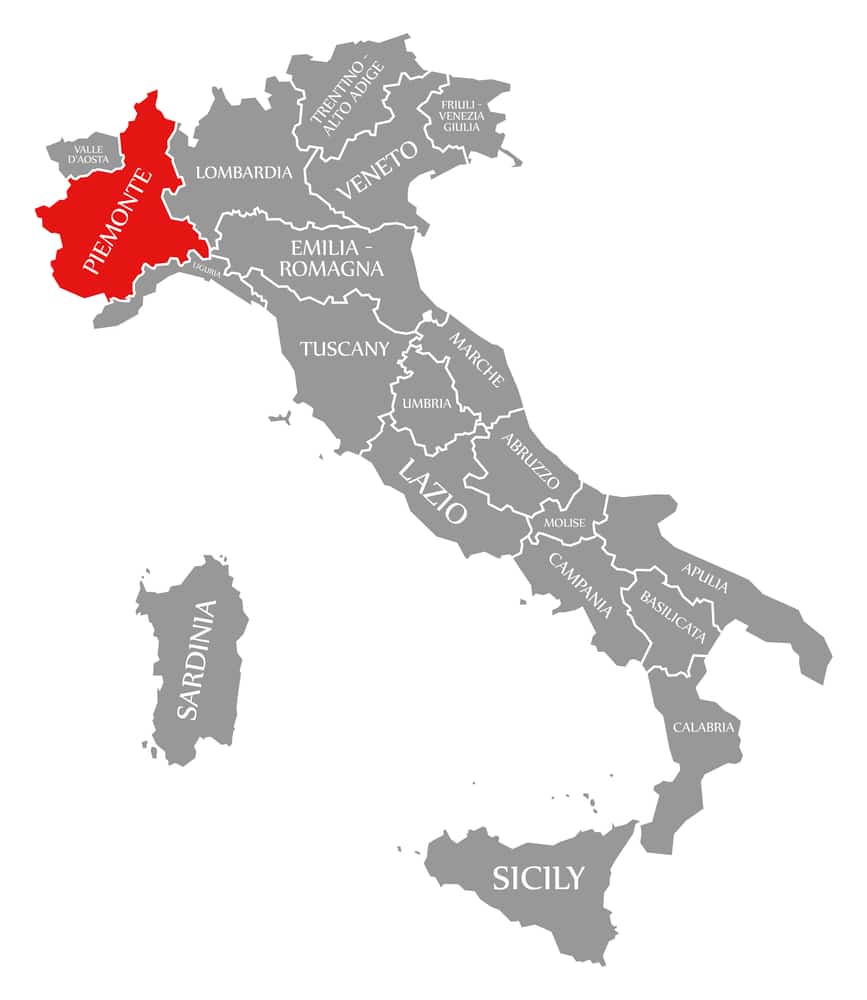
Map of Piedmont Italy
The map of Piedmont Italy below shows in greater detail where some of the region’s towns and areas are in relation to one another.
Torino is the capital of Piedmont, with its elegant piazzas and royal palaces. Asti and Alba are the gateways to the UNESCO-recognized Langhe-Roero-Monferrato area known for slow food, top wines, black and white truffles, and hazelnuts. Further north, you’ll find Lake Orta and Lake Maggiore (also partially in Lombardy) shimmering against an Alpine mountain backdrop and with no shortage of history or outdoor adventures.
Reasons to Visit Piemonte
As with the other regions of northern Italy, Piedmont has a character and charm all its own. However, compared to other nearby regions like Lombardy or Liguria, the region has been left unexplored by the majority of visitors.
That means you can spend time in Piemonte, off the main tourist route, experiencing a more local, authentic corner of Italy. All while still enjoying UNESCO World Heritage Sites (Piemonte has 5), historic sites, a countryside dotted with one medieval village after another, world-class wine, and 40+ Michelin Star restaurants.
Here are just 10 of the reasons why you should visit Piemonte!
1. Torino
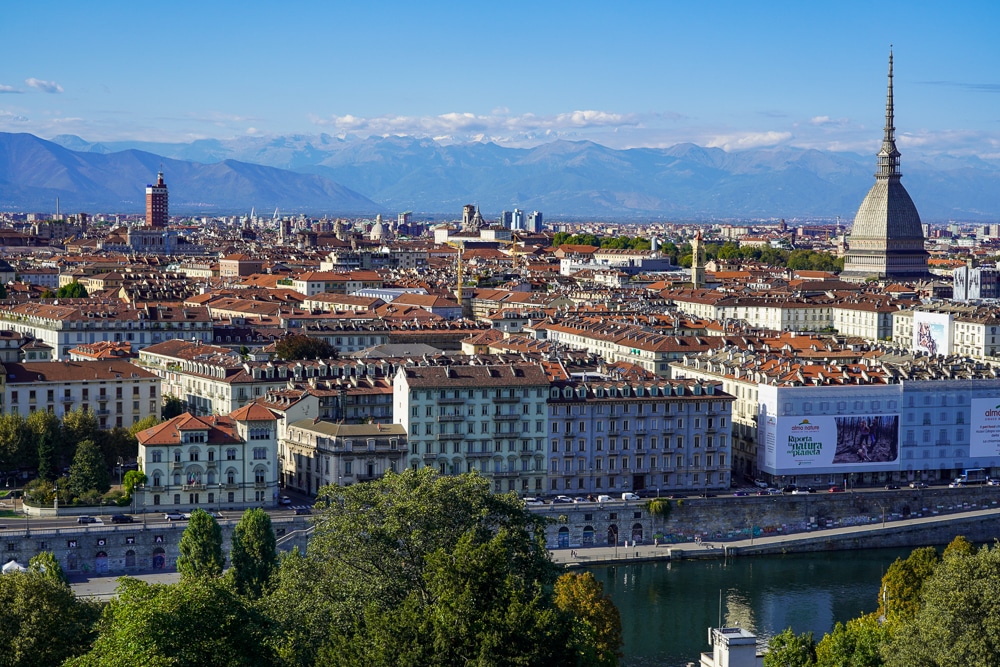
At the heart of the Piedmont region of Italy is the city of Turin, or Torino in Italian. It was the first capital of Italy after the Italian unification in 1861 and makes a great place to start your northern Italy itinerary even if you have just a day in Turin!
Sitting along the western banks of the Po River, Torino is at once elegant and gritty. In its historic center, you’ll find baroque architecture, refined piazzas, and majestic royal palaces used by the House of Savoy, Italy’s former monarchy. Explore further and you’ll recognize Turin’s industrial side. It’s home to car industry giants like Fiat and Alfa Romeo.
The city has a range of fantastic museums. First-time visitors to Turin should visit the Palazzo Reale, the Royal Palace of Turin, located in Piazza Castello. The gorgeous palace is part of the UNESCO World Heritage Site collection of royal Savoy residences and dates back to the 16th century. In the same square, you’ll find Palazzo Madama which is also part of the House of Savoy palaces. Once used for guests of the royal family and home to the first Senate in the Kingdom of Italy, the palace is now a museum with a collection of paintings and decorative arts going back as far as the Middle Ages
The city’s iconic dome and spire building, the Mole Antonelliana, has a panoramic terrace on top that offers fantastic views of the city skyline and the Alps that surround the city and were used for skiing when the city hosted the Winter Olympics in 2006. Inside, you’ll find the National Museum of Cinema with movie memorabilia and history. Turin’s Egyptian Museum is one of the most famous in the world. While the fascinating Automobile Museum of Turin has an incredible collection over several floors telling the story of how private transportation evolved over centuries. Car lover or not, you’re sure to appreciate this unique museum.
Art lovers won’t want to miss the Pinacoteca Agnelli at the top of the Lingotto where you can admire the captivating collection of paintings acquired by Giovanni Agnelli, the founder of Fiat. While you’re there, you can also visit Fiat’s test track rooftop.
In between museum-hopping, spend time strolling under Torino’s porticoed sidewalks and through the historic center between Piazza Castello and Piazza San Carlo. Stop at a historic cafe for the city’s signature drink, a bicerin, which is made of 3 layers – espresso, chocolate, and cream. Or indulge in a decadent mug of hot chocolate. After all, Turin is the chocolate capital of Italy with a historic connection to hot chocolate going back to the mid-1500s and the Savoy family.
Torino is a classic Italian city and a great place for anyone who wants to take in prized cultural, artistic, and historic sites, savor the rich Piemontese cuisine, and experience a city that offers a true taste of local culture.
ProTip: La Venaria Reale is another of the UNESCO-recognized Savoy residences and it’s located just outside of Torino. By car, it’s about a 20-minute drive. Otherwise, you can take the train or bus or even cycle there along the Corona Verde route that connects the Royal Palaces in Piemonte.
2. Slow Food
The slow food movement is exactly as it sounds. It’s the opposite of fast food and it began in Bra, a town in Piemonte after outrage over the first McDonald’s opening in Rome decades ago. The result is an amazing destination for foodies and anyone who loves to eat delicious food!
Piedmont prides itself on restaurant experiences that are like homecooked meals using only the most local ingredients. These foods must have been produced in a way that values the work of the farmers and people who produced them who in turn promise to respect the environment and local ecosystems while making these ingredients.
How does this translate to you as a visitor to Piedmont? Whether you’re out for a fine dining experience at a Piemontese restaurant in Torino or eating at a small restaurant in a village on a countryside hilltop, you’ll be able to try local dishes with the freshest ingredients.
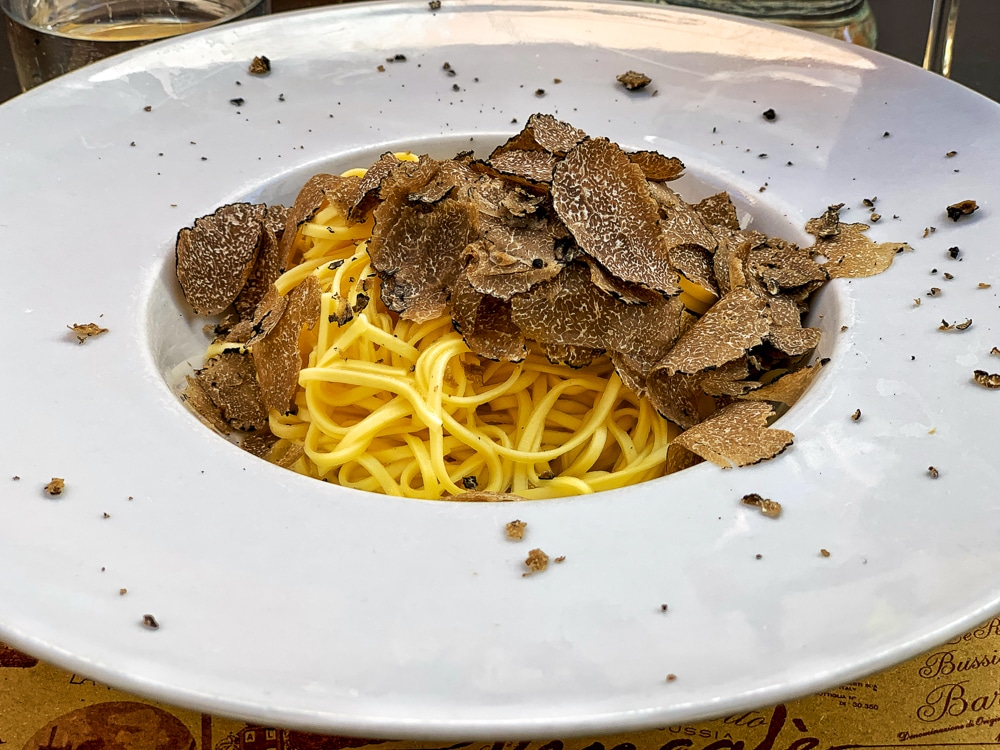
This could be a selection of traditional recipes for popular dishes of Piedmont like Bagna Cauda (a creamy sauce made of anchovies and garlic), Vitello Tonnato (thinly sliced veal cooked in wine and topped with a sauce of tuna and cream), or a dish of Agnolotti (stuffed pasta with a meat sauce or served with butter and sage). Other popular regional dishes include risotto, tajarin (a long, thin egg noodle served with ragu or truffles), or beef braised with Barolo, one of the famous red wines produced in Piedmont.
Chefs throughout the region use this slow food philosophy – generational recipes and local cheeses, meats, and seasonal fruits and vegetables – to create inventive regional dishes. The proof comes from Piedmont’s 40+ Michelin Star restaurants and countless others who deserve just as much recognition for their flavorful dishes.
As you learn more about the food in Piedmont, you’ll inevitably realize that Italian food is so much more than spaghetti with tomato sauce or lasagna. That alone is reason enough to spend a few days visiting wonderful Piemonte Italy and in the process, getting a more accurate look at Italian culture.
3. Piedmont Wine Region
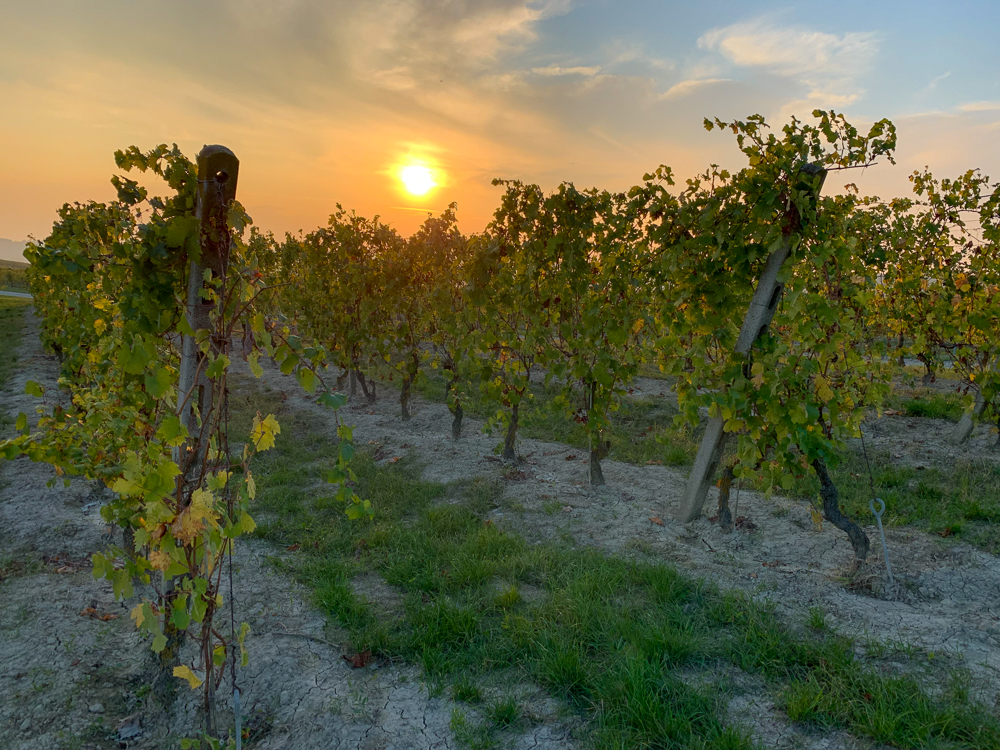
Piemonte is a wine-lovers paradise. Italy designates its best wine-growing areas with DOCs (high-quality wines) and DOCGs (highest-quality wines). Piedmont has 19 DOCGs which is the most of any region in all of Italy. There are also 41 DOCs which is the same as Tuscany.
The sloping landscape of Piedmont is perfectly positioned between the cooler air of the Italian Alps to the north and the milder air of the Mediterranean Sea to the south. This creates cooler nights, foggy mornings, and days with lots of sun which amount to perfect growing conditions for the region’s grapes.
The region is famous for its Nebbiolo, Barbera, and Dolcetto grapes for red wines like Barolo, Barbaresco, and Barbera d’Asti. The Arneis and Moscato grapes are used for white wines and fizzier, sweeter wines. What adds to the region’s reputation as a wine-producing powerhouse is the number of indigenous grape varieties. Lesser-known grapes like Grignolino, Ruche, Freisa, Vespolina, and Malvasia produce interesting flavor profiles all their own and are growing in popularity.
I love favorites like Barolo and Barbera but I’m equally in love with Ruche and Grignolino wines. What’s more, as you travel in the Langhe, Roero, and Monferrato, Piedmont’s main grape growing areas, you’ll find numerous wineries owned by smaller growers who are more than happy to welcome you in for a tasting and tour. With a little exploration, you’ll easily taste (and maybe even bring home) bottles of wine that you won’t find outside of Italy.
If you’re hoping to visit Italy in search of the best wines, you must visit Piemonte! Italian wine doesn’t get better than what you’ll taste in Piemonte.
4. UNESCO-Recognized Langhe Roero and Monferrato
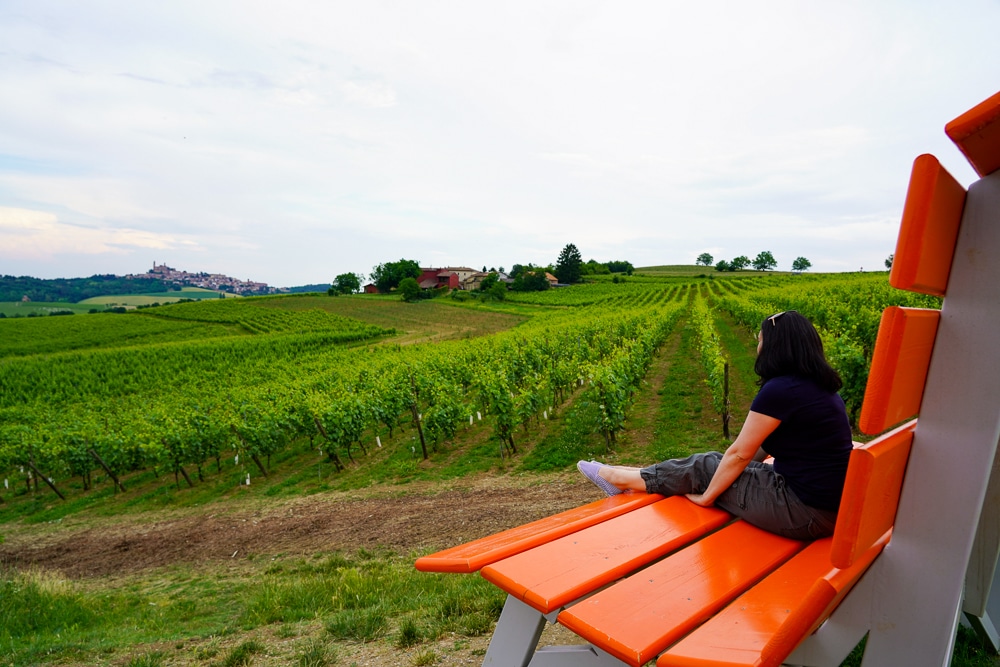
Imagine rolling green hills blanketed in grape vines with ancient villages and castles perched above the slopes as far as the eye can see. Then, picture blue skies and the shimmering peaks of the Alps dazzling like a mirage in the distance.
No, this isn’t Tuscany. This is Piemonte’s Langhe, Roero, and Monferrato, a land known not only for its world-famous wines and slow food but also its jaw-dropping natural beauty.
Spend time in these hills of vineyards and you’ll feel as if time has stood still for hundreds of years. Visit a local winemaker to hear the story of how generations of the same family have pressed the grapes, aging them in wooden barrels, and storing them in infernots, carved-out caves in the tufo stone in the ground below. Or head out into the forest with a local truffle hunter and his dog to learn the secrets of finding the ever-elusive white truffle.
Come for the wine and food but leave time to cycle the winding roads past chapels from long ago and through sleepy towns and villages. You can admire the view of the valley from one of the area’s “Big Benches.” Or walk the trails through the vineyards and hazelnuts growing on the hills only to find you’ve landed in a spot all your own with a gorgeous swirling 360° panorama of the countryside.
Visit the 11th-century Castle of Grinzane Cavour to learn about the history and types of grapes grown in the Langhe, Roero, and Monferrato, as well as about Camillo Benso, the Count of Cavour who is credited with developing the production of wine in the region. The Castle is full of memorabilia from long ago and offers stunning views of the vineyard landscapes of the Langhe, Roero, and Monferrato.
Visit villages like Nieve, La Morra, Cella Monte, Barolo, Cherasco, Olivola, Montemagno, and many others to wander along quiet village lanes only to “discover” the best restaurant, the most unforgettable grappa tasting, or a seemingly forgotten church or castle. After all, the Langhe, Roero, and Monferrato regions of Piedmont reveal their gems only to those who are willing to take the time to find them.
5. Lake Maggiore and the Borromean Islands
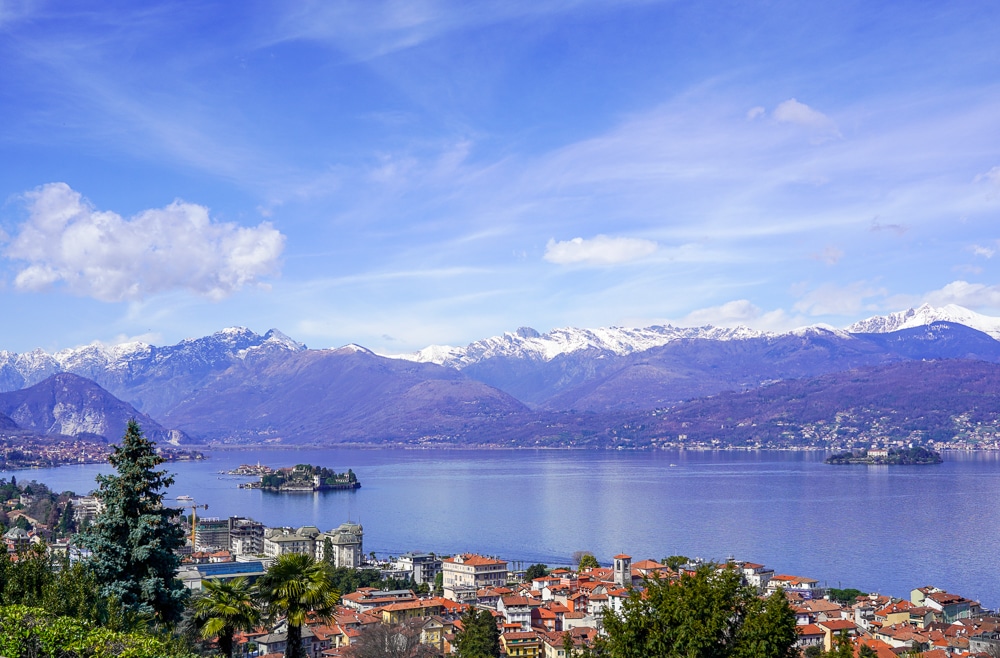
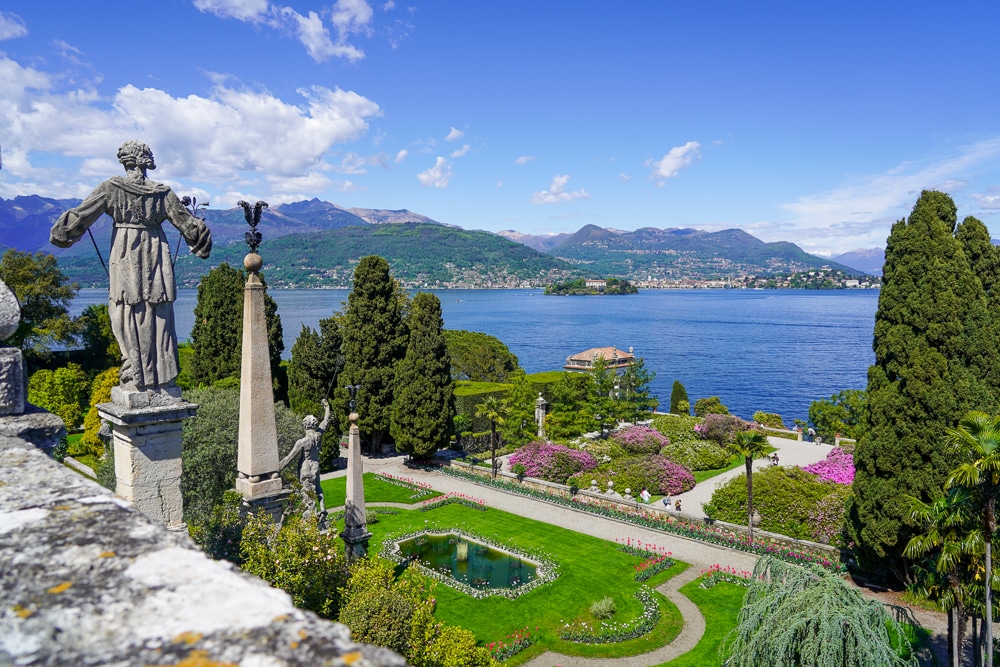
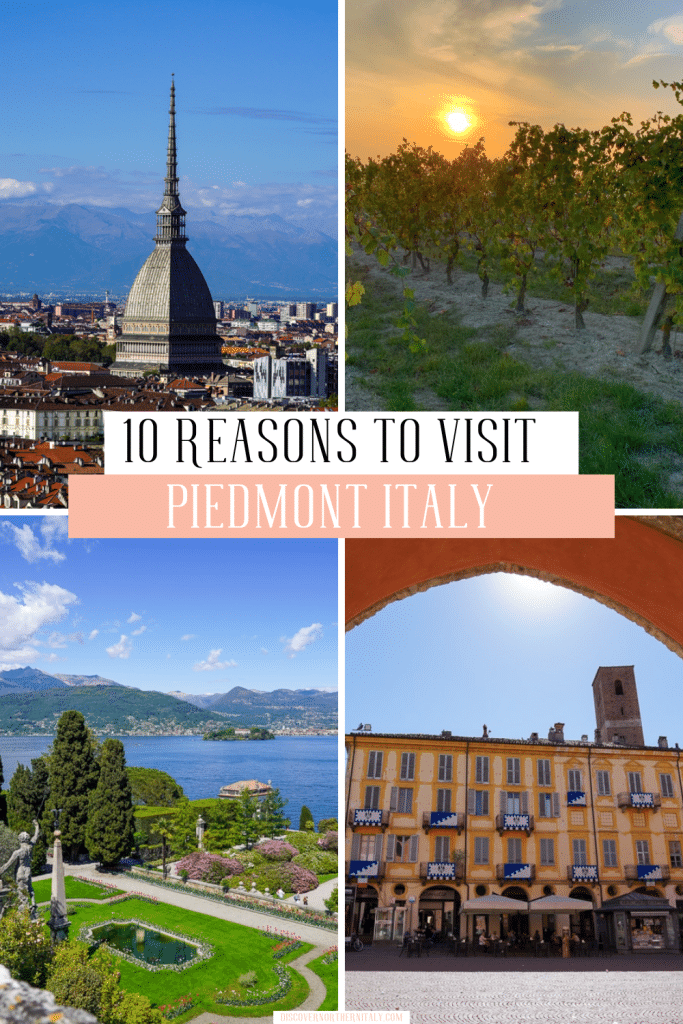
Islands in Piedmont? Yes, you read correctly! The Borromean Islands are part of Lake Maggiore which is shared between Piedmont and the region of Lombardy in Italy and Switzerland to the north. There are main 3 islands, Isola Bella, Isola Pescatori, and Isola Madre, plus 2 smaller islets, all on the Piemonte side of the lake.
These gorgeous islands can be accessed from the popular town of Stresa. Water taxis shuttle visitors between the islands to enjoy the food, views, postcard-perfect gardens with their white peacocks, and the Borromean Palaces on Isola Bella and Isola Madre. Dating back hundreds of years, the Palazzo on Isola Bella stuns with its baroque artwork, spectacular tapestries, and grottoes covered in shells, stones, and fossils from the lake that’ll leave you at once baffled and in awe over the work it must have taken to create these rooms.
The gardens on Isola Madre and Isola Bella set among Lake Maggiore and the Alpine foothills are works of art all by themselves. In spring and summer, the colors of the blooming flowers along with the statues and fountains in the gardens are simply beautiful. If you’re like me, you’ll be wondering, “How did one place end up with so much beauty!?” I confess to visiting these gardens many times myself because of this!
Isola Pescatori means Fishermen’s Island and as its name suggests was the home of fishermen who made a living fishing the lake. Today, the island is the only one of the 3 islands to be open all year (about 25 people live on the island), although spring, summer, and early fall are the busiest times of year to visit.
Most people come to stroll along the island’s circular promenade and to eat at one of the many restaurants on the island. With some extra time, though, you can easily visit the Church of San Vittore and a small fishing museum to learn about Lake Maggiore’s marine life and what life was like as a fisherman here.
Plus, there are so many more things to do at Lake Maggiore if you’ve got a few days to spare.
If you’re wondering whether or not it’s worth it to visit the region of Piemonte, look no further than Lake Maggiore and the Borromean Islands. This area deserves a top spot on your northern Italy itinerary.
6. Lake Orta
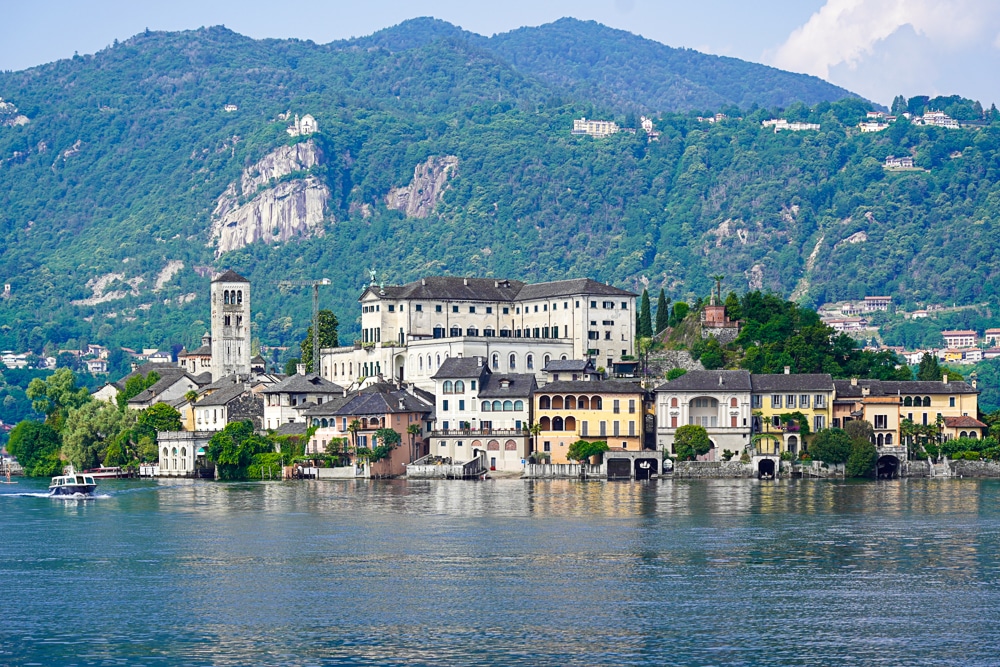
Tucked away on the western fringe of northern Italy’s lakes region is tiny Lake Orta. This beautiful lake is often overshadowed by its nearby cousins, Lake Maggiore, Lake Como, and Lake Garda. But if you take the time to visit Lake Orta and its most romantic town and island, Orta San Giulio and the Island of San Giulio, you’ll have stumbled upon one of the true hidden gems of Piemonte.
Walk the cobblestone lanes heading through the village and toward the central Piazza Motta. Together with the lake views, the colorful facades of the buildings and the 16th-century stilted town hall with its frescoed facade are straight from the movies. Whether you stop for a coffee, lunch, or stroll with a gelato, the scene could not be more quintessentially Italian.
Wander the village and you’ll discover Michelin-starred restaurants, public gardens along the lake where you can sit and enjoy the views, shops, and historic churches.
Take a water taxi across to the Isola San Giulio to see the 12th-century Basilica (with roots dating back to the 4th century) and its marvelous 14th-16th century frescoes inside. Then, walk the circular route around the island called “The Way of Silence.”
The island is home to a monastery and the purpose of the short walk is for contemplation and reflection. It’s also incredibly scenic with little alleyways jutting down towards the water or partially covered doorways where you can peer into pretty lakeside courtyards.
Elsewhere along the shores of Lake Orta, you’ll find a beach where you can swim, relax, or rent kayaks to go out on the lake. There are hiking and cycling routes, too. Above the lake, take the time to visit the beautiful Sacro Monte of Orta (see below) and birds-eye lake vistas.
7. UNESCO World Heritage Sacri Monti
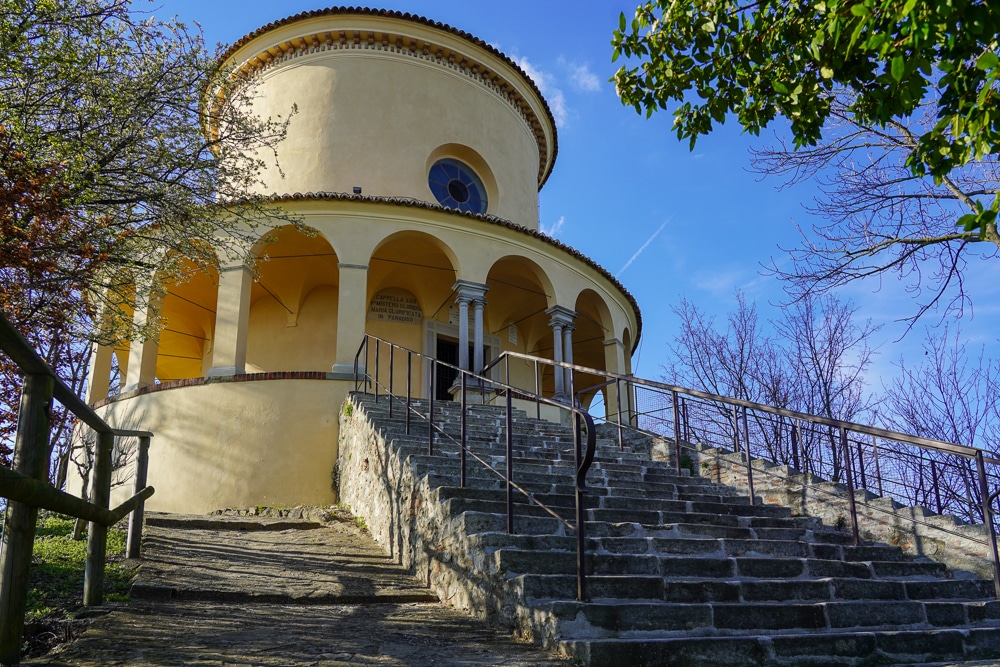
The Sacri Monti are a collection of 9 sets of chapels set in the northern Italian regions of Piedmont and Lombardy. Together, they are a UNESCO World Heritage Site. Piedmont has 7 of these sites. The chapels of the Sacri Monti, meaning sacred mountains, date back to the 16th and 17th centuries. Each set of chapels tells different stories from the Bible and were built as another pilgrimage option for the devoted who could not reach the Holy Land mostly because the way became increasingly dangerous.
These chapel complexes are set up on mountain perches and inside hold Renaissance and Baroque artistic treasures. Frescoed walls and ceilings along with human-sized wooden carved figures create life-like dioramas that are unique and captivating. Combine this with the gorgeous setting of the Italian Alps and green slopes of the foothills and you can’t help but recognize the spiritual relationship between the chapels and the nature they’re set in.
The Sacri Monti sites have walking trails connecting the chapels at each site or even to the sites themselves. Most also have stunning overlooks with Piemonte’s gorgeous mountains, lakes, hilltop villages, and valleys in the distance.
In Piedmont, you’ll find Sacri Monti in Varallo, Crea, Orta, Oropa, Domodossola, Ghiffa, and Belmonte. Varallo is the oldest, founded in 1486, and has chapels with hundreds of sculptures and frescoes by famed Renaissance artists.
The Sacro Monte in Orta tells the stories of St. Francis and has spectacular views of Lake Orta and Isola San Giulio below. I also love the Sacro Monte di Crea just near my house in Monferrato. The winding path loops you around the chapels on a 1.5-mile path. And although the chapels have grates at the entrances to protect the artwork inside, you can (and should!) still stop to admire the painted walls and ceilings inside.
8. Gran Paradiso National Park
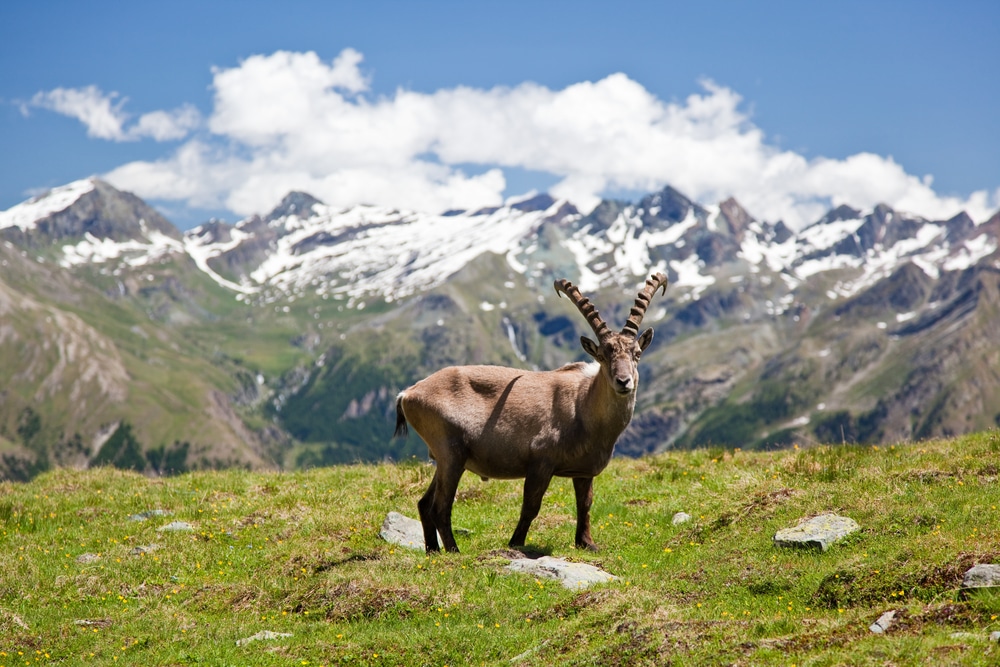
Once a hunting area for Italy’s royal Savoy family, Gran Paradiso National Park is now Italy’s oldest national park. It sits partially in Piedmont and the Aosta Valley, Italy’s smallest region to the north, among the Graian Alps. The park’s Alpine beauty is jaw-dropping. From mountain peaks, glaciers, meadows, lakes, and waterfalls, the natural landscapes are some of the prettiest in all of Italy. The park is also home to the protected ibex, the symbol of the park, and countless other animals.
Outdoor enthusiasts can enjoy the park in all seasons whether to hike, bike, camp, rock climb, ski, or snowshoe. Some hiking trails are perfect for a day hike while others stretch across several days and require stays in mountain rifugios and inns. You can also learn more about the park at its Visitor Centers and historic sites within the protected natural area.
Ceresole Reale is on the Piemonte side of the park, you can learn about the park’s landscapes and how humans and mountain goats have coexisted since prehistoric times. While at other centers, you can see the ways of mountain farming or gain a better understanding of high-altitude landscapes and the plants and animals that survive there.
If you’re visiting the region of Piemonte, planning some time in Gran Paradiso National Park is a great way to diversify your trip. It’s easy to plan an itinerary that includes the sights and city vibe of Turin, the wine-growing countryside of the Langhe and Monferrato, Lakes Maggiore and Orta, and also includes time in the Alps which are ever-looming as you travel through Piedmont.
9. Sacra di San Michele
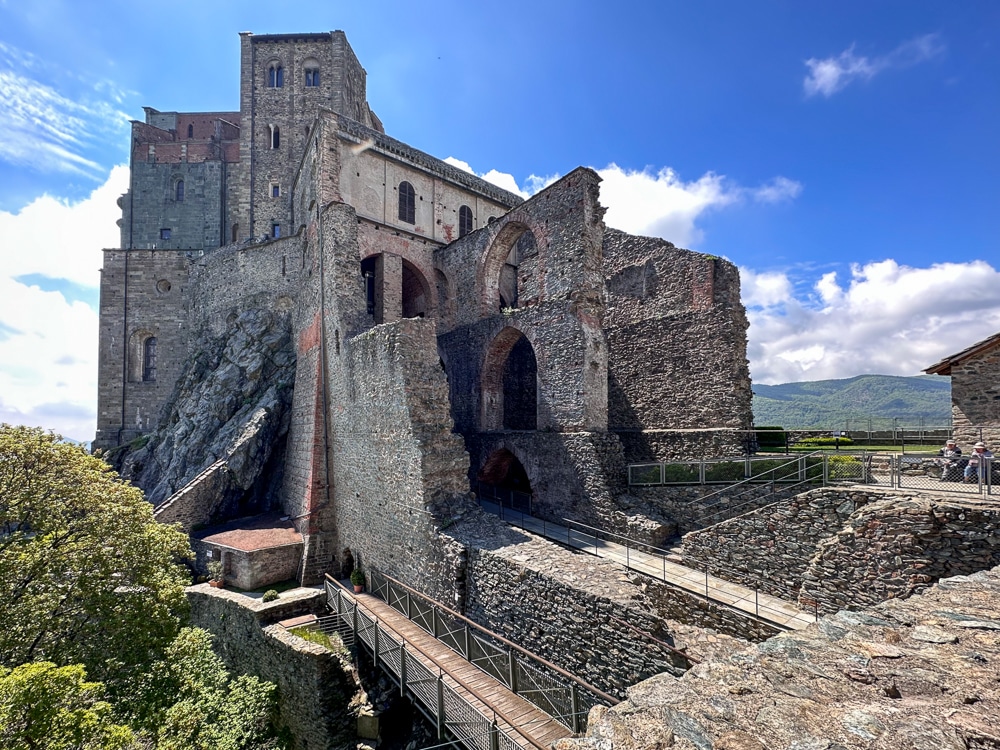
In the Val di Susa (Susa Valley) west of Torino, you’ll come upon the towering Sacra di San Michele. This monastery dates back more than 1000 years and sits on top of Mount Pirchiriano. On its own, it is an incredible example of Gothic and Romanesque architecture. Factor in that the religious complex sits more than 3,000 feet high and that the 130+ feet tall stone structure is built into the mountain itself and you can’t help but be amazed at how this impressive and imposing abbey came to be.
What’s perhaps most mysterious of all is that the Sacra di San Michele sits along a Sacred Line thought to symbolize the sword that Saint Micheal used to send the Devil back to hell. Seven sanctuaries from Ireland to Israel, including other famed sites like Skellig Michael and Mont Saint Michel, sit along this perfect line with no logical explanation about how they all landed exactly in these spots. The drama of the monastery’s position and magnitude was not lost on famous author Umberto Eco who used the Sacra di San Michele as the inspiration for his setting in his best-selling novel, The Name of the Rose.
Today, you can hike to the monastery from one of several hiking trails. I hiked from the village of Sant’Ambrogio below. The hike is challenging but follows the way pilgrims took to reach the sacred site above. From the village, you’ll follow the steep and rocky mule tracks through the forest and past a smaller village above before reaching the Sacra di San Michele. Along the way, you’ll pass the Stations of the Cross and picnic tables where you can stop for a break. If you do this hike, plan for a full-day outing to do the round-trip hike and visit the monastery.
You can also drive up to the Sacra di San Michele. I’ve also taken this route which is certainly much easier than the full hike! From the parking area, there’s an easy 15-minute walk to the entrance. In addition to the historical, religious, and artistic things to see, you’ll be rewarded with sweeping panoramic views of the Susa Valley.
10. Alba
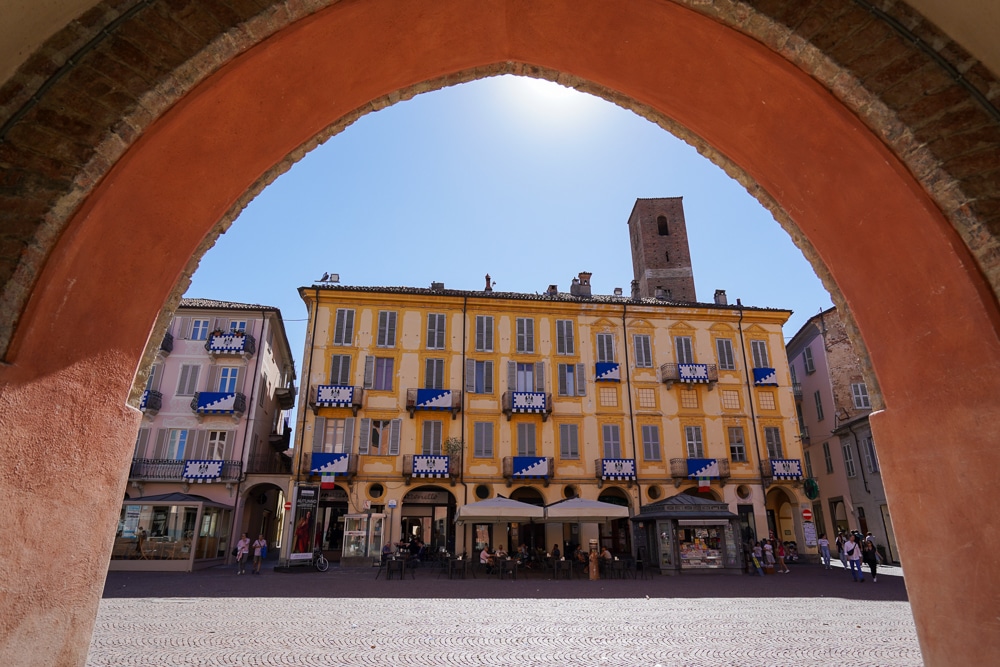
The ancient city of Alba is another reason to visit the region of Piedmont. Alba’s roots date back to before Roman times. Eventually, it became part of the Roman Empire and was named Alba Pompeia. (You can see some of the city’s Roman and medieval ruins on an underground archaeologist-led tour.)
Today, Alba is at the heart of the Langhe wine region in the province of Cuneo and is part of the UNESCO-recognized region mentioned above. The city hosts its annual International White Truffle Fair when this elusive truffle is auctioned off to bidders from around the world who pay big sums of money to land one of the prized truffles. The city is also known for the vineyards lacing the hills surrounding the city and its fine dining, with 7 Michelin-awarded restaurants within Alba.
Piazza Risorgimento (also known as Piazza Duomo) is the city’s central square and is home to the Duomo of San Lorenzo, a 12th-century Romanesque Cathedral built on top of what is believed to be a Roman Temple. In fact, inside the Cathedral, you can look through cut-outs in the floor to the ruins below including things like an ancient baptismal font.
The square also has the historic town hall (Palazzo Comunale) and one of the remaining medieval towers of Alba which used to have hundreds more and were a status symbol for rich and powerful families. Beyond this, the historic city center of Alba is easy to walk through to discover more of the city’s churches and squares, as well as places where you can study some of the ruins that lie just below street level.
On Saturdays, the town of Alba has its weekly market where you can buy fresh produce, meats, cheeses, and bread, as well as regional specialties and other goods like clothes. It’s a great way to experience Piemontese and Italian culture, as well as find some delicious souvenirs to bring back home.
Should You Visit Piemonte?
I’ve already admitted that I’m biased having chosen to make Piemonte my second home. But truly, this northwest corner of Italy at the foothills of the Alps is something special! This list of reasons to visit Piemonte is just the beginning.
Whether you’d like to museum-hop in Torino, taste fine wine and slow food in the Langhe and Monferrato, discover sites of historical and spiritual importance, enjoy part of northern Italy’s lake district, or hike in the Alps, you’ll find it here in Piedmont. In the process, you’ll get to enjoy a corner of Italy that isn’t on everyone’s radar…yet.
So, what are your questions about visiting Piemonte?
Like this post? Please share it on social media using the share buttons.

Loved this article- We are leaving in early November for Florence then as the seas were too
rough/ ferries closed we have decided to skip the Amalfi Coast and do a Northern Italy trip
the 2nd week.
I would love to know where those gardens are in the last photo, just under the caption –
Should you Visit Piemonte?
So beautiful! Thanks for the articles- I am going to continue reading..
Thanks so much for reading, Diana. So glad you loved the article and were able to travel in northern Italy. It has so many underrated gems! The gardens in the photo are on Isola Bella, one of the Borromean Islands on Lake Maggiore. I highly recommend visiting the palace and the gardens there, plus the other islands, Isola Pescatori and Isola Madre (which also has more gardens.) It’s such a pretty spot and it’s easy to island hop for a full day at the lake. Hope you can make it for a visit. 🙂
Dear author,
I read in the auto-biography that Piedmont is the origin of the late Pope Francis and his ancesters. This made me curious and look up.
So glad I saw this article and enjoyed reading it. I want to visit Piedmont of Italy someday. Wonder when it is a good time through the year to visit and how many days to not rush?
I visited Rome, Venice, Florence, Pisa, etc in 2016. I want to go back to see Piedmont and experience Italy in a different vibe.
Thanks your article and time,
JP Huang
Thank you for reading. Fall is a great time to visit Piemonte or spring. Fall brings the grape harvest and truffle season. Depending on what you wanted to do, you could easily spend a week in Piemonte. You could visit Torino and some of the smaller cities like Alba or Asti, Lake Orta or Maggiore, the Langhe-Monferrato wine area, and more. Hope this helps and thank you for reading!