
All it takes is a single visit to Italy and you’ll immediately see that Italians are in a serious relationship with their coffee. If you embarrass easily, consider yourself forewarned. PDAs happen in every piazza and cafe from north to south. And from this devotion has sprung a coffee culture in Italy as intense as any caffè you’ll find from Torino to Trieste.
The first coffee beans arrived in Italy through the port of Venice in the 16th century and in no time, Italians were smitten. Today, you’ll find several options to choose from when ordering your coffee in Italy, as well as super important rules to know so that you can blend in. After all, isn’t part of the fun when traveling or staying in Italy immersing yourself (or at least trying to) in the culture!?
Andiamo! Let’s get some coffee in Italy!
Coffee in Italy 101
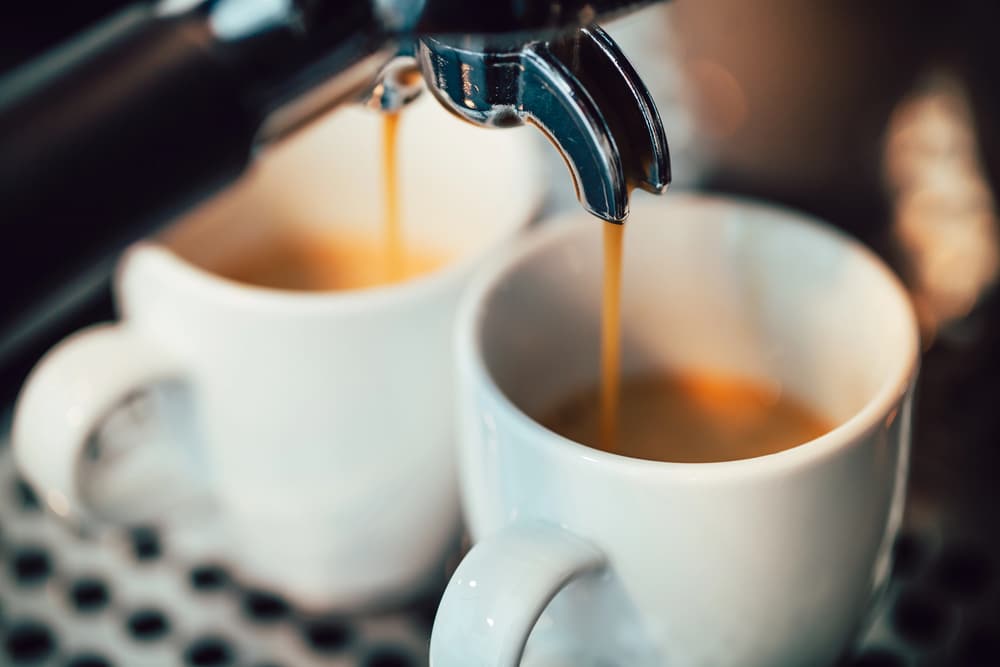
To avoid any confusion, the word in Italian for coffee is “caffè,” pronounced caf-FAY.
A caffè refers to an Italian espresso served in a “tazzina” which is about the size of a shot glass or demitasse cup in the United States. So if you say, “Un caffè, per favore” or “Prendo un caffè, per favore,” you’ll get the equivalent of about a shot of espresso.
When you do this and depending where you are in northern Italy, you might be given a small glass of water. Drink this before having your coffee to cleanse your palete. It’s to make sure nothing you’ve eaten or drank before will interfere with the flavor of the coffee.
Where to Get Coffee
When you’re in Italy, getting coffee means heading to a “bar,” which is essentially what we think of as a café. You’ll see “bars” everywhere from big cities to countryside villages, central piazzas to tiny side streets. Sometimes the bar will have a name and sometimes it’ll simply be called “Bar.”
Most bars sell more than just coffee. You can typically get other drinks (alcoholic and nonalcoholic), lite bites, pastries, and even sometimes gelato. Typically in the morning, most Italians go to the bar for a quick caffè. But as the day goes on, it could also be a place to meet friends or take a rest. It’s not uncommon to see a range of people and ages at a bar from teenagers to families, colleagues, and little old ladies.
The traditional caffè served at an Italian bar could cost as little as 1 Euro so it’s worth it to seek out the bars where the locals go away from tourist attractions and central piazzas to avoid overpaying.
If you’re in one of northern Italy’s cities like Torino or Venice, you can also have your caffè at a caffè! I know, it’s confusing!
Caffès like Caffè Florian in Venice’s Piazza San Marco (also the oldest operating coffee house in the world) or Caffè Mulassano in Torino tend to be more luxurious and historic places to have coffee, drinks, and small bites like sandwiches, quiches, or salads.
How to Order Coffee
Here, you’ve got options: you can sit down at a table (al tavalo) for table service or stand at the bar counter (al banco).
Most Italians, especially in the morning, prefer to drink their coffee standing. Breakfast in Italy isn’t a big deal. A quick coffee and maybe a cornetto (like a brioche or croissant) does the trick. Typically, it’s also cheaper if you stand at the bar compared to sitting at a table.
If you plan to stand at a bar, you can walk up to the counter and order your coffee. Otherwise, you can take a seat or wait to be seated depending on the place.
Afterward, you usually get a small piece of paper with your order written on it. To pay, take this paper to the cash register when you’re ready to leave and the cashier will let you know the total and handle your payment. Sometimes, too, you won’t get anything and you’ll just tell the cashier what you ordered.
There are even some bars where you need to pay first and then show your receipt at the bar counter to get your coffee. I’ve had to do this in busier places, like at train stations, and more touristy areas where there are just too many people for the baristas to keep track of.
The Rules of Coffee Culture in Italy
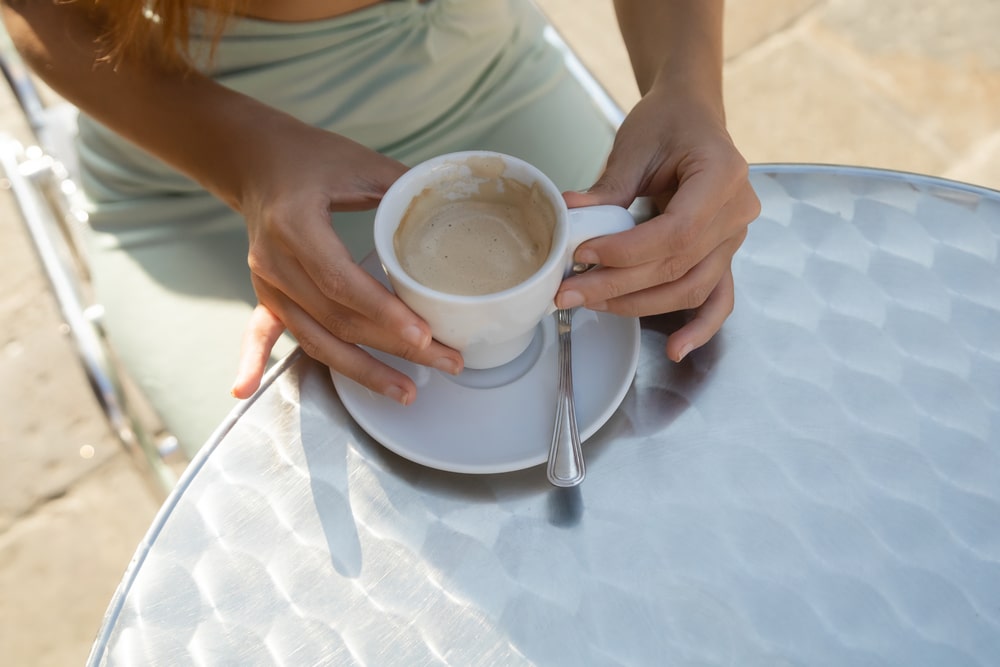
Aside from the rituals for where and how to get your coffee in Italy, you’ll also want to know Italian coffee culture etiquette and rules. You can see these unwritten rules and habits in action when you’re in Italy long enough or take the time to observe how it’s done at a local bar. But to save you some embarrassing gaffes, I’ve made a list of the ones you need to know!
1. Never ask for coffee in a to-go cup.
Italians don’t take coffee “to-go”. It just isn’t done. The Italian way is to stand up at the bar counter, down your shot of espresso, and then quickly go on your way.
2. No cappuccino after 11 a.m.
You may have already seen this on social media, but in Italy’s coffee culture, having a cappuccino after 11 a.m. is one of the biggest faux pas! Cappuccino is firmly established as a morning drink because of the milk it contains and how it pairs perfectly with the typical Italian breakfast.
True story…While visiting me in Italy, my aunt ordered a grappa before eating (Grappa is considered an after-dinner drink) and the waitress needed help snapping out of her shock before bringing my aunt the grappa. Similarly, no one will stop you from enjoying a cappuccino whenever you please but you may get a few stunned looks at the request once breakfast time has passed.
3. Don’t lick your coffee spoon.
It’s considered impolite to lick your coffee spoon in Italy. Instead, it’s better to gently tap it against the saucer to remove any coffee or foam.
4. Drink your coffee immediately.
Italian coffee is meant to be enjoyed right away to fully appreciate its flavor and aroma. Drinking it within 2 minutes ensures you get the best taste. Plus, if you’re drinking your coffee at the bar counter, etiquette says never linger for more than 5 minutes.
5. Instant coffee isn’t a thing and Mokas are a must!
In Italy, instant coffee simply doesn’t cut it. If you’re visiting friends or family in Italy or staying in an airbnb, you’ll see the Moka pot used to make coffee at home. It’s an absolute staple in Italian households!
6. There is only one coffee size in Italy.
Unlike in other countries where you can choose from various cup sizes, in Italy, there’s only one standard size for coffee. So when you order your caffè, it’s one size fits all. Likewise, for cappuccinos and other coffee specialty drinks, like a caffè Americano, each has its own standard cup size that it’s served in.
7. Don’t drink coffee with your lunch or dinner.
Last but not least, never order any coffee drink to have with your lunch or dinner. This could be just as big of an offense as ordering a cappuccino after breakfast. In fact, you might even get more strange looks for doing this than committing a cappuccino faux pas!
8. A latte is milk, not coffee.
If you order a latte in Italy, don’t be surprised if you get a glass of milk…and a few oddball looks. Latte translates to milk in English. On its own, it has nothing to do with coffee when you’re in Italy. You can ask for a caffè latte which is mostly milk with a shot of espresso but like a cappuccino should only be enjoyed in the morning.
Types of Coffee in Italy
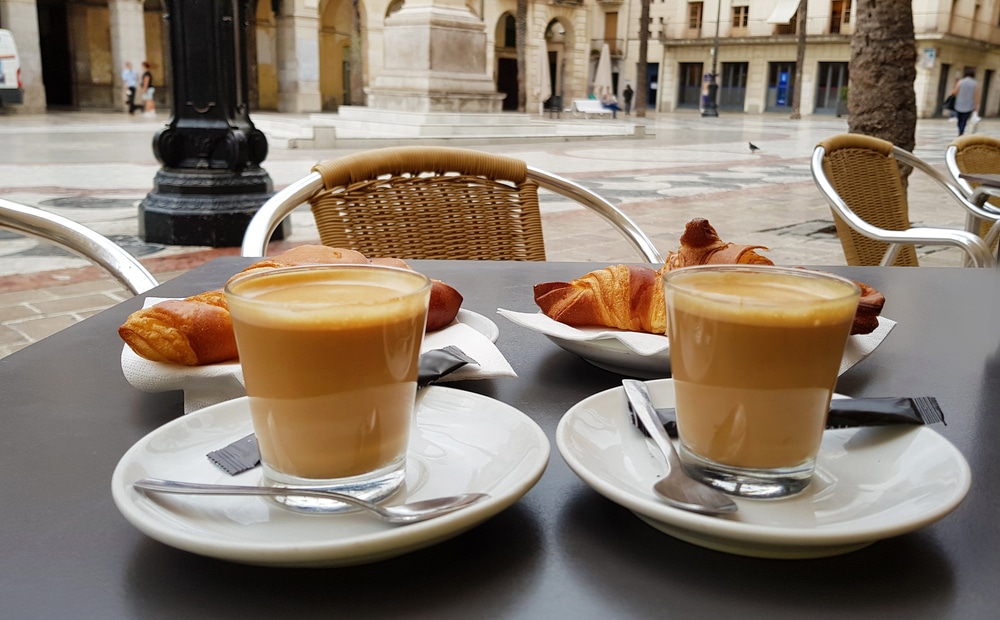
From the classic espresso to the creamy caffè macchiato and numerous regional specialties, you’re spoiled for choice in Italy. Now that we’ve covered Italy’s coffee culture rules, let’s be clear on what each drink is so you get the coffee your taste buds are craving.
- Caffè: As mentioned above, ordering “un caffè” will get you a shot of espresso—a concentrated, intense brew served in a small cup. It’s the cornerstone of coffee in Italy and is enjoyed throughout the day.
- Caffè Doppio: This is a double shot of espresso, brewed with twice the amount of coffee grounds to give you an extra jolt of caffeine. While not exactly a touristy coffee, Italians usually prefer to have multiple caffès during the day instead of a double in a single instance. I like the idea of having more than 1 coffee break, don’t you?
- Caffè Macchiato: Caffè Macchiato is like an espresso with a hint of frothy milk, derived from the Italian word “macchiato,” which means “spotted” or “stained” in English. When you order a caffe macchiato, you’re basically getting an espresso shot with a touch of steamed milk.
- Caffè Americano: This cup of coffee is an espresso with hot water added to reduce the intensity similar to having a black coffee.
- Caffè con Panna: This delicious drink starts with an espresso or a doppio, then gets topped off with a dollop of whipped cream. If you can, ask for fresh whipped cream!
- Caffè Ristretto: If a typical caffè (espresso) isn’t strong enough, try a caffè ristretto. It’s a shot of espresso made with less water so it’s highly concentrated and guaranteed to get you moving!
- Caffè Lungo: On the flip side, if the typical caffè is too strong for your liking, this coffee doubles the amount of water through the same amount of coffee grounds for a smoother, gentler taste.
- Caffè Ginseng: This unique Italian coffee blends the bold flavors of espresso with a hint of earthiness that comes from ginseng root extract.
- Caffè Corretto: I love the name of this one! It’s a “corrected” espresso because a shot of liquor is added for an extra kick to your coffee experience. You can add grappa, sambuca, cognac, or another liquor you’d prefer.
- Caffè Shakerato: This is Italy’s take on iced coffee. Espresso is chilled over ice and then shaken to give a frothiness. It’s very refreshing and one of my summer favs!
- Marocchino: This coffee drink is made from a shot of espresso, a layer of creamy foam, and a dusting of cocoa powder.
- Caffè Affogato: More dessert than a drink, a scoop of gelato is “drowned” (affogato in Italian) in a shot of espresso.
Northern Italy’s Influence on Coffee Culture
Three northern Italian cities, in particular, played a huge role in fostering Italian coffee culture. Take a look at the role Venice, Torino, and Trieste played. Plus, if you’re hoping to get to the roots of Italy’s coffee history and passion, these 3 cities are all connected via the same high-speed train line across Italy’s north and perfect for coffee connoisseurs
Trieste: The Unofficial Coffee Capital of Italy
Considered Italy’s unofficial “Coffee Capital,” Trieste is the country’s largest coffee port and a hub for the coffee processing industry. With an average of 1,500 cups of coffee consumed per person each year, Trieste boasts the highest coffee consumption in Italy.
This caffeine-loving city in northeastern Italy and the region of Friuil-Venezia Giulia even hosts the annual Trieste Coffee Festival every October, celebrating the city’s rich coffee culture.
Venice: Where Coffee Was Introduced
Venice, the iconic city in the northern Italy’s Veneto region, was the first city in Europe to embrace coffee, and is where Italy’s coffee culture began. Thanks to its strategic location along the Adriatic Sea and trade relations with the Arab world, Venice became the gateway for coffee to spread throughout Italy beginning in the 1500s.
As a reminder, Caffè Florian in Piazza San Marco has been open since 1720 and is the oldest still operating in the world! Can you imagine how many caffès it has served over the last 300+ years!?
Torino: Home of the Bicerin and Modern-Day Espresso
You might know that Torino, in the region of Piemonte, is famous for its chocolate but it’s also where Angelo Moriondo invented and patented the first espresso machine and where the iconic Italian coffee brand, Lavazza, got its start. Put this together with the city’s elegant caffès and signature drink, the Bicerin and you have a northern Italian coffee oasis!
The Bicerin is perfect for enjoying at one of Torino’s historic coffee houses including Caffè Al Bicerin, where the drink originated 250+ years ago.
A Few of Northern Italy’s Coffee Specialties
You’ll find regional Italian coffees all across northern Italy. Here are a few of my favorites!
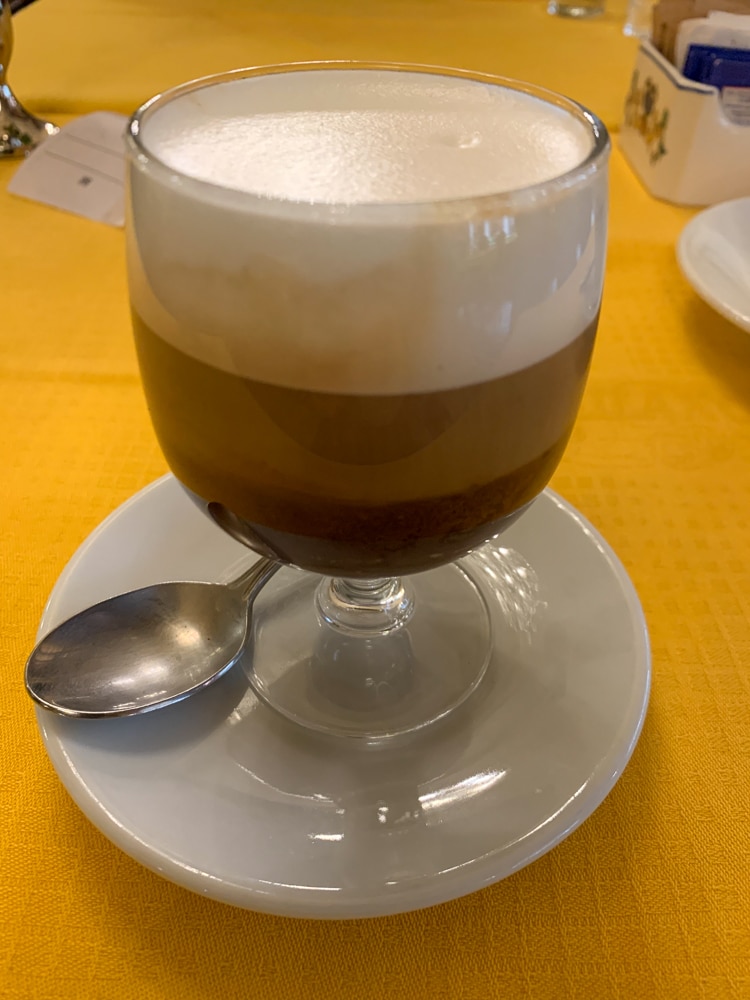
- Bicerin – Turin’s specialty coffee has 3 layers, espresso, hot chocolate, and whipped cream. To drink it, don’t stir! Drink it slowly to allow each flavor to combine in your mouth. Or use a spoon to taste each layer first before drinking it.
- Caffè Pedrocchi – Only made in Padua’s historic coffee shop of the same name, a caffè Pedrocchi consists of a shot of 100% Arabica coffee, mint syrup, and whipped cream dusted with cocoa powder.
- Caffè ‘Allo Zabione – I had this coffee drink on my first visit to Bologna and loved it! Zabaglione wine, made with eggs, sugar, and a hint of wine, is blended with espresso. It was the perfect combination of sweet and smooth!
Ready for your Quick Shot of Espresso?
In Italy, coffee is more than just a beverage—it’s a way of life and an integral part of Italian culture. The great news is that if you can master these few steps, then you can easily do coffee like a true Italian, enjoying that perfect espresso all while having a quintessential cultural experience on your trip to Italy!
