
I’ve been on a mission to find the best ways to learn Italian. I’m a total Italophile at heart and spend months of the year living and traveling in Italy. But long before my extended stays in Italy, I knew how important it was to know at least some basic words and phrases in Italian even as a traveler.
Today, we are so lucky. It’s easier than ever to learn Italian with all the content, courses, and tools that are available. Some are paid but there are plenty of free resources, too. The trick is finding the ones that you like the most.
In reality, there’s no secret or best way to learn Italian. You just have to invest the time and stick with it. This is, of course, easier when you use fun and enjoyable Italian language tools instead of ones that make you want to ultimately avoid studying or practicing.
So I’ve put together this list of my favorite resources for learning Italian to help you. These are the ones that I love and that have helped me make the most progress on my own Italian-learning journey. I hope it’s helpful for you, too!
Duolingo
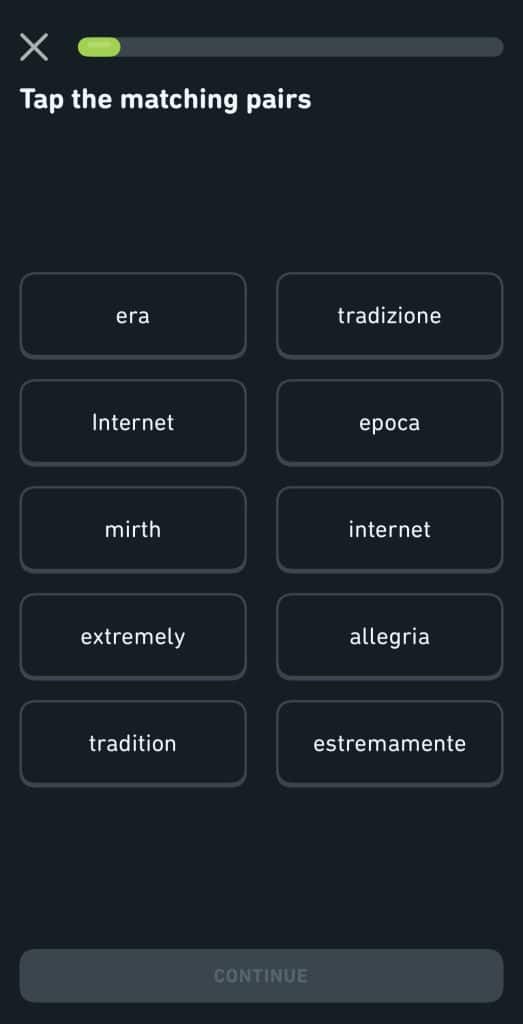


I started using Duolingo as a beginner learning Italian. It’s a free app and website (although you can pay to get rid of ads – I never did) with vocabulary, grammar, listening, and speaking exercises that feel more like games. You start by answering a few questions so that Duo, the app’s owl mascot, can understand your level. You can also choose to start from scratch if you’re a total beginner.
Once you start, you’ll earn points and collect rewards to unlock new resources and reach new levels. There’s even a leaderboard where you can try to earn top honors.
One of my favorite things about Duolingo is how easy it is to just jump into an activity. I used it when I was first learning Italian to practice when I had “dead time” while waiting for the train or in line at a store. It’s also a great choice when you feel the urge to mindlessly scroll social media. Instead, you practice Italian but come away with the same dopamine hit and new Italian words!
It’s also great for learning and practicing vocabulary and verb conjugations. Duolingo (and other resources you’ll see in a moment) gave me a workable base to jump into some of the other Italian resources on this list. Plus, if you’ve studied and/or speak other romance languages, you might notice some grammatical connections to Italian like I did during the activties to speed up your learning.
The downside to Duolingo is that it can take a while to work up to a level where you’re practicing sentences for conversations. The app, though, does give you the chance to test out of levels if you feel something is too easy.
I’ve moved beyond Duolingo now and it shouldn’t be your only tool either. But I whole-heartedly recommend it as one of the tools to use to learn Italian, especially when you’re just starting.
ProTip: If you’d like something similar but with a bit more of a structured, transparent learning path, take a look at Babbel. I’ve used it in the past when trying to learn some basic Spanish and thought it was really useful.
Italian Uncovered by StoryLearning
There are a ton of Italian courses online and it can be hard to know which ones are worth the time and investment. I’ve been in your shoes with too many browser tabs open feeling overwhelmed by all the choices!
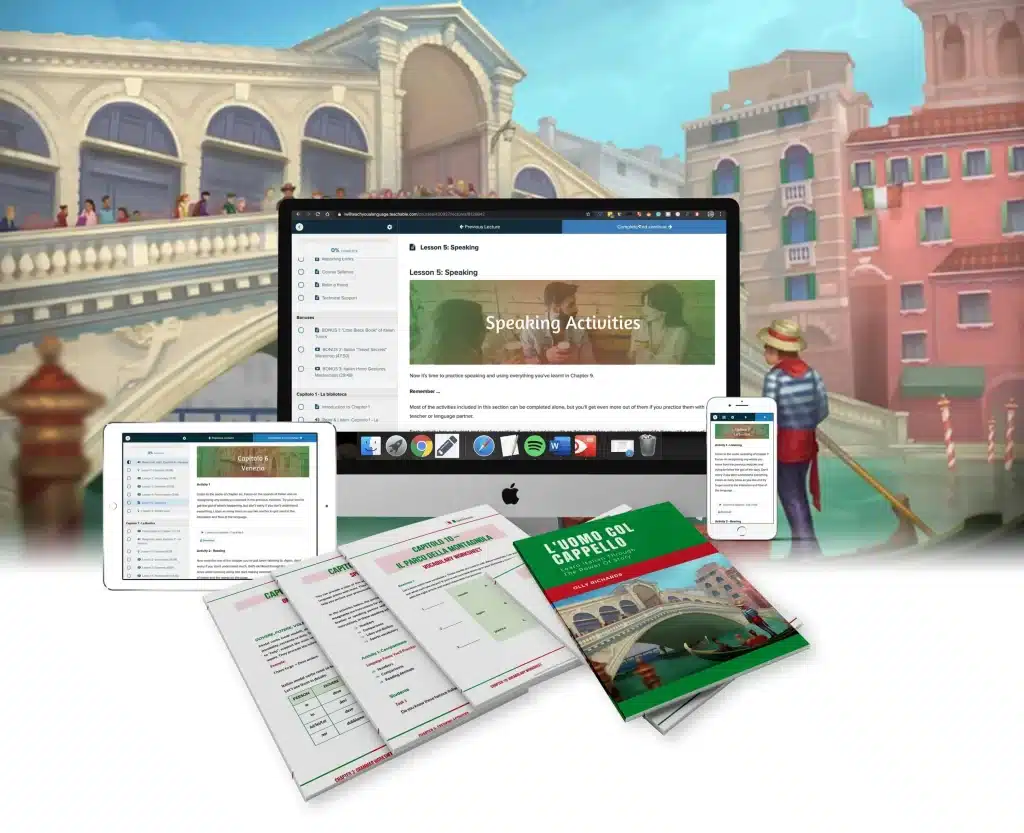
But, if you asked me to name ONE course that helped me advance my Italian level quickly and in a fun way, it would hands-down be Italian Uncovered by StoryLearning. The premise is really unique but, at the same time, makes a lot of sense, too.
The courses are centered around a story that unfolds as you progress through each lesson. Along the way, you’ll learn Italian vocabulary and grammar, as well as practice listening and speaking in Italian based on where you are in the story.
There’s a ton of science behind why this methodology works and the guy who created the courses (Olly Richards) speaks 8 languages including Italian. I’m not going to explain every detail here. But stick with me for a moment.
I want you to close your eyes and think back to a time when you were “learning” a language. For a lot of us, it was in school where we had classes in Spanish, French, or Italian. Do you remember writing and repeating verb conjugations and vocabulary over and over? How much of it do you remember? Better yet, how much of it do you feel confident using to have a conversation?
Stories are different, though. We remember them. We retell them. We apply the lessons we learn from them. Plus, as a former elementary classroom teacher myself, I recognized in Italian Uncovered some of the fundamentals we teach to help kids not only learn to read but also decode and decipher new words. Phonics is important but so is context! We remember words better and can teach ourselves new words more easily when they’re connected to a sentence or a story.
But the main reason why I loved the course? It was fun!
The story was interesting and engaging. I was curious to know what happened next so I kept coming back. Plus, I realized I was recalling what I was learning because I remembered it in context with the story. So, in my experience, the course was a win-win.
And keep in mind, when I purchased the beginner level of Italian Uncovered, I only had a bit of Duolingo Italian under my belt. I kept wondering how on Earth I was going to read a story in Italian?!? It seemed to go against everything I had been taught about learning a language but it worked amazingly.
Now, if your goal is only to know some basic Italian phrases and how to order your gelato in Italian, you can easily buy an Italian phrasebook or use Google Translate for that. But, if you’re hoping to up your level of Italian because of travel or any other reason, I can’t recommend Italian Uncovered enough.
Italian Language Books

After I began using stories to fuel my Italian language learning, I wanted to read more in Italian!
It was absolutely part amazement that I could actually do it but, if I’m being completely honest, it also made me feel like some kind of language-learning rockstar. (I assure you nothing could be further from the truth.)
I wasn’t looking for kids’ books in Italian. I wanted to read books that were entirely in Italian, at my level, and written for adult learners like me.
I never really considered reading in a language I wanted to learn. I figured that wouldn’t be possible until I was more “advanced.” But with that now turned on its head, I set off to find books I would enjoy reading in Italian that I could also use to learn more.
Here are some of my favorites:
- Short Stories in Italian for Beginners by Olly Richards
- Short Stories in Italian for Intermediate Learners by Olly Richards
- Omicidio alla Modo by Cinzia Medaglia (There are a couple of other books in the series, too, like Omicidio in Passerella.)
- Non Puoi Essere Tu by Sonia Ognibene (She has written many other great books for Italian learners, too!)
- Il Mistero della Casa in Sicilia by Melanie Chircop (I Fantasmi di Sambuca is the second book in this series. I loved them both and have read other books by this author.)
- In Altre Parole by Jhumpa Lahiri (So relatable as an Italian learner and also beautifully written!)
- Io non ho paura by Niccolò Ammaniti (Intermediate novel)
- Cristo si e’ Fermato a Eboli by Carlo Levi (Good for intermediate-level reading)
Youtube Videos
In addition to apps, courses, and reading, I found (and still find) it immensely helpful to listen to as much spoken Italian as possible. One of the ways I like to do this is on YouTube.
It’s no secret that immersing yourself in a language pays dividends. Yes, it helps you hear the cadence of the language and work on your pronunciation. But when it’s used consistently and in conjunction with the tools I’ve mentioned, a funny thing starts to happen.
You actually start to understand what’s being said.
Plus, the great thing about YouTube videos is you can use subtitles in your language or your target language. You can repeat parts you didn’t understand and you can slow the speed down if you need to.
I listen to a lot of spoken Italian. As a result, my ability to understand the Italian being spoken around me in Italy is quite high. I recommend you incorporate as much listening in Italian as you can.
A lot of the teachers I watch on YouTube do a mix of videos, some grammar-focused and others about Italian culture.
Here are my favorites:
- Learn Italian with Lucrezia – She’s such a great teacher and so personable! She does Italian grammar and vocabulary videos and shorts, as well as vlogs about life and culture in Italy
- Learn Italian with Teacher Stefano – Another amazing teacher who you’ll want to hang out with, too! He makes easy-to-understand grammar videos. Plus, I love his Italian culture videos for listening practice.
- Italy Made Easy – Manu has a great library of videos, especially for beginners!
Italian Podcasts
Podcasts are another great way to listen in Italian. But I would recommend starting with YouTube videos because you can read the English or Italian subtitles if you need them.
Once you’re ready to test out some Italian podcasts, play around with the playback speed. If you need, slow it down. Or as you get better, listen at a faster speed to improve your ear.
When you’re ready to add some podcasts to your Italian language diet, these are the ones I recommend:
- Italy Made Easy Podcast – This was the first Italian podcast I ever listened to and I loved every minute.
- Learn Italian with Joy of Languages – Katie and Matteo are fun to listen to and great teachers. Their podcast and YouTube videos are very beginner-friendly.
- Italiano Bello – Irene speaks slowly and explains things in such a clear way to improve your listening comprehension in Italian.
Italian TV and Movies
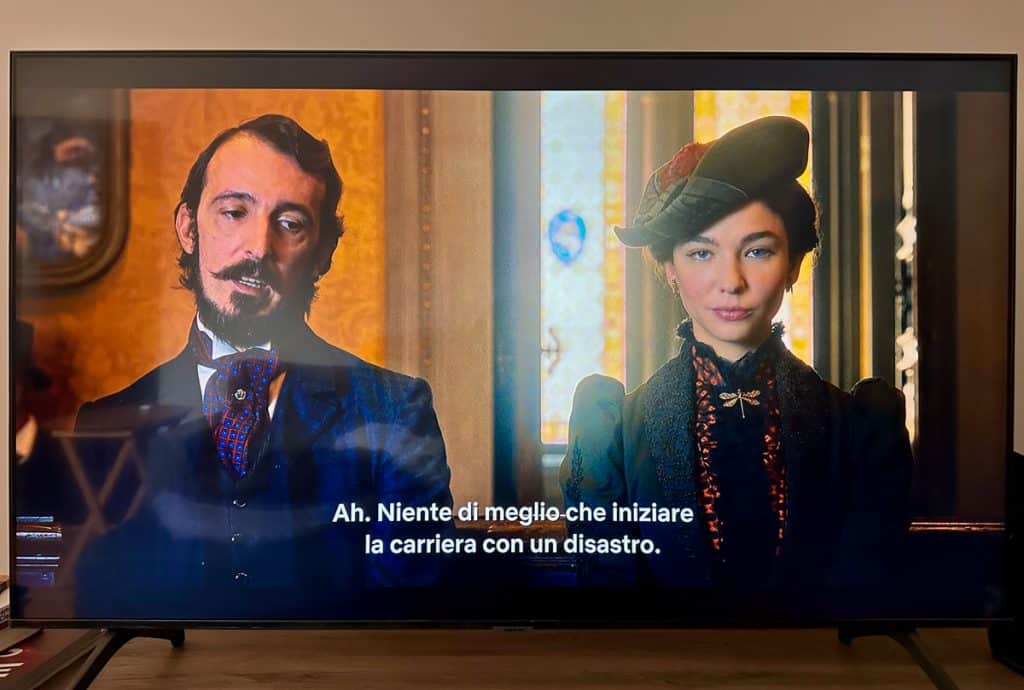
This has to be one of the most fun ways to be immersed in Italian!
Of the two, I prefer TV series because they are usually shorter and the sequential episodes let me watch a new episode with some context already.
One way to get started with this is by watching the show or movie in Italian with English subtitles. Or, watch something that you know very well in English (like Friends or your favorite movie) in Italian with Italian subtitles.
Go into this knowing you won’t understand everything and be ok with it. But the longer you stick with it, you’ll be amazed at how your understanding improves.
You can find some Italian programming on Netflix but this is limited. Plus, stopping to look up words can get tedious when you’re just starting.
I’ve also tested out a tool that I really liked called LingoPie which has Italian TV shows and movies, including some from Netflix and Disney+. The difference here is you can hover over the subtitles for translations, get grammar explanations on something you heard, and add new words and phrases to a word list. These words and phrases can be reviewed through gamified exercises within the tool.
I would definitely recommend giving LingoPie a try if you’d like to watch Italian shows and movies along with some built-in tools to help you learn new words and phrases.
Italian Flashcards
I don’t use flashcards as the main focus of my Italian studies. But I do find them helpful specifically when I make them for words and phrases that I’ve read, heard, or seen.
I’ve used two apps for this, Anki and Quizlet. I prefer apps on my phone because I can easily swipe through some flashcards when I have a few minutes to spare.
Plus, I’m a believer in the concept of spaced repetition. I can indicate which ones I missed and the apps know to show the card to me again in a minute. It’ll also review cards I’ve mastered intermittently to keep learned words and phrases fresh.
Italian Speaking Practice
Ah, yes now we’ve come to it! A guide with the best ways to learn Italian has to include a speaking component.
If you’ve started to quietly panic inside, I get it. I know this feeling well! I can’t tell you how many times when I was first trying to use my Italian out in the wild that I completely froze up and literally said nothing. Like, niente.
It’s one thing to study and practice Italian with no one around. But another beast altogether when you begin actively trying to communicate…with real Italians.
To this day, I continue to improve my speaking skills. A few tools have been really helpful with this.
- italki – This online platform has native-speaking teachers and community tutors in just about every language you can imagine. The best part is you can schedule lessons at convenient times and practice at home via a video call with your teacher. You can focus on more technical things like grammar and verb tenses or you can use the lessons for conversation practice. I love being able to hop on italki nearly any time of day for some Italian practice with someone who’s native language is Italian.
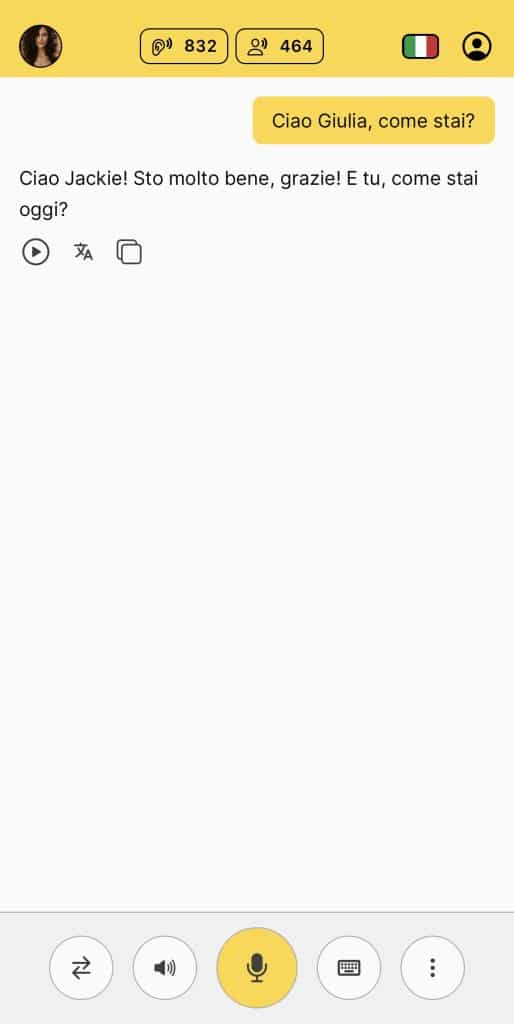
- Teacher AI – This AI language-speaking app is amazing. It’s strictly for conversation practice, although you can discuss grammar topics, too. Once you open the app, you begin speaking about anything you’d like to the “teacher.” Along the way, the teacher will correct you and ask you to repeat things correctly. I also love that I can code-switch when needed, meaning I can speak in Italian but switch to English for a word or phrase that I don’t know how to say. Best of all, you don’t need to schedule a lesson and you can speak for as long as you want, any time you want.
- Talk to Italian Friends – If you have friends or family that speak Italian, practice with them! Not only are you lucky to have these valuable language-learning partners, but you’ll start to see the fruits of your labor which is so motivating to keep going!
Ready to Learn Italian?

Can you imagine what it would be like after planning your dream Italian trip for months and months to arrive in Italy ready to speak some Italian!? It’s not impossible!
You don’t need to be perfectly fluent to potentially make some new Italian friends or just impress the waiters and tour guides you meet. But above all else, learning some Italian opens the door to the local culture and may lead to experiences that would have never been possible without knowing some Italian.
All that’s left now is to start! Andiamo!
Which Italian learning tool on this list would you like to try?
Like this post? Please save it on Pinterest or share it on social media using the share buttons.


Thank you for sharing your favorite resources! I especially love the suggestion to incorporate Italian movies into learning. It really helps with picking up the language naturally. I’ll definitely check out some of the apps you mentioned too!
Thanks so much for reading, Jill. 🙂