
Thinking about traveling to the region of Veneto to see Venice but not sure if it’s worth it to visit more of this northern Italian region?
Well, you should trust your instincts because they’re leading you in the right direction! The Veneto region of Italy is SO much more than Venice!
In this guide, you’ll find all the reasons why you should visit the Veneto region during your northern Italy trip, from the Adriatic Sea to the Dolomites, Venice to the Palladian Villas, and the shores of Lake Garda to pretty Verona.
Let’s go to Veneto!
Where is Veneto Italy?
The Veneto region is in northeastern Italy and is positioned among a diverse cross-section of regions including Trentino-Alto Adige and the majority of the Italian Dolomites to the north and the regions of Emilia-Romagna and Friuli-Venezia Giulia to the south and east, respectively, along the Adriatic coast. The region of Lombardy (Lombardia) is to the west and it’s here where the 2 regions (along with Trentino) share pieces of gorgeous Lake Garda.
This Veneto map offers a birds-eye view of the regions in northern Italy so that you can visualize this part of the country, as well as orient yourself to the many regions of Italy.
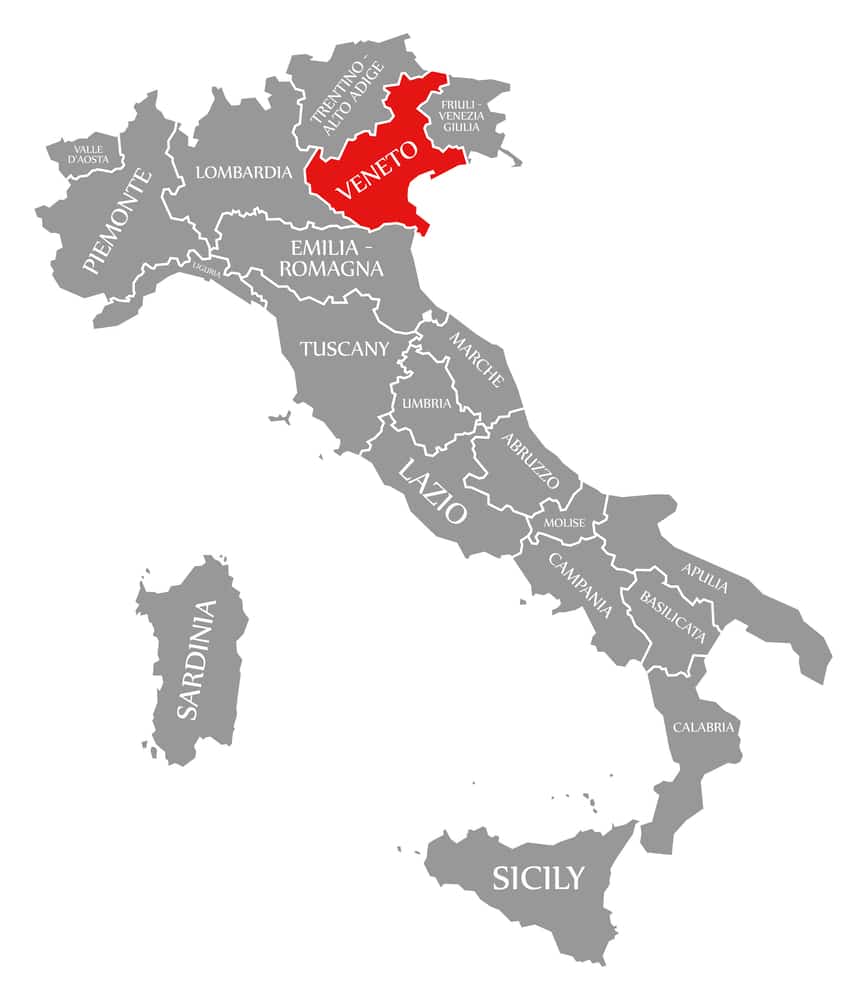
The map of Veneto Italy below takes a deeper look at where the region’s cities, towns, and popular places are in relation to each other. Without question, Venice is the Veneto’s most famous city and destination. Tens of millions of people visit each year to marvel at this “floating city” and to explore the canals and piazzas that hold treasures of great historic value.
For the traveler who dares to go beyond Venice, though, the region of Veneto has plenty more to offer. Verona has some of the most beautiful piazzas in all of Italy, a Roman arena older than the Colosseum in Rome, and was where Shakespeare chose to set his famous play, Romeo and Juliet.
Throughout the region, you’ll find incredible Renaissance architecture, rolling green hills with vines of grapes destined for bottles of Valpolicella wines, and countless villages seemingly from the pages of a medieval fairytale. All of this before we even get to the stunning Lake Garda, Monte Baldo, the Adriatic coast, and the breathtaking peaks of the Dolomites in the northern Veneto.
So, Is Veneto Italy the Same as Venice?
No. Veneto encompasses an entire region of northern Italy. Venice is one of the cities in the Veneto region along with other beautiful cities like Padua, Treviso, Verona, Vicenza, and others. Venice is the capital of this region in the same way Milan is the capital of the Lombardy region or Turin is the capital of the Piedmont region in northern Italy.
10 Top Reasons to Visit the Region of Veneto
Veneto is a fascinating region! During the Roman period, Veneto was part of the Roman Empire. After the turbulent Middle Ages, it became part of the Venetian Republic and remained until nearly 1800. When you travel around present-day Veneto, it reflects this long history in its culture, food, towns and cities, landmarks, and natural landscape. You’ll quickly realize just how many things to do in Veneto you could add to your northern Italy itinerary!
1. Iconic Venice
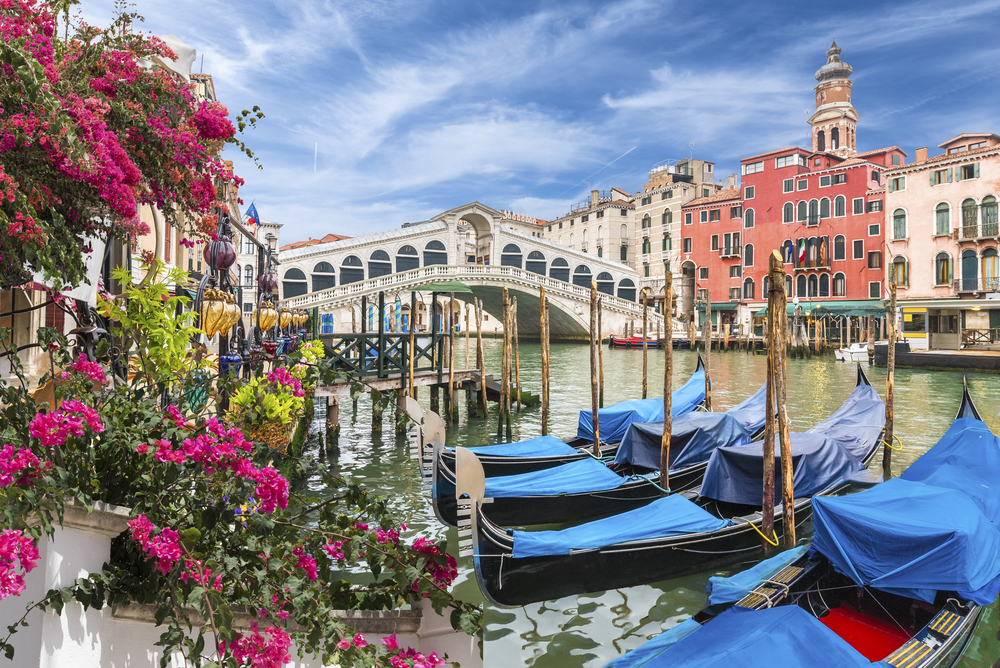
The region of Veneto’s capital city of Venice, in the Venetian Lagoon, needs no introduction. The city of Venice is a world-famous destination, instantly recognizable by possibly every person on the planet. Venice and its lagoon, which sits in the Gulf of Venice, have also been named as a UNESCO World Heritage Site.
From the moment you take a gondola down the Grand Canal or spend time in Venice’s Piazza San Marco, the romance of Venice will have you swooning. Arriving from the mainland to Venice, the effect isn’t gradual. You’re instantly absorbed and taken back in time over 1,000 years while simultaneously feeling like you’ve landed in a mythical place that defies all attempts of logic to make sense of it.
Get lost in the calli – the narrow streets of the city – cruise Venice’s canals on a gondola, and visit the majestic Piazza San Marco to experience the charm of the so-called La Serenissima (“the most serene”).
2. Veneto’s Beautiful Cities
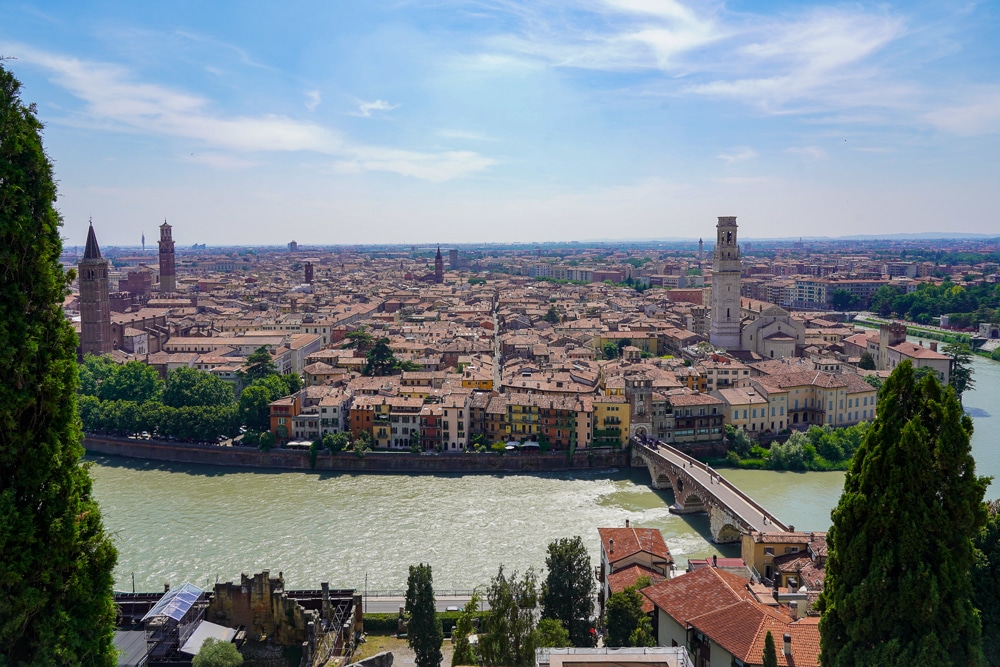
If you are passionate about art, culture, and history, you have plenty of cities to see in the Veneto region of Italy.
The city of Verona is easily one of the most beautiful in Veneto. It’s in this city that Shakespeare’s classic tragedy ‘Romeo and Juliet’ takes place. Also known as The City of Love, you can visit the balcony of Juliet’s House and the Arena di Verona, the city’s amphitheater, older than Rome’s Colosseum.
To have an extra special day, watch a music concert inside the Arena! Be sure to admire the incredible beauty of Piazza delle Erbe before crossing the Ponte Pietra and riding the funicular up to see the panoramic views of the city from Piazzale Castel San Pietro.
And if you’re visit is timed with the holiday season, don’t miss the chance to visit the Verona Christmas market!
Padua is another incredible city in Veneto and the birthplace of the Palladian architectural style. Wander up and down the city to admire its incredible buildings. In Padua, you can also visit the oldest academic botanical garden in the world, the Orto Botanico, and the incredible 14th-century frescoes in places like Scrovegni Chapel, both of which are UNESCO World Heritage Sites.
The greatest example of Palladian architecture is in UNESCO-recognized Vicenza. The Basilica Palladiana and the Teatro Olimpico are only two of the dozens of buildings in the Palladian Villa style, so much so that Vicenza is called ‘the city of Palladio’!
Bassano del Grappa is best known for its wooden Ponte Vecchio which spans the Brenta River. The original bridge dates back to the 13th century but when a flood washed it away in 1567, famed Renaissance architect, Andrea Palladio, redesigned the bridge to be similar to the last one in appearance but more structurally sound. You can also visit the medieval Castello degli Ezzelini and taste some of the local grappa.
Cortina d’Ampezzo is at the center of the Venetian Dolomites with jaw-dropping mountain scenery. The outdoor pursuits are endless whether you’re hoping to ski world-class pistes, see glacier-fed mountain lakes, or hike the Tre Cime loop trail. Cortina is also incredibly posh, with a vibrant shopping and see-and-be-seen scene.
Treviso and Chioggia are not far from Venice and both have beautiful canals, as well. As you wander these cities, enjoy the porticoes, fishing markets, frescoed buildings, and overall more laid-back vibe than popular Venice. Both cities are less crowded and less expensive, too. If you go to Treviso, have the tiramisu at Ristorante Le Beccherie where it’s possible the world-famous dessert was born.
3. Veneto’s Delicious Food and Wine
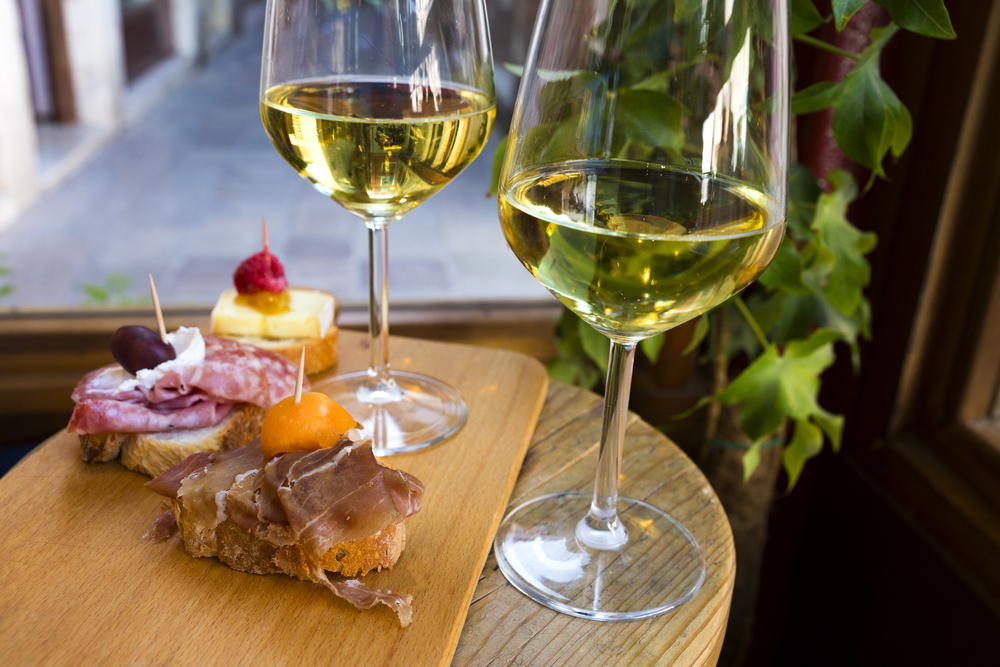
Veneto has vibrant cuisine, and it is the perfect destination if you love good food and wine. You’ll find hearty choices like polenta and risotto and a healthy dose of fish and meat given the region’s connection to the land and the Adriatic Sea.
One of the best things to have in Venice is an aperitivo served with Cicchetti, small bites similar to Spanish tapas. Cicchetti started in Venice but have become popular throughout the Veneto region. To have the most authentic cicchetti, order them in a bacari, the traditional Venetian tavern. Order a spritz with Select Spritz (a Venetian aperitivo!), or prosecco, one of Veneto’s best winery products.
Spend a wonderful evening eating sopressa, a type of salami, savory sardines served over thick spaghetti, or fegato alla veneziana (liver cooked in wine). In Venice, try the baccala mantecato, a salted cod that’s soaked and then beaten into a type of mousse.
To end the dinner, eat a slice of Tiramisù! Even though the origin of Italy’s most famous dessert is fought between Veneto and Friuli Venezia Giulia regions, you cannot come to Veneto and not try it.
For wine lovers, the region of Veneto is the home of Valpolicella and Amarone, as well as Soave white wine vintages. As a result, the Veneto wine region is considered one of the best in all of Italy.
4. Veneto’s Eastern Section of Lake Garda
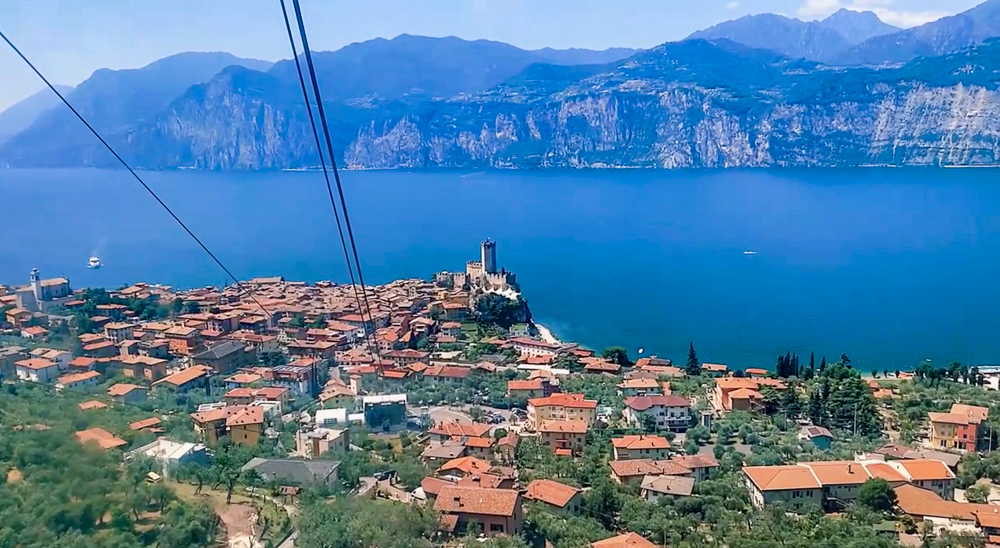
Lago di Garda is Italy’s largest lake and one of the most popular in the Italian Lakes Distict. The eastern shore of Lake Garda lies in Veneto and is an area of incredible beauty, with deep blue lake waters, mountainous peaks in the background, olive groves, sandy shores, historic castles, and postcard-perfect little towns.
While in Lake Garda, you can do plenty of things: hiking, sailing, visiting museums and historic churches, going to the beach, and walking around medieval villages.
Among Veneto’s best towns on the shores of Lake Garda is Garda, the town that gives the lake its name. While in Garda, make sure to visit the Captian’s Palace, a fabulous building in Venetian Gothic style.
Peschiera del Garda, Lazise, Bardolino, Torri del Benaco, and Malcesine are other must-see Lake Garda towns. Peschiera is on the southern shores of Lake Garda and still has its old city walls circling the historic center. Peschiera also has one of the main train stations with access to Lake Garda from cities across northern Italy. You could use Peschiera as a base and explore the lake’s many beautiful spots using ferries.
Lazise is the perfect spot to spend a relaxing day in. Stroll down the waterfront promenade, lined by citrus trees, and take a swim in the lake during summer. If you visit Veneto in winter, Lazise has a lively Christmas market where you can buy local crafts and taste traditional food.
Bardolino is famous for the local wine and the historic center, with several churches dating back to the 11th-12th centuries, and medieval defensive walls. The town’s lakefront promenade, charming restaurants and cafes, and cultural festival dedicated to locally-produced wine are all reasons why Bardolino makes a worthy visit while exploring Lake Garda.
In Torri del Benaco, you can visit the impressive Scaliger Castle, which today hosts the Ethnographic Museum, where you can explore Lake Garda’s local traditions of fishing and olive oil production.
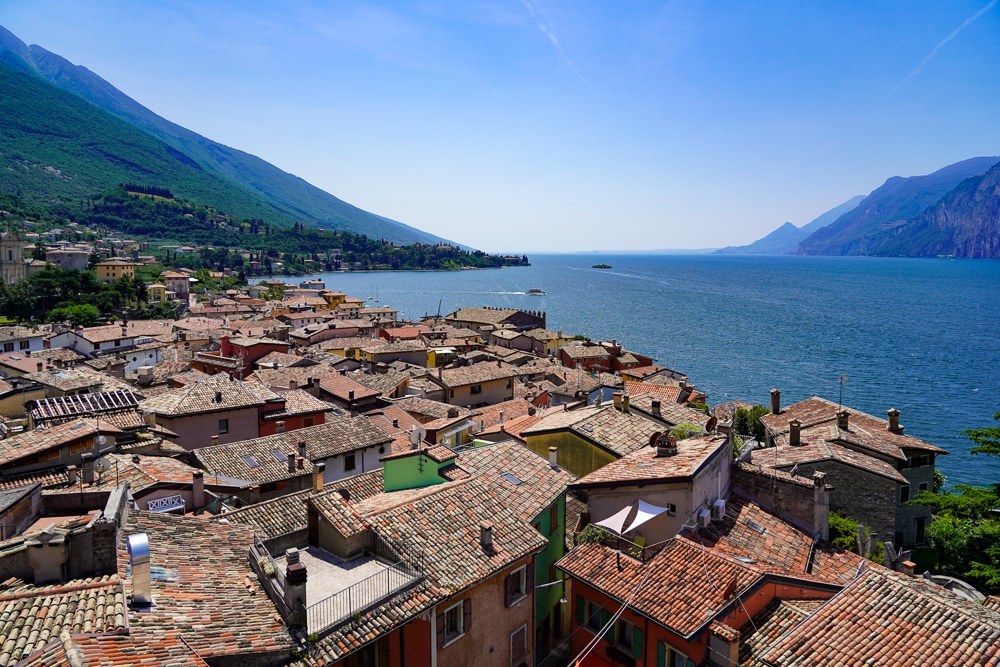
Last but certainly not least, Malcesine is one of the picturesque towns along Lake Garda, not to mention a former Roman settlement! Stroll along the ancient cobblestones to the medieval castle. As you soak up the gorgeous views of Lake Garda, imagine an even more ancient fortress standing in this spot with soldiers watching for trouble. Then, explore Malcesine’s narrow, winding lanes and piazzas where you can eat, drink, and discover the town’s vibrant art scene.
Don’t leave Lake Garda before having taken the ultra-modern funicular to the top of Monte Baldo in Malcesine. From the mountain, you will enjoy a panoramic view of Lago di Garda! You might even see a few paragliders on the mountaintop as they take to the sky.
5. Veneto’s Dolomites
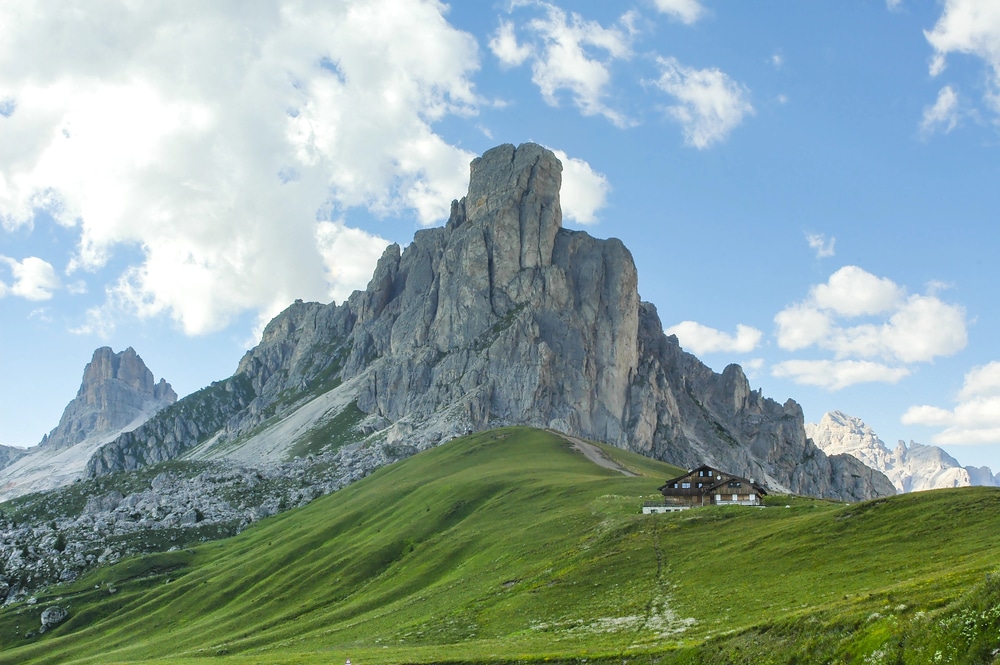
You will find some of Europe’s most impressive mountains and hills in the Veneto region. From the UNESCO-recognized Dolomites in Dolomiti Bellunesi National Park near the town of Belluno to the Asiago Plateau, you will see gorgeous landscapes that offer year-round activities. Hiking, mountain biking, trekking, and horseback-riding trails can be explored from late spring to early autumn.
During winter, experience the thrills of skiing or snowboarding on the snow-covered mountains’ slopes. Head to the province of Belluno to enjoy the magnificent Dolomites, with their breathtaking peaks and valleys, and luxurious winter resorts. Visit the Asiago Plateau for a late-summer vacation, and don’t forget to taste the local Asiago cheese and speck, a type of smoked ham.
Monte Baldo, overlooking Lake Garda and reachable by the funicular in Malcesine, and Monte Grappa are two must-see mountains. You will find numerous hiking trails to fit every ability level, rivers great for rafting and canoeing, and historic World War battle spots.
6. Sanctuary of Madonna della Corona
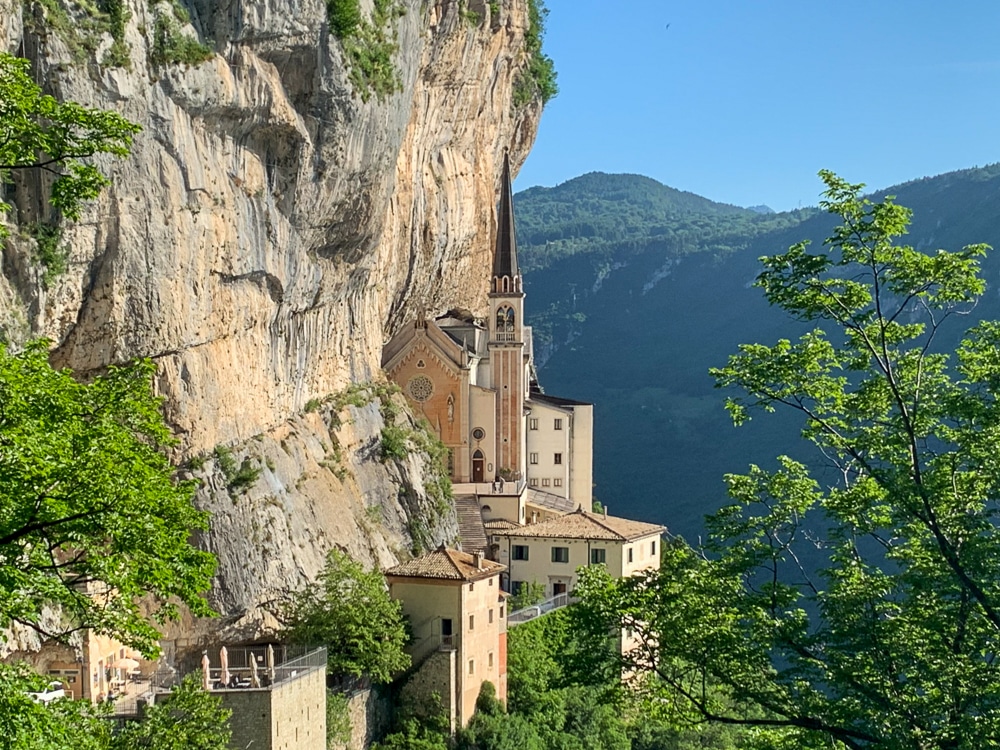
The Santuario Madonna della Corona is an incredible church built into the side of Monte Baldo and has been a Catholic pilgrimage site for centuries. There was likely a monastery here on this site a thousand years ago which became a larger church in the 1600s. The Madonna della Corona Sanctuary has undergone several renovations, most recently in 1970, to preserve and rebuild historic elements of the church.
Despite this, it’s still an impressive site! The church sits on a rocky outcropping over 2,500 feet from the ground with mountains and greenery surrounding it. To get there, you can drive to the little village of Spiazzi and then walk the pathway down past the Stations of the Cross. The walk takes about 15-20 minutes depending on how many times you stop to admire the natural beauty.
If you’re looking for more of a pilgrimage experience, you can start from the village of Brentino Belluno and take the Pilgrim’s Path. To reach Madonna della Corona, you’ll need to climb over 1,500 steps! But in the end, you are rewarded with breathtaking views of the church.
7. Veneto’s Thermal Spas
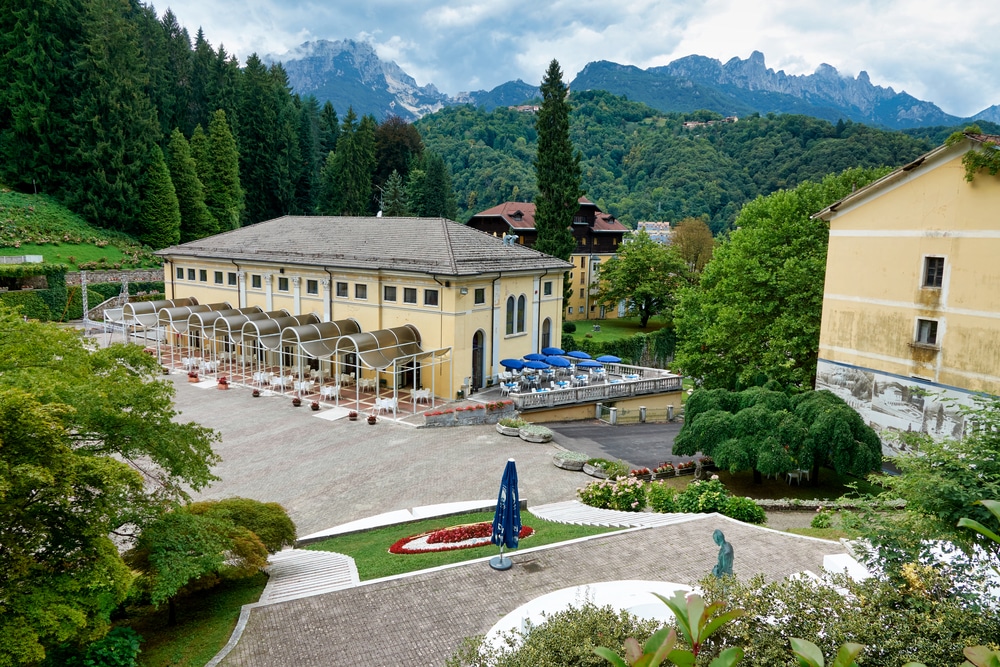
Did you know that Veneto has incredible thermal water springs? They have been used for millennia by the locals, and you can enjoy them too! If you are looking for a relaxing or curative holiday, Veneto is one of the best places to visit.
Thermal springs are integrated into spa resorts that offer all sorts of procedures, treatments, and facilities. Two of the best spa towns in Veneto are Abano Terme and Montegrotto Terme, both in the volcanic Euganean Hills. Here you will find plenty of hotels and modern spa facilities where you can spend a relaxing holiday.
On the Adriatic Sea, you can relax in Bibione, where the thermal spas meet sandy beaches with all sorts of facilities. If you prefer to be surrounded by mountains, you can stay at Villa dei Cedri, a spa hotel on the shores of Lake Garda. And the landscape of the Little Dolomites is the magical background of the spa town of Recoaro Terme.
If you are a history nerd like me, Veneto has the right thermal spa for you as well! In the small town of Caldiero, in the Province of Verona, you can find the Terme di Giunone, where two of the thermal swimming pools date back to the Middle Ages.
8. Veneto’s Islands
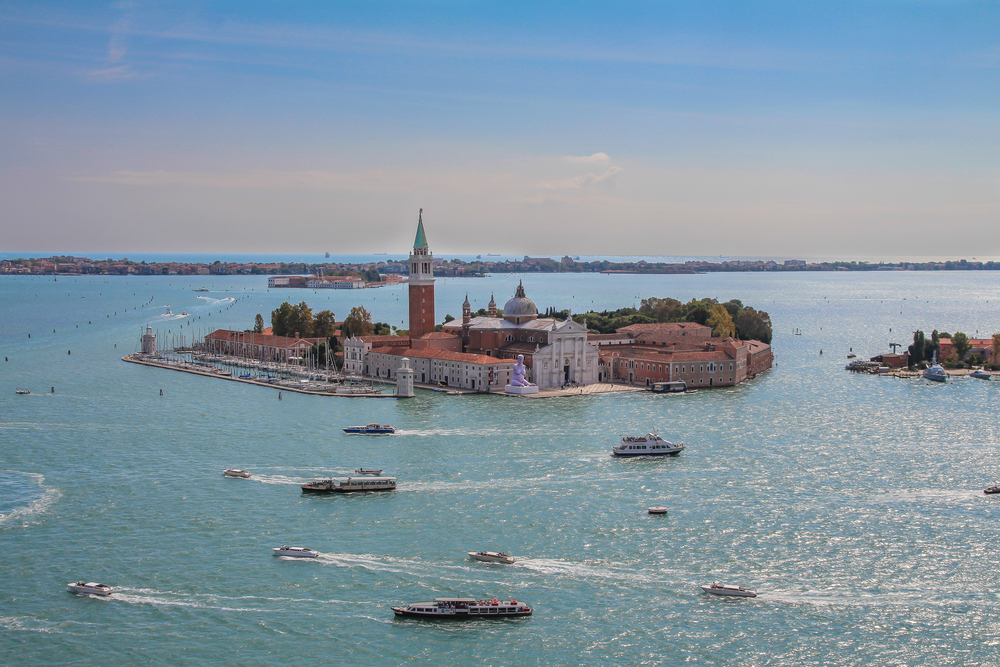
Many islands scatter Veneto’s wonderful landscape! Venice is undoubtedly the most famous one, alongside Burano and Murano. Both in the Venetian lagoon, Burano is popular for its lace-making traditions and colorful houses, which make the town incredibly pretty.
Murano’s most outstanding characteristic is the art of glass-making, which began several centuries ago.
San Giorgio Maggiore, with its Palladian church, and Torcello, with the Basilica of Santa Maria Assunta and the well-preserved Byzantine mosaics, are two other fantastic islands in the Veneto region near Venice.
There are also several islands in Lago di Garda, a few of which like the Isola del Sogno (Island of Dreams), that can be visited. And on the Delta of the Po River, make sure to visit Isola Albarella to admire pink flamingos in the wild!
9. Veneto’s Palladian Villas
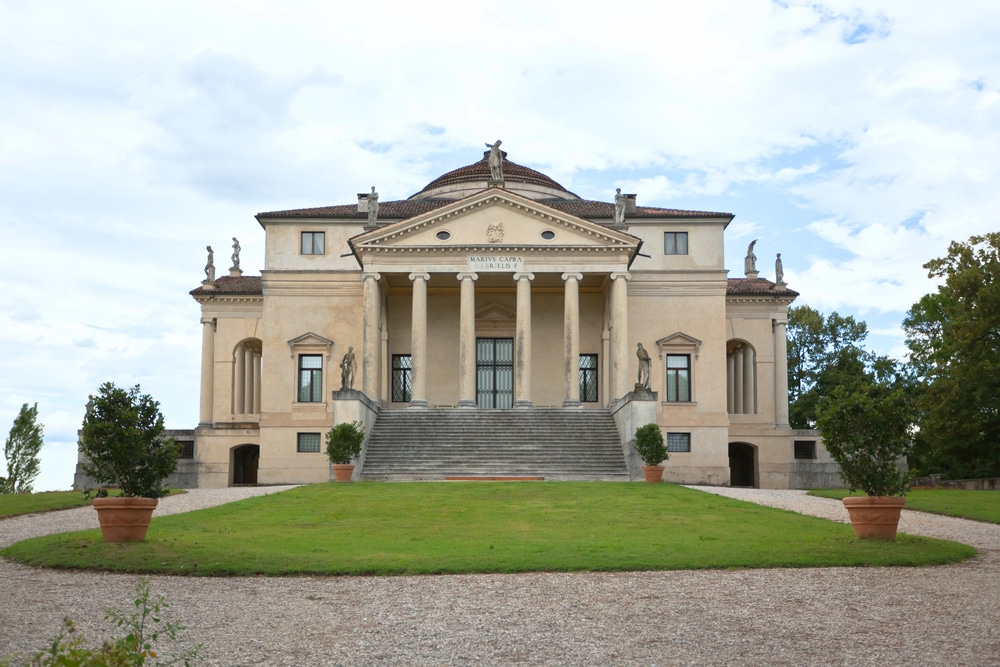
Around Veneto near and along the Brenta Canal, you’ll also find several gorgeous Palladian villas. These are large country homes where local noblemen and aristocrats used to live.
Many of the villas were designed by the architect Andrea Palladio and date back to the Renaissance. They are covered in frescoes and surrounded by manicured gardens with greenery and fountains. There are 24 Palladian villas that are listed as UNESCO World Heritage Sites near Vicenza and around the region of Veneto.
Villa Capra La Rotonda, on the outskirts of Vicenza, is Palladio’s most famous villa. Villa Valmarana ai Nani and nearby Villa Capra have incredible frescoes and a splendid garden overlooking Monte Berico.
Villa Contarini, in the province of Padua, is a huge villa that stands on the ruins of an ancient castle. The villa is decorated with the eclectic 19th-century style, and once a month, an antique market is organized right in front of it. The villa is beautiful even if it’s uncertain whether Andrea Palladio designed it or not.
A few of my favorite Palladian villas in the Veneto are Villa Foscari ( also known as La Malcontenta), Villa Pisani, and Villa Emo. All of which are part of the UNESCO-recognized collection of villas.
10. Veneto’s Nature Parks
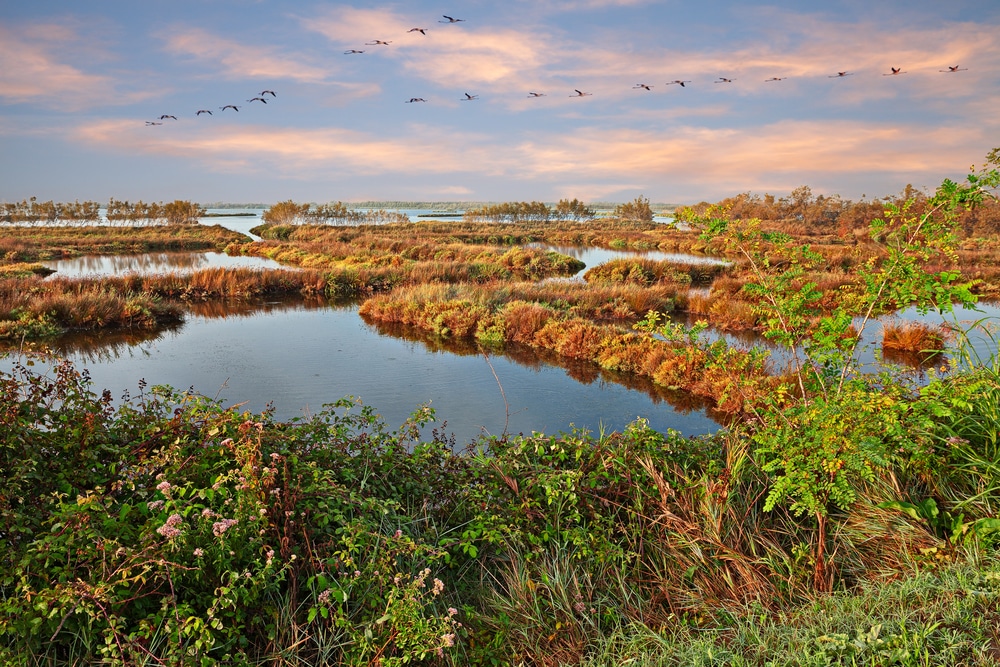
The Veneto region is one of the best places to visit if you love being surrounded by nature. In addition to the Dolomites, which stretch between Veneto and the region of Trentino-Alto Adige, Veneto has many nature parks and spaces where you can hike, bike, kayak, and go wildlife spotting.
A great place to begin nature’s exploration is at the Po Delta Interregional Park, located in the Po Delta and straddling the borders between the Veneto region and the region of Emilia-Romagna. Inside the park, you can marvel at flocks of pink flamingos, sand dunes, and wetlands. In fact, the Po Delta has been recognized by UNESCO and is considered one of the most vital wetlands in Europe because of the habitat it provides for countless animals and plants.
Other natural parks in the region of Veneto that are notable are the Lessinia Regional Natural Park and the Valley of the Sphinxes, an area with large rocks shaped by winds that have a myriad of different shapes!
How to Get to the Veneto Region
If Veneto is your first stop in Italy, there are airports in northern Italy within the region. Venice’s Marco Polo Airport is a major gateway with direct international flights to and from places like the U.S. and Canada, as well as from numerous points throughout Europe.
There are also 2 smaller airports in the region of Veneto in Treviso and Verona. Treviso Airport, in fact, is an alternate nearby option for travelers trying to get to Venice. All of these Veneto airports have public transportation options including shuttles and buses to connect you to major train stations and points of interest.
You might also consider Milan Malpensa as your gateway to northern Italy. From here, trains and rental cars give you easy access to places in Veneto like Venice, Verona, and Lake Garda.
Veneto is well-connected by Italy’s train system, although the further north you go in the region towards the Dolomites, there are fewer secondary lines to get you there. However, you can easily travel by train between the cities in Veneto, as well as take trains to/from cities in nearby regions like Milan, Bologna, Modena, Trento, Udine, and Trieste.
If you’re touring the region by car, you’ll find well-maintained highways, typical city streets, and winding countryside and mountain roads.
Venice is a car-free city so, if you’re driving, you’ll need to park at one of the parking lots before reaching the historic city center. Over on the other side of the lagoon, Piazzale Roma is the most convenient option but you’ll pay upwards of 30 Euros a day. It’s best to reserve a spot in advance if you plan to park here, especially in busier travel seasons like summer.
If you’re a traveler who wants to road trip to small towns and villages, not to mention drive around Lake Garda or up to the Dolomites, having a car is the best way to get around within the Veneto region.
Is the Veneto Italy Region Worth Visiting?
The region of Veneto is an incredible region in northern Italy with one of the most iconic cities in the entire world, historic sights dating back to the Romans, beautiful walled medieval villages, and jaw-dropping natural beauty. There are just so many things to do in Veneto!
It’s a region that should be on the top of your list as you plan your trip to northern Italy.
So, are you ready to visit the Veneto region of Italy?
Like this post? Please share it using the social media buttons.
