Noli, Italy is a tiny gem sitting on the Italian Riviera along Liguria’s coastline.
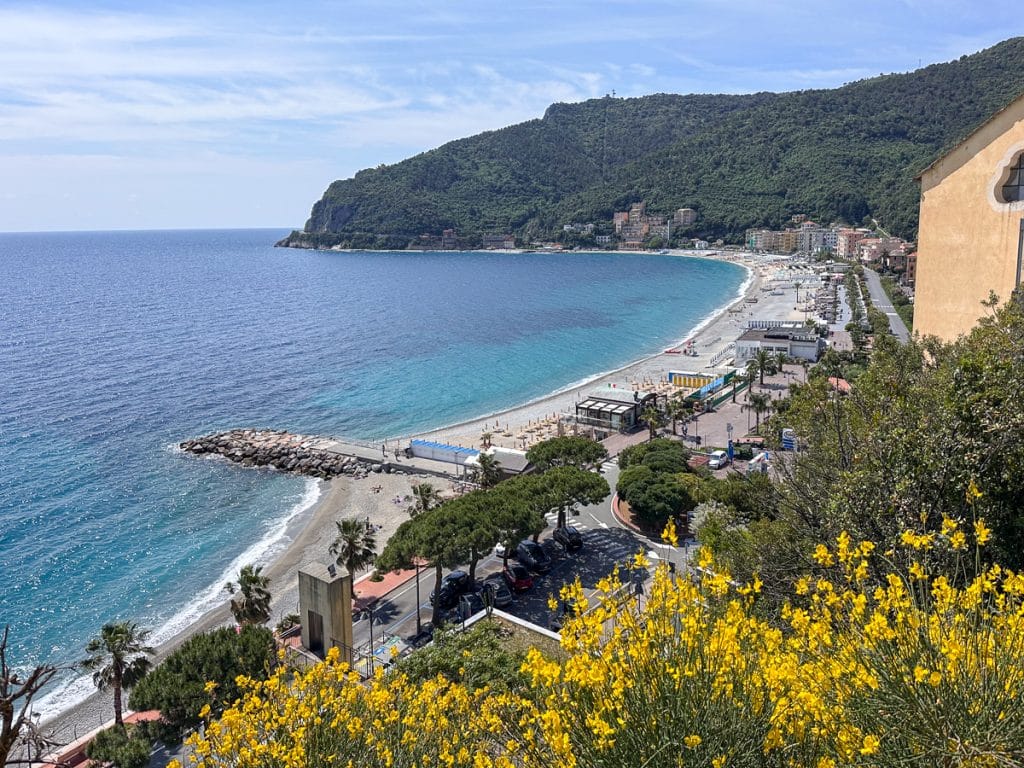
Its medieval historic center, complete with ancient towers and covered stone walkways, is wrapped by protective walls and appears unchanged for centuries. All of this is just steps from pebbly beaches and the turquoise sea stretching as far as the eye can see.
You don’t have to be in Noli long to understand why it was named one of the “Borghi Piu Belli” (most beautiful towns) in Italy. This was how Noli landed on my places-to-visit list in the first place. Admittedly, though, I had spent too much time on the more popular side of the Italian Riviera and I was looking for equally beautiful places away from the crowds.
After spending time in Noli, I can’t believe I waited so long.
Where is Noli in Liguria?
The Italian Riviera spans the entire coastline of Liguria and is split into two parts. Genoa is Liguria’s main city and is the dividing point between the Riviera di Levante and the Riviera di Ponente.
The Riviera di Levante is east of Genoa and more popular. It has places like Portofino, Cinque Terre, and Camogli.
The Riviera di Ponente is the coastline between Genoa and the French border to the west. It’s lesser-known side of the Italian Riviera and has many hidden gem spots. Noli is one of them.
Noli is in the Province of Savona about 40 miles west of Genoa with access by car and train.
For a broader view of the region and nearby towns, see this Liguria map.
Top Things to Do in Noli
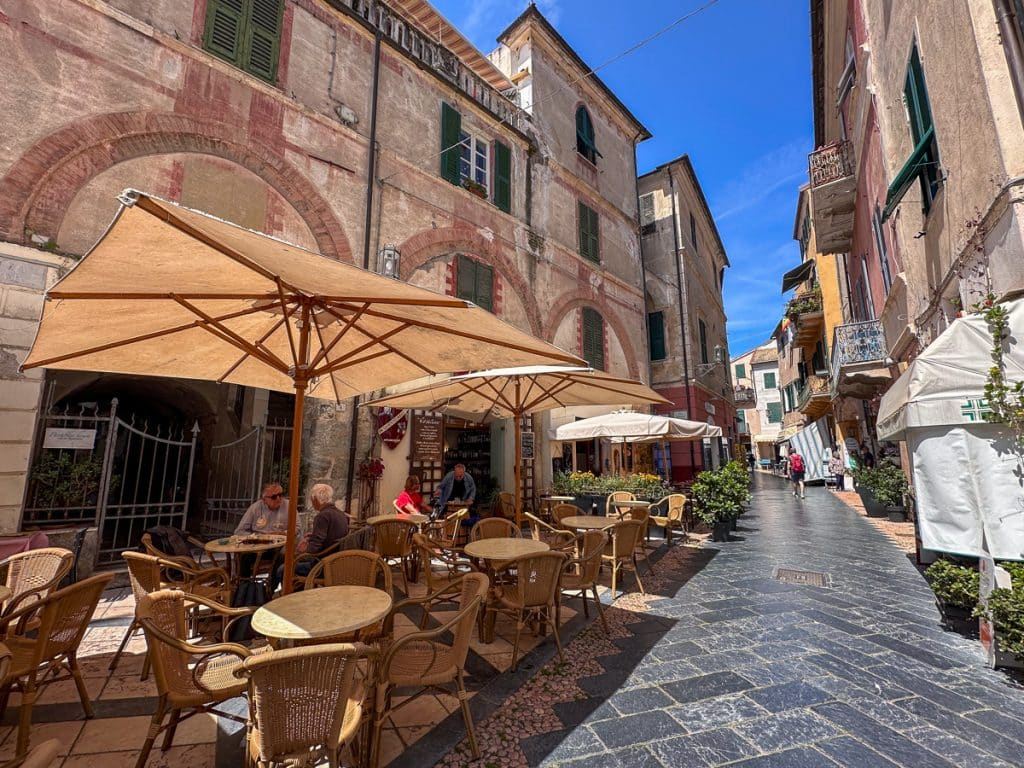
You can’t help but be drawn to Noli whether you’re looking toward the seafront, following the arched entrance through Noli’s medieval walls, or gazing up at the castle and small clusters of houses on the hillside above the town.
Fortunately, it’s compact enough for an easy visit with plenty of things to do. Along the way, you’ll get to see parts of Noli’s past as a maritime republic and why its beaches have earned Blue Flag status
Explore Noli’s Medieval Old Town.

From Porta Piazza, the frescoed main entrance gate, you’ll enter the beautiful medieval center of Noli. The dark stones on the ground look like a carpeted path leading you straight into the past.
From left to right, you’re instantly surrounded by medieval architecture and the modern-day focaccerias, shops, and cafes that occupy them.
The goal here is to wander without a plan. Noli’s old town is tiny; it’s impossible to get lost. You’ll see some of the town’s remaining towers, historic palazzos, ancient churches, small piazzas, medieval doorways, and a labyrinth of stone alleyways.
As you explore, you’ll likely find yourself walking under the covered stone walkway known as the Loggia della Repubblica. Merchants and residents once bought, sold, and traded goods under these porticoes. I liked the placards along this walkway that shared historical tidbits about the town.
Enjoy the Beach and Promenade.

Noli has a pretty waterfront area with a paved promenade that runs between the beach and Noli’s old town. There are a few places to stop for a gelato or to sit for a drink. It’s also a great spot to sit and watch the sunset over the Mediterranean.
From the promenade, you can easily walk onto the beach with its crystal clear water.
There are public areas and private beach clubs (bagni). The beach is pebbly with some sandy spots. Fortunately, the pebbles seemed to be mostly smooth.
Still, I definitely recommend a thicker beach towel or mat and water shoes if you plan to sit on the public area of the beach for a while or head into the water.
In the summer, arrive early to get a sun lounger and umbrella at one of the beach clubs. Especially on the weekends, these go fast!
If you plan to swim, bring a snorkel and mask! The water around Noli is usually very clear.
Visit the Cathedral of San Pietro.
As you walk around the maze of alleyways in Noli, take a peek inside this Romanesque 13th-century church right in Noli’s historic center. It was Noli’s main cathedral during its days as a maritime republic. It’s situated inside Noli’s defensive walls (unlike the Church of San Paragorio), which made it safer.
Inside, some changes were made during the 1600s and 1700s, which is why you’ll see more ornate, baroque elements around the altar and naves.
Look closely because you’ll see hints of Noli’s maritime past in some of the carvings. You can just imagine the sailors long ago who came here to pray before their voyages.
See the Church of San Paragorio.

Just outside Noli’s old defensive walls, the Church of San Paragorio dates back to the 11th century. It had been the main church in Noli until later in the 1500s when San Pietro in the center of the town assumed that role.
The Church of San Paragorio is a Romanesque church and one of Noli’s most historic sights. It was named a National Monument and is one of the best preserved churches in Liguria. Archaeologists even discovered burial grounds and a crypt that pre-date the 11th-century church you see today.
Unfortunately, when I visited Noli, it was closed to visitors and still seems to be closed. But if you’ve made it to Noli, it’s worth seeing if you can get a closer look at this ancient religious and archaeological site.
Climb to Castello di Monte Ursino.

If you look up from Noli’s beachfront area, your eye instantly goes to the Castello di Monte Ursino. It was originally built in the 12th-century and was fortified in the 15th-century. Noli was a small, but strong, maritime republic and this castle protected the town from attacks.
Making my way through the historic center with the sea at my back, I took a meandering path through the historic center and toward the castle, following some signs with a mix of Google maps to point myself in the right direction. There was an exit through the medieval walls beneath the Torre San Giovanni on the opposite side of where I had entered from the town’s main gate.
I had planned to follow the steep mule track for a direct route up the hill. But the path was closed when I visited so I followed the winding path with views of the coast on my right. Not only was it a gentler climb up, the views of Noli and the Ligurian Sea, as well as the places I passed, like a small white chapel, were breathtaking.
Going this way, you’ll also pass by the Noli cemetery, which if you haven’t seen one in Italy before up close, is worth a small detour to take a respectful look.
After about 30-40 minutes, I arrived at the castle, including plenty of stops to take a lot of photos and videos.
The castle itself and the spectacular views of Noli and the coastline are well worth the walk up. It costs 2 Euros per person to go inside the castle and up to the ramparts. Even if the castle is closed, which it is during the week in the off-season, it’s still worth the walk for the amazing views.
ProTip: Bring water, especially on a warm day because there’s nowhere (except maybe the small spigot in the cemetery) to get water along the way.
Hike the Coastal Trail between Noli and Varigotti.
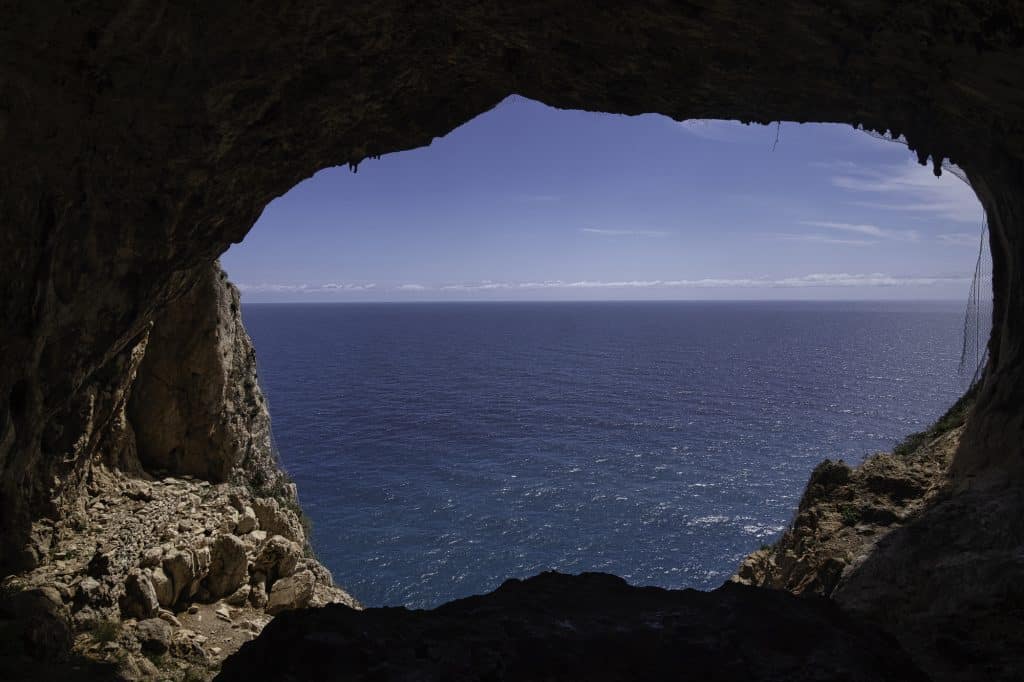
The Sentiero del Pellegrino is one of the most spectacular coastal hikes on the Ponente side of the Italian Riviera. It’s a moderate hike about 3.5 miles one-way that takes about 2.5-3 hours to do.
You can hike the trail in either direction, but starting in Varigotti gets you to the best viewpoints quicker and, overall, comes with the best views.
Along the way, you’ll have the chance to pass by ancient churches and towers, and visit the gorgeous Grotta del Falsari. Not to mention, the panoramic coastal views on this hike are stunning. You can see up and down the Ligurian coastline and overlook Bergeggi Island.
From Varigotti, you start from Via Strada Vecchia (or from Noli at Piazza Lorenzo Vivaldo). Look for the red X trail marker on the way up and signs for Pilgrim’s Trail #1 as you descend towards Noli.
To manage the logistics, use public bus number 40 to get to Varigotti, or if you start in Noli, to take you back there. I’m working on a complete guide of this hike and will link to it here when it’s ready.
For more hikes around Noli, check this guide, too. Or plan some walks up into the hillside above Noli to see a few super tiny hamlets like Tosse or Voze.
ProTip: This is a fantastic hike, but make sure you’re prepared with plenty of water, snacks (or lunch if you plan to stop), and sturdy hiking shoes. The climb up to the trail and the walk down to the Grotta del Falsari should not be done in sandals.
Visit the Baia dei Saraceni.

The breathtaking Baia dei Saraceni is between Noli and Varigotti. It’s a dramatic cove with one of the most beautiful beaches in Liguria.
If you hike the coastal path between Noli and Varigotti, you’ll have sweeping views of the bay’s crystal clear water.
To be clear, the beach is totally open with no amenities. You simply take a towel and find your own spot in paradise.
The most hassle-free way to get here is to take the number 40 bus to the Varigotti-Malpasso stop.
You can drive from Noli. It’s just a couple of miles along the coastal road. The issue is parking. There are a few spots to pull into along the side of the road, but they come up quick, so don’t pass them. Otherwise, you’ll head into the town of Varigotti.
I parked along the side of the road for a short visit and it was not the safest place to get in and out of my car. It’s possible, but be careful. There’s access from the road to head down to the beach.
Eat the Best of Liguria’s Specialties!
Focaccia and pasta dishes with pesto are musts. This is also the place to eat freshly caught seafood and tuna in olive oil.
I also love the “pansotti con salsa di noci” in Liguria. (There’s a shop in Camogli where I’ve bought several jars to take back to my home in Piemonte.) Pansotti is an herb-filled pasta and it’s served in a creamy walnut sauce.
Look, too, for a thin pancake made from chickpea flour called “farinata.” It’s cooked in wood-fired ovens and sometimes served with pesto.
Where to Stay in Noli
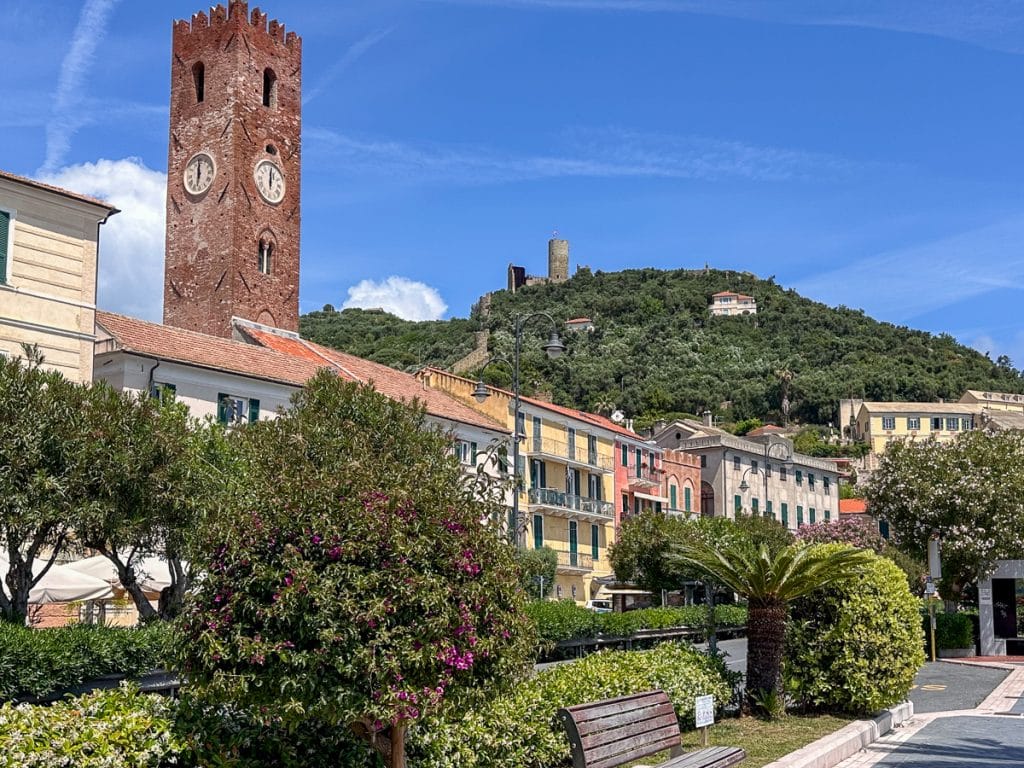
You’ll have to decide if your main goal in visiting Noli is for beach time. If this is the case, it could be worth looking at hotels in the beachfront part of town for the views, but also for a lounge chair and umbrella access.
Otherwise, choosing between the beachfront area and the old town will come down to price and which accommodations have what you’re looking for.
Staying in Noli’s historic center, or even just beyond the walls, still means you’re close to everything, including the beach, main piazzas, and plenty of restaurants.
Many of Noli’s hotels are in historic buildings or are B&Bs or apartments that were once (or possibly still are) family homes. If you need a specific amenity (Wi-Fi, air conditioning, parking, an elevator, etc), don’t assume it’s an automatic feature. Confirm the accommodation has it before you book.
Here are a few accommodations to look at in Noli.
Palazzo Vescoville Hotel – An elegant historic palazzo converted into a hotel in a perfect location.
Ca’ de Tobia – A beautiful B&B just steps from Noli’s beachfront and medieval center.
Hotel Miramare – A classic seaside hotel with Mediterranean views.
Noli Centro Apartment – A spacious, modern apartment in the heart of Noli with parking.
Practical Tips for Visiting Noli

Getting to Noli is straightforward. If you plan to drive, pay close attention to the section below about parking.
How to Get to Noli
If you’re staying along the Italian Riviera or in Genoa, the easiest way to reach Noli is by train. There are also direct trains from Savona, Milan, and Turin. Regional trains run along the coastline from San Remo and Ventimiglia, too.
The closest stations are Spotorno-Noli and Finale Ligure Marina. Both are just a few miles from Noli’s historic center. You’ll need to take a quick local bus along the SS1 (scenic coastal road that spans the entire Italian Riviera coastline) or a taxi.
ProTip: If you’re coming from Milan or Turin, compare the travel time on direct trains and those with one stop. Sometimes, it’s actually faster to connect than to take a direct train that makes many stops along the way.
If you’re driving to Noli, you’ll likely end up (at some point) on the A10 autostrada. Take the Spotorno exit and, in just a few minutes, you’ll arrive in Noli.
When I drove from Piemonte, I took this exit and Noli came up on the righthand side. Go slowly so you don’t miss some of the parking areas right in front of Noli. It’s not the easiest road to turn around if you pass the entrance to the lot.
If you’re already staying nearby on the Ponente side of the Italian Riviera in places like Finale Ligure or Borgio Verezzi, local buses run to Noli.
Lastly, the closest airport to Noli is Genoa City Airport (a.k.a Genoa Christopher Columbus Airport). And for reference, Genoa is Genova in Italian. So if you’re driving or navigating to Noli through Genoa, signs and announcements will say Genova.
Parking in Noli
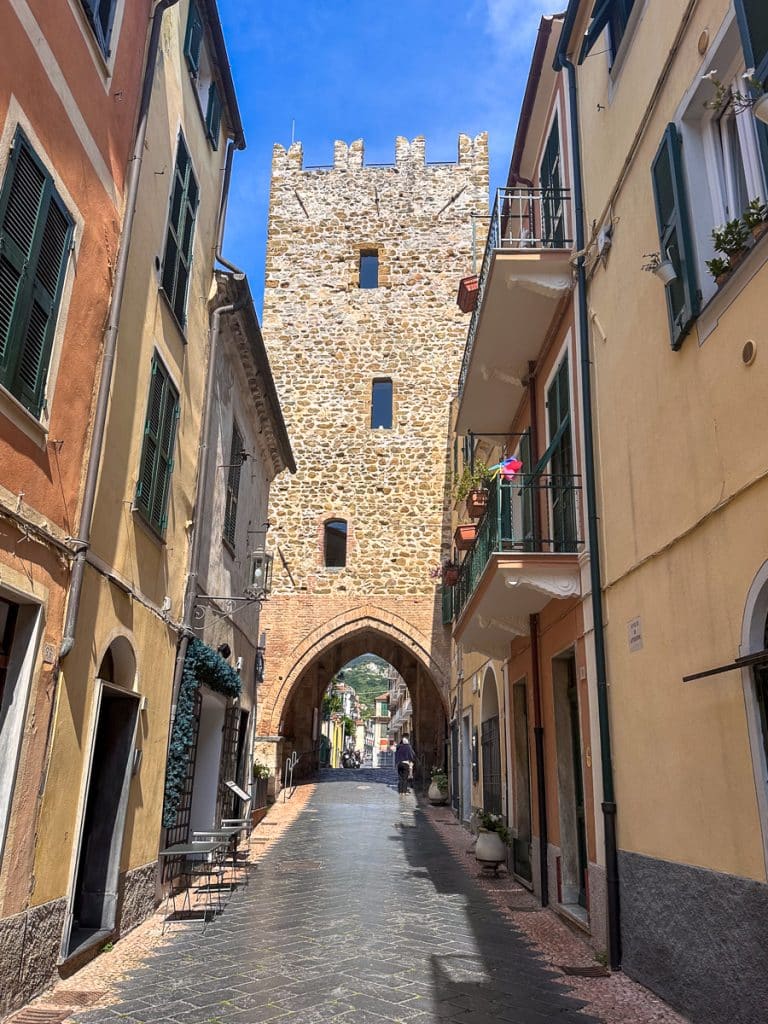
Parking close to Noli’s historic center and beachfront area can be difficult. In the old town, most streets are pedestrian only so it’s best to find parking as quickly as possible and move around on foot.
There are a few parking areas on both the beach and town side of Noli. If the parking spot has white lines, it’s free, public parking. If it has blue lines (most do), look for the automated parking machine to pay for a period of time. Then, stick the ticket on your dashboard.
If you think you found street parking, check for signs indicating these spots are only for locals.
For the best luck, especially in the summer season and on weekends, arrive in the morning before these main parking areas fill up.
ProTip: The Italian word for parking area is “parcheggio.” On Google Maps, you can search for Noli parcheggio and see the ones that come up if you’re having no luck finding a spot.
How Much Time in Noli

Noli is small and won’t take more than a few hours to explore on foot, even with the hike up to the Castle. You could easily plan a morning in Noli, have lunch, and then move on to another place in the area.
Or plan an afternoon and early evening in Noli to see the historic center, beachfront, and the views along the path up to and from the castle before sitting for an aperitivo by the sea.
If you want to spend some time on the beach and see Noli, I recommend staying for the full day.
To add hiking to your itinerary, like the Sentiero del Pellegrino between Noli and Varigotti, and still see Noli, enjoy the beach, and walk up to the castle, I’d stay overnight and plan 2 days in Noli.
The same is true if you’d like to make Noli a base (an excellent choice!) and visit other places like Finalborgo, Borgio Verezzi, or Bergeggi.
Add a third day if you’d like to visit all of these places and include hikes, beach time, and maybe even a kayak tour to see and snorkel around the tiny Bergeggi Island.
Best Time to Visit Noli

April to June and September into October are the best times to visit Noli. The weather should be comfortable and the water will typically be warm (enough) for swimming. I took this photo on a sunny, warm day in May. The beach was empty.
Summer is the high season for Noli and points along the Italian Riviera. If you plan to visit during these months, book your accommodations at least a few months in advance. If you’re driving, plan on it taking a little longer to move between towns along the coastal road.
Summer weekends, particularly in July and August, are the busiest days in Noli. Parking is really tough on these days so it’s all the more important to arrive early for the best availability. The same goes for spots on the beach.
Will I see you in Noli?
In a sea of towns along both sides of the Italian Riviera, Noli is an ideal spot to spend some time.
It has an amazingly preserved medieval center, a beautiful beachfront with crystal clear water, historic sights, and access to one of the most spectacular stretches of Mediterranean coastline in Liguria.
And yet, it goes largely unnoticed by the big groups of visitors in Portofino and Cinque Terre. So, it feels local, laid back, and completely authentic.
I’ll be back in Noli this coming spring and summer for sure. I hope to see you there!
What questions do you have about visiting Noli?
Like this post? Please save it on Pinterest or share it on social media using the share buttons.